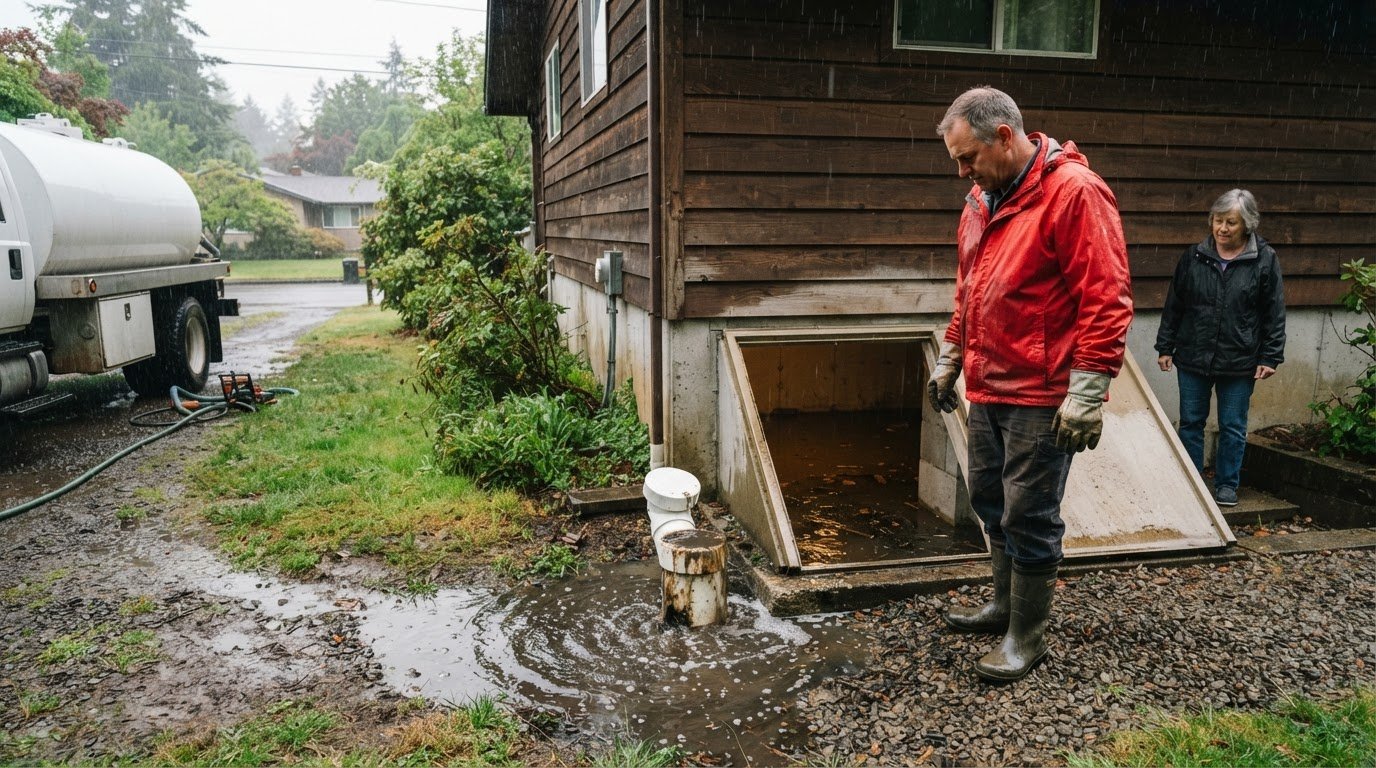
An unused septic system can still pose a problem if its tank and drainfield are simply left behind. For septic tank abandonment in Canby, OR, the tank is typically pumped, made unusable, then backfilled and compacted with approved material, following the requirements that apply to the property. A drainfield may remain in place if the local jurisdiction approves.
A property may no longer rely on its septic system after connecting to city sewer or replacing the system, but taking it out of service and properly abandoning it are separate steps. The tank’s condition, the planned use of the property, and local requirements all shape the right approach.
This guide explains why a septic system may need to be abandoned, when removal may be appropriate, and when a drainfield can remain in place. It also outlines the tank-abandonment process and explains why documenting the work helps maintain a clear property record.
Key Takeaways
- Don’t assume an unused septic tank is harmless; understand how leftover contents and a deteriorating structure can create risks.
- Determine whether the tank should be abandoned in place or removed based on its condition and the property’s plans.
- Learn what typically happens to a tank during abandonment and why the work should be documented and mapped.
- Find out when a leach field may remain in place and how septic tank pumping can prepare a tank for its next step.
Reasons for septic system abandonment
In Canby, a septic system may need to be abandoned when a property connects to city sewer or replaces its system. Follow the applicable jurisdiction’s requirements for permits, inspections, and paperwork. Document the completed work and map the system components for the property record.
- Confirm whether the property now uses city sewer. When a sewer connection replaces septic service, the old tank no longer treats household wastewater. Leaving it unused does not complete the abandonment. Locate the tank, access points, and former sewer connection before planning the next step.
- Check whether a failed or replaced system has left components behind. A new installation may restore wastewater service, but the old tank and drainfield still occupy space on the property. Record which components remain, then plan how to address them as part of the project.
- Consider the tank’s condition before deciding how to handle it. An empty, unused structure can deteriorate, and a weakened tank may become a ground-safety concern. Assess visible damage, access covers, and the surrounding ground to help determine whether abandonment or removal is appropriate.
- Factor in planned property work, such as construction or landscaping. A buried tank may conflict with the proposed work area, while a drainfield can limit how that part of the property is used. Map these components against the project before choosing a method.
- Keep a clear record of the completed work. Note the tank and drainfield locations, the method used, and completion details. A map can help future owners or contractors avoid digging into an abandoned component. Retain these records with the property documents.
The applicable jurisdiction determines permit and inspection requirements. Document and map the completed work, including the tank and drainfield locations, the method used, and completion details. Keep these records with the property documents.
When a septic tank needs to be abandoned or removed
Use the property plans and local requirements to decide whether an unused tank should stay or be removed. Take these steps before work begins.
-
Check Local Requirements and Oversight
First, identify the jurisdiction overseeing the property in Canby or Clackamas County. Abandonment and removal requirements depend on the applicable jurisdiction, so establish which process applies before scheduling work. A sewer connection and a redevelopment project may have different site plans and work areas, but both require proper handling of the unused tank. Keep project details together for permitting and inspection.
-
Determine Who Can Do the Work
Have a qualified professional pump the tank using a vacuum truck and take the waste to an approved facility. Homeowners should not pump the tank themselves. Abandonment may also involve crushing the tank, drilling drain holes, and backfilling with approved material. Follow local requirements for who performs each task; pumping alone does not decommission the system.
-
Review Costs and Risks
Abandonment costs depend on the tank’s size and condition, site access, disposal needs, and whether removal or in-place abandonment is chosen. A quote is needed to determine the cost for a specific property. An unused tank left unfilled or improperly abandoned remains a buried void; deterioration or collapse can create a ground-safety concern. Choose a method that addresses the tank, not just the wastewater connection.
-
Find Official Forms and Contacts
Use the Canby or Clackamas County office responsible for the property’s septic requirements to locate applicable forms and contact details. Ask for the abandonment or removal paperwork, the inspection process, and any documentation needed to close out the work. Keep the completed records and a site map with property documents. For preparation, septic tank pumping empties the tank before abandonment.

Abandoning a leach field in place
A drainfield may remain in place if the local jurisdiction approves. Tank abandonment follows a separate process, so plan the field and tank work separately.
- Locate and map the drainfield before planning the work. Mark its boundaries and connection to the former septic system on a site plan. This record distinguishes the field from the tank and shows where each component remains. Keep the map with the property documents after the work is complete.
- Get approval from the local jurisdiction before leaving the drainfield in place. Approval is essential; a tank-abandonment method does not automatically authorize leaving the field. Share the site plan and explain whether the property is connecting to city sewer, replacing its system, or changing how the site will be used.
- Make the drainfield decision separately from the tank procedure. A common tank process is to have a licensed professional pump it using a vacuum truck and take the waste to an approved facility. The tank may then be crushed, have drain holes drilled, and be backfilled and compacted with approved material. These steps apply to the tank, not the field.
- Keep the approved plan and completion details together. Record the drainfield’s mapped location, the decision to leave it in place, and the related tank work. If site work changes later, the map helps identify buried components before digging. Show the tank and field as separate features because they have different locations and handling steps.
In Mecklenburg County, septic tanks and drain fields are rarely excavated and removed from a site. That local practice is useful context when considering whether the field should remain, but it does not replace the need to obtain approval from the local jurisdiction. Keep the field decision tied to its mapped location and the approved plan, rather than assuming that the tank’s treatment determines what happens to the field.
Before closing out the work, clearly record which component remains and which was addressed separately. Future owners or contractors can consult the site record to distinguish the drainfield from the former tank and understand the decisions made for the property. Keep the record with the other property documents so the field’s location and status are clear when the site is reviewed or work is planned.
What are the septic tank abandonment requirements in Canby, Oregon?
- Confirm the applicable jurisdiction’s requirements before work begins. Septic tank abandonment or removal must follow the rules for the property. Do not assume a process used elsewhere applies in Canby. Decide whether the tank will be abandoned in place or removed, then establish which approvals or inspections apply.
- Arrange for the tank to be emptied before structural work. A vacuum truck operated by an appropriately licensed professional should remove the contents and take the waste to an approved facility. This step addresses the tank contents; it doesn’t complete the abandonment. Arrange septic tank pumping before the tank is crushed, filled, or removed.
- Follow the approved method for the tank’s condition and the site. A common process includes crushing the tank, drilling drain holes, and backfilling and compacting approved material. Removal after pumping may be another option. The applicable jurisdiction’s requirements determine which method is appropriate; do not treat the options as interchangeable without considering the approved plan.
- Document and map the completed work. Record the tank’s location, the method used, and where the work was performed. Keep these details with the property records so future owners or contractors can locate the abandoned component before excavation. If the drainfield remains in place, show it separately on the map because its location and status differ from the tank’s.
A code requirement from another jurisdiction should not be treated as a Canby rule. The Omaha Plumbing Code requires a septic tank cover to be designed for a load of at least 150 pounds per square inch. That figure is specific to the code named here; it does not establish the cover requirement for a property in Canby. Check the applicable local requirements for the project before relying on any design specification, particularly when a cover will remain accessible or be part of the completed work.
When reviewing plans or estimates, keep in mind that technical specifications from elsewhere cannot replace the requirements that govern the property. Ask the relevant jurisdiction to clarify any applicable cover or structural criteria, and retain that guidance with the project records. This helps ensure the chosen abandonment method and any remaining components are addressed under the rules that apply to the site.
Lil’ Stinky Septic Service: Septic Tank Pumping
Lil’ Stinky Septic Service provides septic tank pumping to prepare an unused tank for its next step. Pumping removes the tank contents, but it does not complete abandonment. The tank must still be abandoned or removed according to the requirements for the property. This distinction matters when a home connects to city sewer or replaces an existing septic system. Plan pumping as one part of the process, then address the tank structure, backfill, and property records. If the septic system is still in use, an inspection or installation may be more relevant than abandonment. Contact Lil’ Stinky Septic Service for septic tank pumping, with free estimates, honest, upfront pricing, and a Best Price Guarantee.
Set Up the Next Step for Your Property
Make the abandonment decision part of your property’s transition plan, not an afterthought once excavation or landscaping begins. Coordinating the work with a sewer connection, replacement system, or future building project can help keep the site plan and property records aligned. For septic tank abandonment in Canby, OR, start by clarifying how the property will be used and organizing the work around that plan.
Lil’ Stinky Septic Service offers septic tank pumping, septic inspections, and septic installation. Pumping can prepare a tank for abandonment, while an inspection or installation may better fit a property with a different septic need. The right service depends on what the property requires next.
Contact Lil’ Stinky Septic Service to discuss the septic work your property needs. A clear plan can help you move forward with confidence.
Frequently Asked Questions
Why is it necessary to abandon a septic system?
Abandon a septic system when it no longer serves the property, such as after a connection to city sewer or replacement with a new system. The old tank remains underground even though wastewater no longer flows through it. Properly addressing it helps prevent an overlooked structure from creating a hazard during later property work and keeps its status clear in property records.
How much does septic tank abandonment cost in Canby, Oregon?
Costs depend on the tank’s size and condition, site access, disposal needs, and whether it is removed or abandoned in place. Request a free estimate for property-specific pricing.