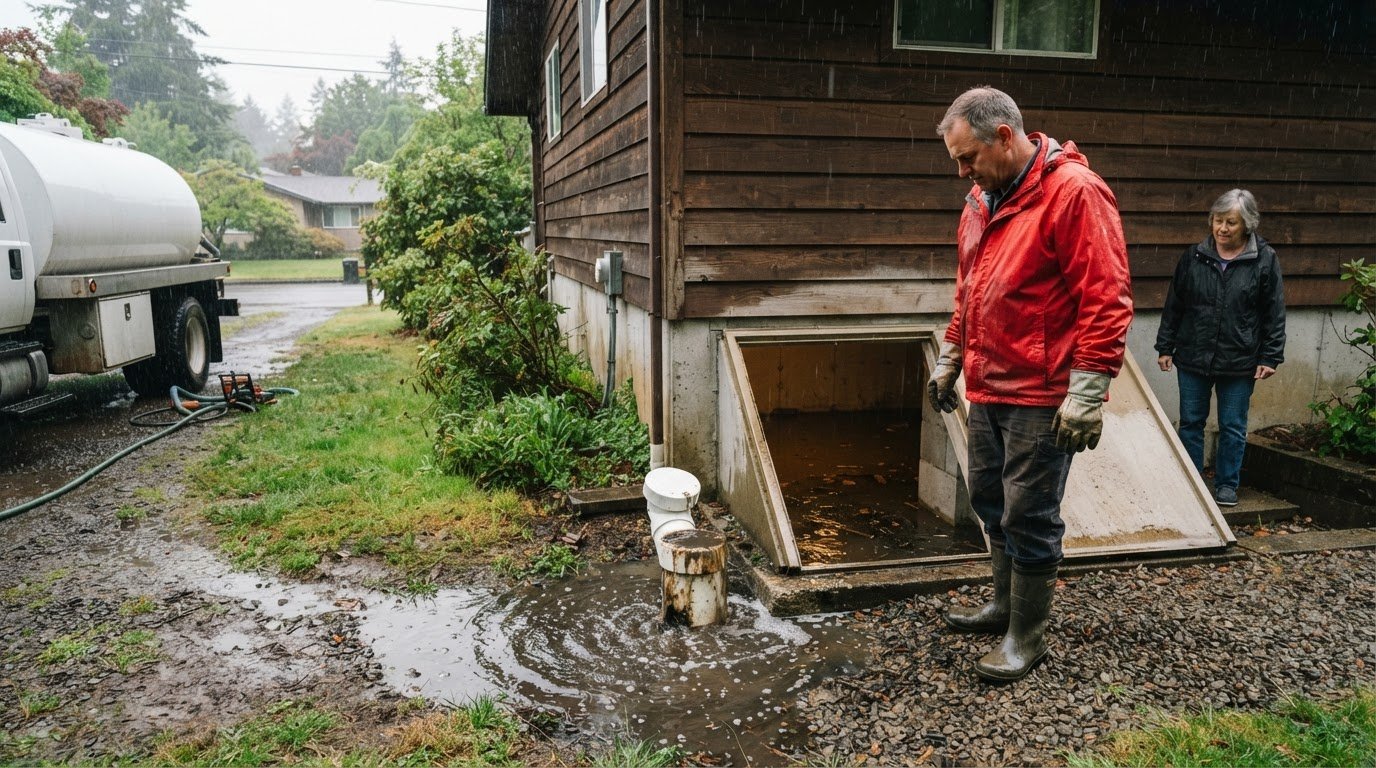
A sewage backup is a safety problem, not a cleanup job to tackle yourself. If you’re wondering what to do about a septic backup in your basement, keep people and pets away, stop using toilets, sinks, and other drains, and don’t enter standing water. Contact a septic or plumbing professional to investigate the cause.
Heavy rain can overwhelm public sewers or raise groundwater around a private septic system, putting extra strain on pipes and drainfields. A backup can also point to a blockage or system problem, so cleaning up visible mess alone may not solve it.
This guide explains how to reduce exposure, why rain can trigger a backup, and what to know about cleanup. You’ll also learn when to call a septic company and what information can help assess the problem. Take it one step at a time, and leave sewage-contaminated cleanup to trained restoration professionals.
Key Takeaways
- Take photos of the damage before cleanup if you can do so safely; they may help document an insurance claim.
- Notice whether the backup affects one drain or several, since that clue can help point to a local blockage or a main-line problem.
- Keep sewage-contaminated porous materials out of the cleanup plan; some items may need to be removed rather than treated in place.
- Call based on the system involved: a private septic issue calls for a septic company, while a home connected to public sewage may need plumbing help.
Cleaning and sanitizing contaminated surfaces
Focus first on preventing exposure. Once the sewage source has been addressed, follow these steps for cleanup.
-
Follow Sewage Cleanup Safety Precautions
Keep children and pets away from sewage and contaminated belongings. Don’t walk through standing water or touch electrical equipment in a flooded basement. If water is near outlets, appliances, or the electrical panel, stay out and contact the utility company for help. Don’t use a household wet/dry vacuum, which isn’t suitable for sewage.
-
Check Applicable Cleanup Requirements
Ask your local health department about requirements for sewage cleanup and septic repairs in your area. Rules may depend on the work involved, including whether a private septic system needs repair. Don’t assume cleanup guidance also covers septic-system work. If the backup is near a sewer cleanout or backwater valve, don’t open or adjust equipment while sewage is present.
-
Arrange Professional Cleanup and Restoration
Use a qualified restoration or cleanup professional for significant sewage contamination. Trained professionals have appropriate protective equipment and procedures for contaminated areas. Sewage-soaked carpet and other porous materials can be difficult to sanitize fully, so they may need removal and proper disposal. Mold can begin establishing in contaminated materials within 24 to 48 hours under typical basement conditions.
-
Clean and Disinfect Affected Areas
On hard surfaces, remove dirt and debris, wash walls and floors with warm or hot water and low-suds detergent, then rinse. Follow appropriate sanitizing and disinfection procedures, and never mix cleaning products. Open windows or use fans to air out the space after cleaning. Replace porous materials soaked with sewage if they can’t be completely cleaned and dried. If the floor drain backs up again or tree roots are suspected, have the drainage problem assessed before considering cleanup complete.
Why Does Sewage Back Up in the Basement After Heavy Rain?
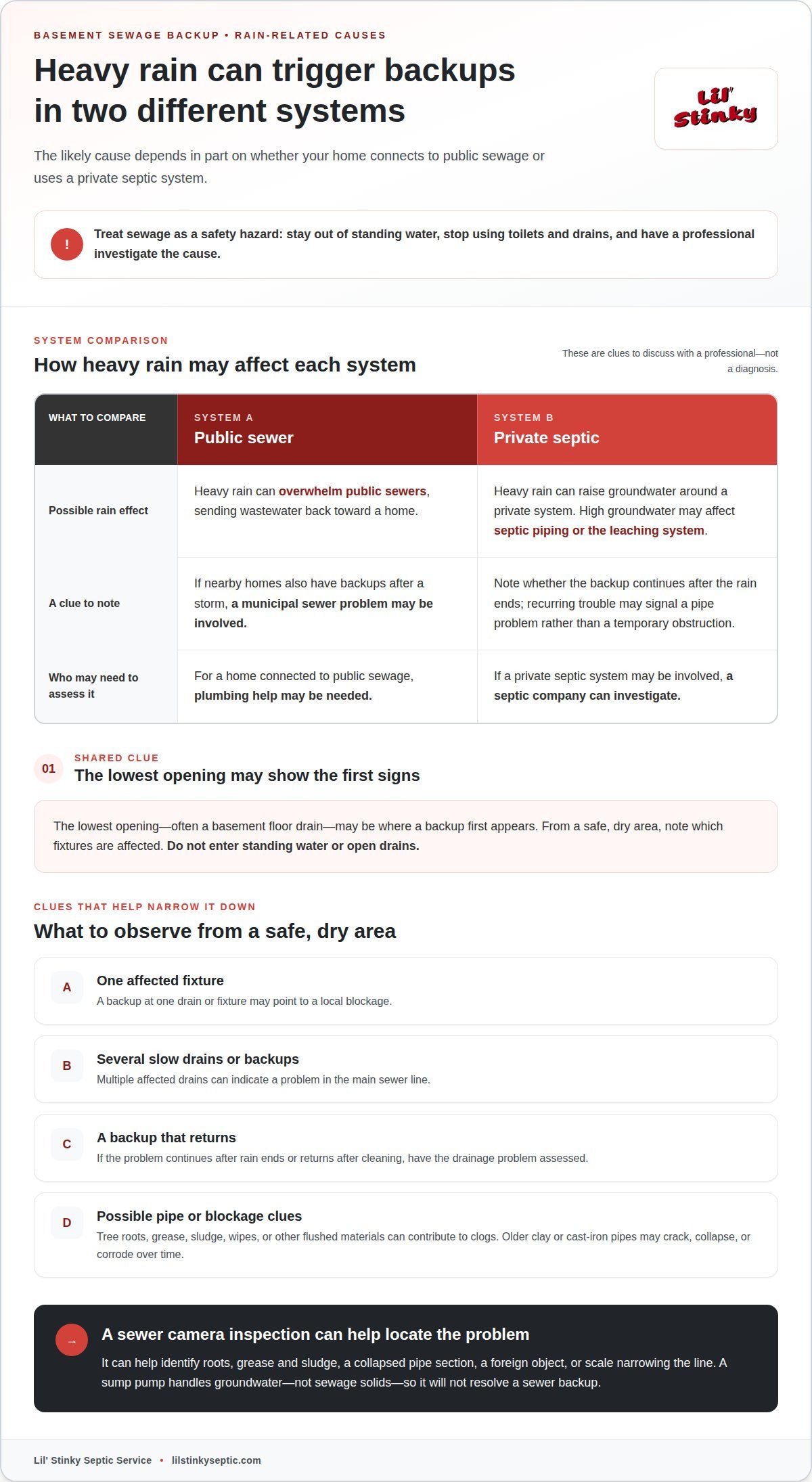
Rain can overwhelm public sewers or raise groundwater around a private septic system, sending wastewater back toward the house. Use the signs below to narrow down what may be happening, but don’t enter standing water.
-
Assess Backup Severity and Likely Causes
From a safe, dry area, note whether sewage is coming up through one basement floor drain or several. One affected fixture may point to a local blockage; multiple slow drains or backups can indicate a problem in the main sewer line. Note whether the backup continues after the rain ends, since recurring trouble may signal pipe damage rather than a temporary obstruction.
-
Identify Rain-Related Backup Causes
Consider whether your home connects to public sewage or a private septic system. Heavy rain can overwhelm public sewers, while high groundwater can affect septic piping or the leaching system. If nearby homes also have backups after a storm, a municipal sewer problem may be involved. The lowest opening, often a basement floor drain, may show the first signs.
- Look for other clues without opening drains or disturbing sewage. Tree roots can enter damaged pipes, while grease, sludge, wipes, or other flushed materials can contribute to clogs. Older clay or cast-iron pipes may crack, collapse, or corrode over time. A sump pump handles groundwater, not sewage solids, so it won’t resolve a sewer backup.
- Record which fixtures are affected and whether the problem returns after cleaning. A sewer camera inspection can help locate roots, grease and sludge, a collapsed pipe section, a foreign object, or scale narrowing the line. If several drains are slow, arrange professional drain cleaning to investigate a possible main-line blockage.
Avoiding contact with contaminated water
Keep people away from affected areas until sewage has been professionally cleaned and sanitized. Clothing, bedding, and other exposed items may be salvageable only if they can be cleaned and disinfected. Discard items that cannot.
-
Address Electrical and Contamination Hazards
Stay out of a flooded basement until utility companies have shut off gas and electricity. Don’t touch fuse boxes, plugged-in cords, or appliances while power remains on. If sewage or floodwater is moving toward electrical equipment, outlets, or the panel, don’t enter to shut off power yourself. Avoid breathing near raw sewage, which can expose people to disease.
-
Handle Contaminated Clothing and Bedding
Separate sewage-exposed clothing and bedding from clean laundry without shaking them or carrying them through living areas. Discard them if they can’t be cleaned and disinfected. The same applies to carpets, furniture, toys, and other affected belongings. Porous materials can be difficult to sanitize completely, so don’t assume surface cleaning makes them safe to keep.
- Keep children and pets away from contaminated rooms during cleanup. People with weakened immune systems should leave the premises until remediation is complete. If someone touches sewage, have them wash their hands thoroughly with soap. Keep contaminated fingers away from the eyes, nose, and mouth.
- Don’t restart an appliance if its motor or controls were submerged. Ask the appliance dealer or service company before using it again. After heavy rain, don’t move contaminated belongings through clean rooms; keep them separate for assessment. Take photographs of damage before moving items, if you can do so without entering a hazardous area.
Calling a septic company or emergency plumber
If you’re deciding what to do about a septic backup in your basement, keep people out, stop using fixtures, and call for help. Don’t enter standing water or try to clear the blockage yourself.
- Identify whether your home uses a private septic system or connects to public sewage. If the septic system may be involved, call your septic company’s emergency number. If your home connects to public sewage, call an emergency plumber. Matching the call to your system helps focus the investigation on the likely source.
- Describe what you can see from a safe location. Say whether sewage is coming up through one basement drain or several, whether other fixtures are backing up, and whether the problem began during heavy rain. Mention any sewage near electrical equipment. If you’re unsure what to do after a septic backup in the basement, these details help the professional understand the situation.
- Stop using water until the backup is handled. Don’t flush toilets, run sinks, or use other drains, as continued use can cause upstairs fixtures to back up. Keep children and pets away. Don’t use chemical drain cleaners or a household wet/dry vacuum on sewage.
- Share clues that could indicate a wider sewer-system issue. If neighboring homes also have backups after a storm, mention it, since a municipal sewer problem may be responsible. If only your home is affected, report repeated backups, slow drains, or suspected debris in the main sewer line. Don’t open cleanouts or attempt repairs while sewage is present.
- Before normal drain use resumes, ask what the inspection found and what needs attention. A private septic system may need investigation for excessive solids, blocked piping, pump or float failure, electrical problems, high groundwater, or leaching-system issues. For a suspected private-system problem, arrange septic system help rather than treating sewage exposure as a routine clog.
Lil’ Stinky Septic Service
Lil’ Stinky Septic Service can help when a basement backup may involve your private septic system. Septic inspections can identify system concerns, and septic tank pumping may be appropriate when accumulated solids contribute to the problem. The right next step depends on the cause, so share what you observed, including whether multiple drains were affected or the issue followed heavy rain.
If the signs point to a public sewer problem, contact the appropriate emergency plumbing service instead. For a backup that may involve your septic system, contact Lil’ Stinky Septic Service to discuss the situation and next steps.
Take the Next Step Toward a Lasting Fix
If you’re deciding what to do about a septic backup in your basement, first find out whether your private septic system is involved. The right response depends on the cause, so share what happened and which drains or fixtures were affected. If the issue points to the septic system, Lil’ Stinky Septic Service can help determine whether pumping, an inspection, or installation fits the situation.
Addressing the underlying cause matters more than simply restoring the basement. A clear assessment can help you understand what needs attention and make informed decisions about the system. If your home connects to public sewage, seek help suited to that system.
For guidance on a suspected private septic-system problem, contact Lil’ Stinky Septic Service. Taking the next step can help you move forward with a clearer plan.
Frequently Asked Questions
How Can You Help Prevent a Basement Sewer Backup?
Reduce preventable clogs and keep the septic system maintained. Don’t pour cooking grease down drains or flush wipes, paper towels, and sanitary products. Routine septic inspections and pumping can help limit excess solids and identify developing problems earlier. If backups recur after storms, arrange an assessment of the system and drainage path. A backwater valve can help protect a building connected to an overwhelmed public sewer.
Is It Safe To Stay In My Home or Business After a Sewer Backup?
Leave the building until sewage contamination has been professionally cleaned and sanitized. Sewage may affect more than the visible floor area, including belongings and frequently touched surfaces. Keep children and pets out, and have anyone with a weakened immune system stay elsewhere during remediation. Return only after the affected areas have been cleaned and the building is considered safe for occupants.
What Are Signs of a Sewage Backup?
Watch for wastewater coming from a basement floor drain, toilets, or other low fixtures. Several drains becoming slow together can point to a main-line problem, while a persistent sewer odor may signal a drainage issue. Note whether symptoms appear during or after heavy rain and whether neighboring homes report similar trouble. These patterns can help distinguish a wider sewer-system issue from a problem within one property.
What is the greatest danger in a flood or sewage back-up?
Electrical shock is an immediate danger if floodwater reaches energized outlets, appliances, cords, or an electrical panel. Sewage exposure also carries health risks, including exposure to disease-causing organisms. Don’t walk through standing water to investigate or reach equipment. If water is near electrical components, stay out and contact the utility company for help rather than entering to shut off power yourself.
How do I safely shut off water and electricity during a basement sewage backup?
Stop using toilets, sinks, and other fixtures to prevent more wastewater from entering the drainage system. Don’t touch a fuse box, plugged-in cord, or appliance in or near floodwater. If the electrical panel is in a dry, accessible area, use the main shutoff only if you can reach it without crossing water or sewage. Otherwise, leave and contact the utility company.
What health risks come from septic sewage exposure, and what protective gear is needed?
Raw sewage can expose people to disease, including hepatitis and E. coli, through contact or nearby air. Avoid handling contaminated materials, and wash hands thoroughly with soap after accidental contact. Leave significant sewage cleanup to trained restoration professionals using appropriate protective equipment and procedures. Household gloves or a face covering are not a substitute for professional cleanup of contaminated areas.