What if a failed septic inspection is a reason to investigate, not an automatic order to replace the whole system? If you’re searching “failed septic inspection what next Canby,” start with the written report. It should identify the concern, but unfamiliar terms and unclear recommendations can make the next move feel uncertain.
A failed result is understandably stressful, especially if you’re buying or selling a home and working against a real estate deadline. The right response depends on what the inspection found. A problem with one component doesn’t automatically mean the entire system has failed, and approving work before you understand the findings can lead to decisions without enough information.
This guide explains how to read the report, what to document, and how to weigh possible next steps, from further evaluation to pumping or system work when appropriate. You’ll also learn how to keep a property transaction moving while repair decisions are clarified. Based in Canby, Lil’ Stinky Septic Service provides DEQ-certified inspections with written reports, along with pumping, installation, and other septic system work.
Key Takeaways
- Start with the written findings and any real estate deadlines so you can organize next steps without jumping to conclusions.
- Identify which system components the report mentions. Concerns involving the tank, pipes, distribution system, or drainfield may call for different follow-up.
- If a sale is involved, understand how the contract shapes your options before discussing evaluation, repair planning, or other agreed terms.
- Answer “failed septic inspection what next Canby” with a practical plan for documenting concerns and arranging focused follow-up.
- Lil’ Stinky Septic Service provides local inspections, pumping, and system work to help Canby property owners understand findings and make informed decisions.
Failed septic inspection in Canby: what should you do first?
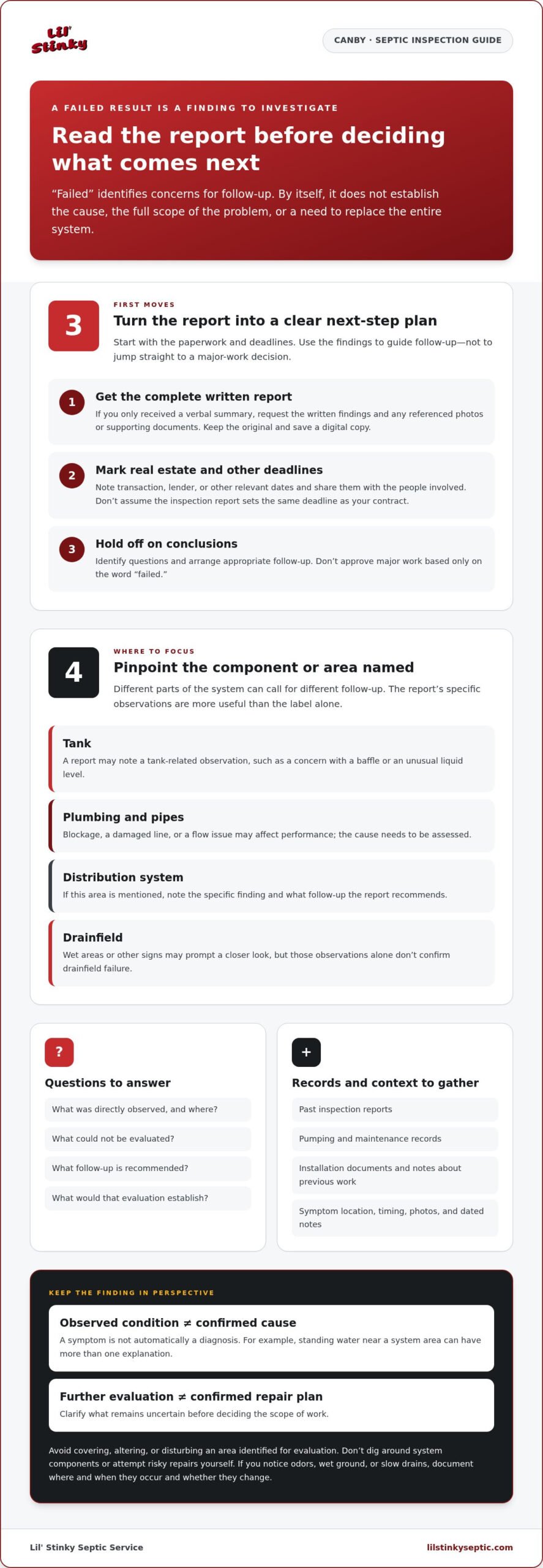
An unsatisfactory septic report is a finding to investigate, not an automatic decision to replace the whole system. First, understand what the inspector observed and what follow-up they recommend. A failed inspection means the report identifies concerns that need clarification, evaluation, or action. It doesn’t, by itself, explain the full scope of the problem.
If you’re searching “failed septic inspection what next Canby,” begin with the paperwork and any deadlines. Keep the report in its original form, save a digital copy, and gather related inspection, pumping, and maintenance records. These documents can help a septic professional understand the system’s history and distinguish a new observation from a concern noted before.
- Get the complete written report. If you received only a verbal summary, request the written findings and any referenced photos or supporting documents.
- Mark important dates. Note real estate, lender, or other transaction deadlines, and share them with the people involved in the sale. Don’t assume a report sets the same deadline as your contract.
- Hold off on conclusions. Use the report to identify questions and arrange appropriate follow-up. Don’t approve major work based only on the word “failed.”
Which parts of the septic inspection report should you read first?
Start with the findings, observations, recommendations, and stated limitations. Note which component or area each item refers to, and distinguish what the inspector directly observed from what they think it may mean. A symptom, such as standing water near a system area, isn’t the same as a confirmed cause. For background on how a tank, pipes, and drainfield function together, see this Septic system overview.
Highlight unfamiliar terms and write down questions: What was observed? Where? What couldn’t be evaluated? What follow-up is recommended, and what would that evaluation establish? Clear answers help show whether the concern relates to one component or a broader system issue. Keep your notes with the report so details don’t get lost between conversations.
What should you avoid doing before the findings are clear?
Don’t assume every failed result means the entire system must be replaced. The report may identify a concern that needs more investigation before anyone can determine its scope. At the same time, don’t cover, alter, or disturb an area the inspector identified for further evaluation. Changing site conditions can make it harder to assess what was originally observed.
If you notice odors, wet ground, slow drains, or another visible symptom, record where and when it occurs and whether it changes. Photos and dated notes can give a qualified septic professional useful context. Avoid risky repairs or digging around system components yourself. A calm, documented first response helps you understand the report and choose appropriate next steps.
What a failed septic inspection in Canby may reveal
The word “failed” can sound final, but the report’s specific observations are more useful than the label. It may describe an issue with one component, note a symptom that needs further investigation, or explain that part of the system couldn’t be evaluated. The finding alone doesn’t establish the cause or the full scope of work.
A septic inspection report identifies concerns that need follow-up; it doesn’t, by itself, identify the final remedy. An observed condition isn’t always a diagnosis, and a recommendation for further evaluation isn’t the same as a confirmed repair plan.
How do tank, plumbing, and drainfield findings differ?
The tank holds wastewater so solids can settle and treatment can begin. A report may note a tank-related observation, such as a concern with a baffle or an unusual liquid level. Plumbing and pipe concerns, by contrast, involve wastewater moving to or from the tank. A blockage, damaged line, or flow issue may affect performance, but the cause needs to be assessed.
The drainfield receives wastewater after it leaves the tank and disperses it into the ground. A report may describe wet areas or other signs that prompt a closer look, but those observations alone don’t confirm a drainfield failure. The EPA guide to septic system function explains how the tank and drainfield work together. This can help you understand why the location of a finding matters.
Possible causes depend on the observation and the system. A flow concern, for instance, could involve a line, while a wet area could have more than one explanation. Treat these as possibilities, not diagnoses. Ask what was directly observed, what remains uncertain, and what evaluation could clarify the issue. That’s the practical answer to “failed septic inspection what next Canby”: move from a broad label to a specific, understandable finding.
Which local details can help explain the report?
Share the property’s location, available system records, and known service history with the professional reviewing the findings. Past inspection reports, pumping records, installation documents, and notes about previous work may provide useful context. Include when a symptom appeared and where it occurs, but don’t assume one detail proves the cause.
Procedures and paperwork can depend on the work being considered. Before taking steps involving county records, permits, or system changes, confirm the current process with Oregon DEQ or Clackamas County. Lil’ Stinky Septic Service provides local septic inspections and written reports to help Canby property owners understand system findings and plan informed follow-up.
Failed septic inspection during a Canby home sale: understand your options
A failed septic inspection can add pressure to a home sale, but it doesn’t automatically decide who pays for work or whether the transaction can proceed. The answer may depend on the sale contract, the circumstances, and applicable rules. Share the written report with the relevant transaction professionals, such as your real estate agent, and ask a real estate or legal professional how the contract applies. Avoid relying on assumptions or informal promises.
If you’re asking “failed septic inspection what next Canby” during a sale, focus on decisions the parties can clarify and document. Depending on the findings and the agreement, possible paths may include further evaluation, a repair plan, negotiated terms, or another course acceptable to the parties. These are options to discuss, not guaranteed outcomes. A clear understanding of the concern keeps the conversation grounded in facts rather than the word “failed” alone.
Who is responsible for septic repairs after a failed inspection?
Responsibility may depend on the contract’s wording and the transaction’s circumstances. Don’t assume Oregon law automatically assigns septic repair costs to the buyer or seller. Review relevant terms and deadlines with the appropriate real estate or legal professional before agreeing to work, a credit, or a change to the sale terms. Keep technical findings separate from questions about contractual obligations.
If the parties need more information before deciding, they can discuss a focused evaluation of the reported concern. If a repair is proposed, address its scope and timing through the transaction process rather than relying on an unclear verbal understanding. Make sure each party knows what has been agreed to and what remains unresolved.
What documents help keep the sale discussion clear?
Keep key records together and share relevant copies with the professionals helping manage the transaction. A complete file helps clarify which finding is being discussed, what follow-up has occurred, and which decisions remain pending.
- The written inspection report and any available system or service records.
- Written evaluations, repair proposals, and documentation of completed work.
- Notes of agreed next steps, responsible parties, and transaction dates or deadlines.
Keep updates in writing, especially if a new evaluation changes what the parties understand about the concern. For broader context on ongoing septic care, the EPA SepticSmart program offers maintenance information that may help owners think about system care beyond the immediate sale discussion. Follow the transaction’s agreed process for sharing new documents or decisions.
A practical repair and follow-up plan after a failed septic inspection
Once you understand what the report says, turn it into a short action plan. Separate confirmed observations from questions that still need answers. Connect each proposed step to a specific finding, rather than choosing a remedy based on the word “failed.” Pumping may remove accumulated contents from a septic tank, but it won’t resolve every possible concern involving plumbing, pipes, distribution, or drainfield performance. The right response depends on what further evaluation shows.
- List each finding. Note the report’s wording, the component or area involved, and any recommended follow-up.
- Clarify what’s unknown. Ask a qualified septic professional what evaluation could explain each concern and what it would establish.
- Match action to evidence. Consider pumping, further testing, repair planning, or other work only when it addresses a reported finding or professional evaluation.
- Verify project requirements. Before work begins, confirm with Clackamas County or the appropriate agency whether permits, approvals, or reporting apply to the specific project.
- Keep a complete record. Save written evaluations, the agreed scope of work, and documentation describing what was completed.
How should you move from report findings to a repair decision?
Ask that each proposed action be tied to a particular observation or evaluation result. If a report notes a concern in one area, a proposal should explain how its scope addresses it. Further testing may make sense when the cause or extent isn’t clear. Repair or replacement decisions should follow site findings, not guesswork. Request written documentation describing the work and its scope.
A written plan also separates what’s known from what remains to be assessed. For example, a recommendation to investigate a pipe issue doesn’t establish that the drainfield needs work. If replacement is being considered, understand what findings support it and what alternatives, if any, have been evaluated. The goal is to decide based on the system’s condition and documented evidence, not to steer toward a particular outcome.
When might another inspection or report be needed?
Follow-up depends on the original findings, any evaluation or work completed, and the report’s purpose. A transaction or agency may require specific documentation, so confirm current Oregon DEQ and Clackamas County procedures rather than assuming one report or receipt will meet every need. Keep updated reports, work records, and related correspondence with the property’s system file.
That file helps transaction parties understand what changed and gives future professionals useful context. If the report leaves questions about the system’s condition, Lil’ Stinky Septic Service provides DEQ-certified inspections with written reports, along with pumping and system work. Arrange a septic inspection to get professional findings that can inform your follow-up plan.
Get local help with a failed septic inspection in Canby
A confusing inspection report is easier to act on when you can discuss the findings with a septic professional who understands the system and local context. Lil’ Stinky Septic Service is based in Canby and serves Clackamas County. The company has more than 25 years of experience and provides DEQ-certified septic inspections with written reports, septic tank pumping, installation, and ATT systems.
Professional evaluation can help you understand what the report describes and what additional assessment may clarify. It can’t guarantee a particular repair or outcome, but it can give you clearer information for your decisions. Lil’ Stinky Septic Service is licensed under Oregon contractor license CCB #189693.
What can a local septic specialist help you understand?
A septic specialist can review inspection observations, explain system terms in plain language, and discuss what further evaluation may address. If a finding relates to tank contents or service history, pumping may be relevant, but pumping doesn’t resolve every possible system concern. Installation or ATT system work should be considered only after the property’s needs and reported findings have been evaluated.
Bring the specific concern forward rather than asking for a broad fix based only on the word “failed.” If the report identifies a concern in a particular area, ask what information is available and what next evaluation could establish. A written inspection report helps keep the conversation focused and creates a record of the findings and recommendations.
What information should you have ready when requesting help?
Gather documents and details that give the professional a useful starting point. Preparation helps make the conversation more specific, especially if you’re working with a transaction deadline or following up on earlier service.
- The written report: Share the complete findings, recommendations, and any attached photos or notes.
- Property location and timing: Provide the Canby-area property address and any relevant sale or transaction deadlines.
- System history: Describe known symptoms, previous service or pumping, and work already completed.
- Questions and follow-up: Identify unclear findings and keep written evaluations and next-step records with the property file.
After the evaluation, use the written findings to guide decisions and explain the system’s status to other involved parties. Keep the report, service records, and documentation of completed work together. A complete record helps prevent confusion about what was observed, assessed, and done.
If you’re sorting through failed septic inspection what next Canby, share your report with Lil’ Stinky Septic Service to discuss a practical next step. Request help with your septic inspection findings.
Make your next septic decision with confidence
A septic inspection can be a turning point for a property, but it doesn’t have to leave you stuck. Make the next decision one you can clearly explain: what information supports it, what work or evaluation it involves, and what records you’ll keep. That clarity can help you move forward whether you’re staying in the home or preparing for a change in ownership.
If you’re still asking “failed septic inspection what next Canby,” bring your report and unresolved questions to a local septic specialist. A clear discussion can help you understand the information in front of you and consider a practical path without assuming the outcome in advance. Talk with Lil’ Stinky Septic Service about your inspection findings and take the next step with a better understanding of your options.
You don’t need to solve every question at once. Start with the facts, get the guidance you need, and move ahead one informed decision at a time.
Frequently Asked Questions
Does a failed septic inspection mean the entire system must be replaced?
No. A failed result doesn’t, by itself, establish that the whole system needs replacement. It may call for clarification or additional assessment before anyone can determine the scope of work. For example, a report may identify a limited concern but leave its cause unresolved. Ask what evidence supports a replacement recommendation and whether further evaluation could define the issue more precisely. Make decisions from documented findings, not the label alone.
Can pumping fix a failed septic inspection?
Sometimes pumping addresses a tank-related concern, but it won’t resolve every issue an inspection may identify. A tank that needs service is different from a concern involving a pipe, distribution component, or drainfield. If the report mentions a problem beyond the tank, pumping alone may not explain what’s causing it. Use the inspection findings and service history to decide whether pumping is relevant, then assess any remaining concerns separately.
Who is responsible for septic repairs after a failed inspection in Oregon?
Responsibility depends on the sale contract and the circumstances, so the inspection result alone can’t answer the question. Don’t assume Oregon law automatically assigns repair costs to the buyer or seller. Review the agreement’s relevant terms and deadlines with your real estate agent or a legal professional. If the parties reach a new arrangement, document it through the appropriate transaction process rather than relying on a verbal understanding.
Can a home sale continue after a septic inspection fails?
Possibly, but the inspection result alone can’t determine whether a particular sale will proceed. The contract, the parties’ decisions, and any applicable transaction requirements matter. Buyers and sellers may discuss getting more information, planning work, or agreeing on other terms. Share the report with the professionals handling the sale and clarify how proposed next steps relate to the contract. Don’t treat an inspection finding as a guaranteed cancellation or a guaranteed path to closing.
How long can septic repairs and follow-up inspection take in Canby?
There isn’t one dependable timeline for every Canby property. The schedule can depend on the evaluation findings, the type and scope of work, whether permits or approvals apply, and when follow-up can be arranged. Ask for a project-specific sequence that separates evaluation, required approvals, work, and documentation. If a sale is underway, share its deadlines early so the people managing the transaction can account for the work plan.
Do I need another septic inspection after repairs?
Not in every situation. Whether follow-up is needed depends on the findings, the work completed, and the inspection’s purpose. A buyer, lender, transaction agreement, or agency may have its own documentation requirements. Before assuming the repair invoice is sufficient, confirm relevant Oregon DEQ or Clackamas County procedures and clarify what records the transaction requires. Keep final work documentation with the inspection report for future reference.
What should I do if the inspection report is unclear?
Ask for clarification before deciding what work to authorize. Identify the specific phrase or observation you don’t understand, then ask what was observed, what couldn’t be evaluated, and what follow-up could answer the question. For “failed septic inspection what next Canby,” turn unclear language into a written question list. If the report includes photos, note which finding each image relates to so the discussion stays specific and useful.