
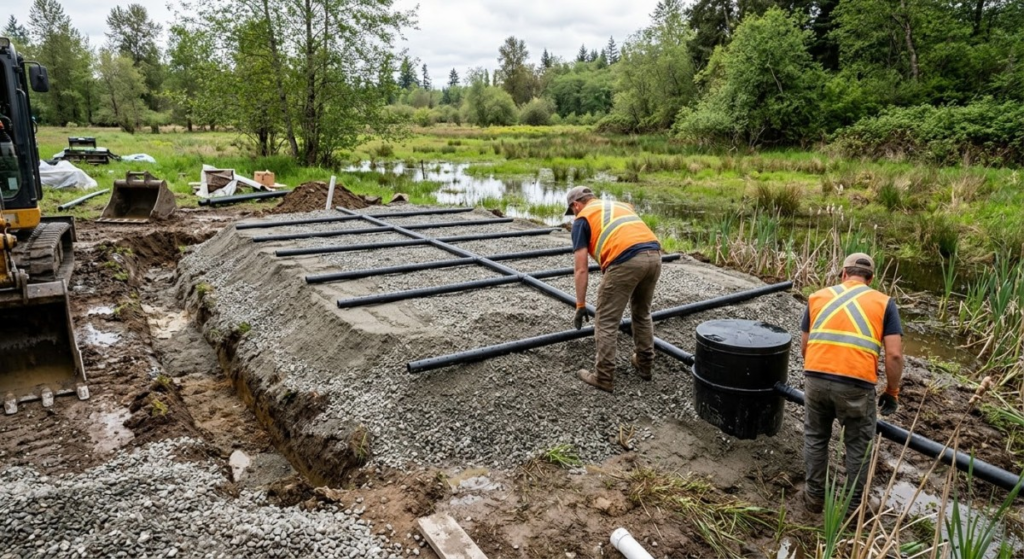
If your property sits above a high water table, installing a standard septic system is likely to fail — and that failure can mean sewage backup, contaminated groundwater, and serious regulatory problems. A high water table doesn’t mean you can’t have a functioning septic system; it means you need the right system for your site’s conditions. Many homeowners discover this challenge only after purchasing land or when a conventional system stops working.
We’ve put together a practical breakdown of why high water tables cause such significant problems for traditional septic systems and what modern solutions actually address those conditions effectively. The options available today go well beyond a standard drain field, and understanding them can save you from costly mistakes.
This article walks through the specific challenges a high water table creates, the advanced treatment technologies designed to handle those conditions, and answers to the most common questions we hear from homeowners and builders dealing with this exact situation.
Challenges of High Water Table Septic Systems
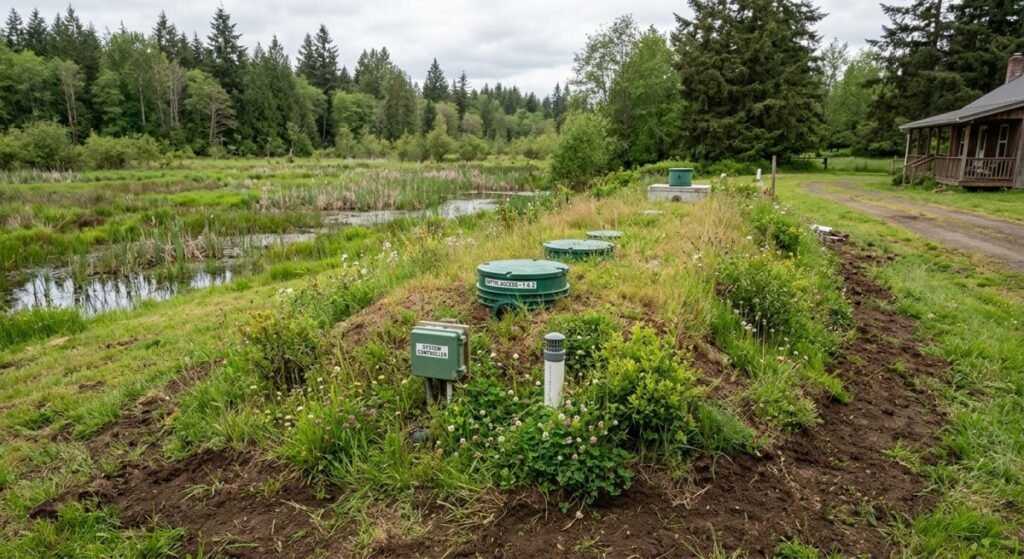
A high water table creates real, measurable problems for septic systems — from saturated drainfields to regulatory hurdles that can stop a build or sale in its tracks.
Understanding Water Table Levels and Septic Performance
A conventional septic system relies on soil to filter and absorb wastewater after it leaves the tank. The drainfield needs a minimum vertical separation — typically 24 to 36 inches — between the bottom of the trench and the seasonal high water table. When that buffer shrinks, the system loses its ability to treat effluent before it reaches groundwater.
The seasonal high water table is the key measurement here, not just what we see on a dry summer day. In many regions, that level can rise significantly in late winter and spring. A site that looks fine in August may have standing water just 12 inches below the surface in March.
Common Problems: Saturated Soil, Flooding, and Drainfield Failure
When the water table rises into the drainfield zone, the soil becomes saturated and can no longer absorb effluent. The result is a system that backs up, surfaces wastewater into the yard, or pushes untreated sewage toward nearby water sources.
Common signs of failure in high water table conditions include:
- Wet spots or odors above the drainfield after rain or snowmelt
- Sewage backup into the home during wet seasons
- Gurgling drains indicating the system is under pressure
- Persistently soggy ground that never fully dries out
These aren’t minor inconveniences. A failed drainfield can cost $10,000–$30,000+ to replace, depending on site conditions and local requirements.
Impact on Property Value and Local Regulations
A septic system that can’t meet setback requirements from the water table is a serious liability. Most state and county health departments require soil evaluations and percolation tests before approving any system installation or replacement. A failing or non-compliant system can trigger mandatory remediation before a property can be sold.
Lenders and title companies increasingly flag septic compliance issues during real estate transactions. A property with no viable path to a compliant system may be deemed unbuildable or underfundable — directly affecting its market value and financing eligibility.
Advanced Treatment Technology (ATT) Systems: The Best Solution for High Water Table Sites
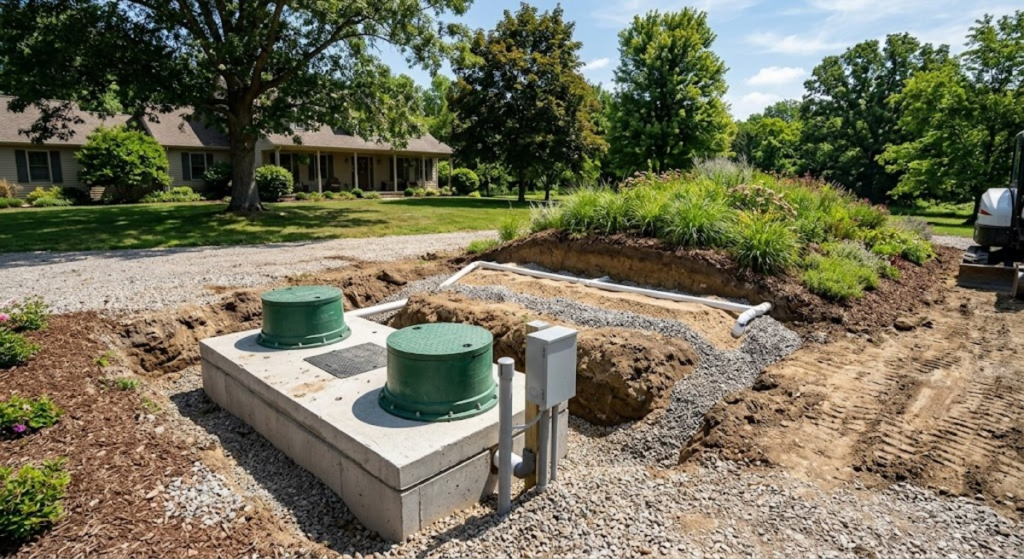
ATT systems treat wastewater to a higher standard before dispersal, which significantly reduces the soil absorption demand — making them a practical solution where conventional systems fail due to insufficient separation from groundwater.
How ATT Systems Overcome High Water Table Obstacles
Conventional septic systems rely on 36 to 60 inches of unsaturated soil below the drain field to filter effluent before it reaches groundwater. When the water table sits within that zone, there simply isn’t enough soil to do the job safely.
ATT systems address this directly by treating wastewater before it enters the soil. The effluent leaving an ATT system typically meets NSF/ANSI 245 standards, reducing biochemical oxygen demand (BOD) and total suspended solids (TSS) by over 90%.
Because the effluent is already highly treated, the required setback from groundwater drops significantly — in many jurisdictions, from 36 inches down to 12 inches or less. That difference is what makes installation viable on sites that would otherwise be unbuildable.
Key Benefits over Conventional Septic Design
| Feature | Conventional Septic | ATT System |
| Effluent quality | Primary treatment only | Secondary/tertiary treatment |
| Required soil separation | 36–60 inches | 12–24 inches (varies by state) |
| Suitable for high water table | No | Yes |
| Drain field footprint | Large | Reduced |
| Monitoring required | Minimal | Regular (typically quarterly) |
ATT systems also reduce the size of the drain field needed, which matters on lots where usable land is limited. Smaller footprint, better effluent quality, and greater siting flexibility are the core advantages in high water table conditions.
One important note: ATT systems do require ongoing maintenance contracts and periodic inspections. That’s a real cost to factor in, but it’s the trade-off for being able to build and use the property at all.
Real-World Applications: High Water Table Success Stories
A common scenario we encounter is a coastal or lakefront property where the seasonal high water table reaches within 18 inches of the surface. A conventional system is a non-starter. An ATT system — often paired with a drip irrigation dispersal field — allows treated effluent to be distributed at shallow depths without contaminating groundwater.
In low-lying rural areas with clay soils and poor drainage, we’ve seen ATT systems with shallow pressure-dosed beds successfully permitted where conventional systems were denied. The treated effluent quality satisfies regulators, and the reduced loading rate protects the surrounding environment.
Flood-prone properties near rivers or tidal zones present another challenge. Here, mound systems combined with ATT pretreatment elevate the dispersal area above the seasonal high water table while delivering effluent that’s already been significantly cleaned. This combination is one of the most reliable approaches we use for these sites.
Frequently Asked Questions
High water tables create specific permitting hurdles, system failures, and design constraints that homeowners and builders need to understand before choosing a septic solution. Knowing the difference between effluent quality standards, separation distance requirements, and maintenance obligations helps avoid costly mistakes.
What are the most reliable septic system options when groundwater sits close to the surface?
When the seasonal high water table is within 24 inches of the surface, conventional gravity-fed drainfields are typically not permittable. We see the best long-term results from mound systems, drip irrigation systems, and advanced treatment systems that produce highly treated effluent before dispersal.
Mound systems raise the drainfield above native soil, creating the vertical separation that regulations require. Drip irrigation systems distribute small, frequent doses of effluent across a wider area, reducing the hydraulic load at any single point. Both options are more reliable than a conventional trench system installed too close to groundwater.
How can I tell whether my property’s groundwater level will affect septic performance and permitting?
A licensed soil scientist or engineer will conduct a site evaluation that includes soil borings and observation of mottling — the gray and rust-colored streaks in soil that indicate where groundwater historically saturates the ground. Mottling is one of the primary indicators regulators use to determine the seasonal high water table, even if the soil appears dry on the day of testing.
Most states require a minimum vertical separation of 18 to 36 inches between the bottom of the drainfield and the observed mottling depth. If your site fails to meet that threshold, alternative system designs will be required.
Why do conventional drainfields struggle in saturated soils, and what failures should I watch for?
Conventional drainfields rely on unsaturated soil to absorb and treat wastewater through biological and physical filtration. When groundwater rises into the drainfield zone, that unsaturated treatment layer disappears, and effluent has nowhere to go.
The most visible signs of failure include:
- Surfacing effluent — wet, odorous patches of ground above or near the drainfield
- Slow drains or backups inside the home, especially after rain
- Lush green stripes of grass directly over drainfield lines
- High bacteria readings in nearby wells or surface water
These failures are not just nuisances. They are public health violations that can result in fines, mandatory repairs, and required system upgrades.
Which design features help a septic system work on small lots with limited separation distances?
Small lots with high water tables are the most restrictive combination in septic design. We look for systems that reduce the size of the dispersal area while still meeting treatment standards. Pressure-dosed systems, for example, distribute effluent more evenly than gravity systems and can reduce the required drainfield footprint.
Drip irrigation systems are particularly useful here because the distribution network can be routed around setback constraints and landscaping features. Regulators in many states also allow reduced setback distances when advanced treatment technology is used, because the effluent entering the soil is already partially or fully treated.
Proper setback distances from wells, property lines, and surface water are non-negotiable, but the type of system you use directly affects how much flexibility you have within those constraints.
How do advanced treatment systems improve effluent quality, and when are they required by regulators?
Advanced treatment technology (ATT) systems add one or more additional treatment stages beyond what a standard septic tank provides. A conventional septic tank produces what is called “septic-strength” or secondary effluent, which still contains significant levels of pathogens, nitrogen, and suspended solids. ATT systems treat wastewater to a much higher standard before it ever reaches the soil.
We work with systems that use aerobic treatment units, fixed-film reactors, or membrane bioreactors to reduce biochemical oxygen demand (BOD) and total suspended solids (TSS) by 90% or more compared to a standard tank. Some systems also provide nitrogen reduction, which is required in areas near sensitive waterways and aquifers.
Regulators require ATT systems in several specific situations:
- Seasonal high water table within 12 to 18 inches of the proposed dispersal area
- Small lots where drainfield sizing cannot meet standard separation requirements
- Failed perc tests combined with borderline soil conditions
- Proximity to protected water bodies, where nitrogen loading limits apply
ATT systems are not a luxury upgrade. In high water table environments, they are often the only permitted path forward.
What maintenance and operating costs should I expect for advanced treatment compared with a standard septic system?
A conventional septic system typically requires pumping every 3 to 5 years, with minimal other maintenance. An ATT system requires more frequent attention because it contains mechanical or electrical components that need inspection and servicing.
We generally see ATT maintenance agreements running between $300 and $600 per year, depending on the system type and local service provider rates. Most states that permit ATT systems require a service contract as a condition of the operating permit, so this is not optional.
Some additional costs to anticipate:
- Annual or semi-annual inspections by a certified service provider
- Replacement of air pumps or blower units every 5 to 10 years, typically $200 to $600 per unit
- Effluent filter cleaning every 6 to 12 months
- Electrical operating costs, which are modest — most ATT units draw between 50 and 150 watts continuously
The higher maintenance cost reflects a more complex system, but it also reflects a system that is actively treating wastewater to a higher standard. In high water table conditions, that performance difference is what keeps the system compliant and functioning over time.