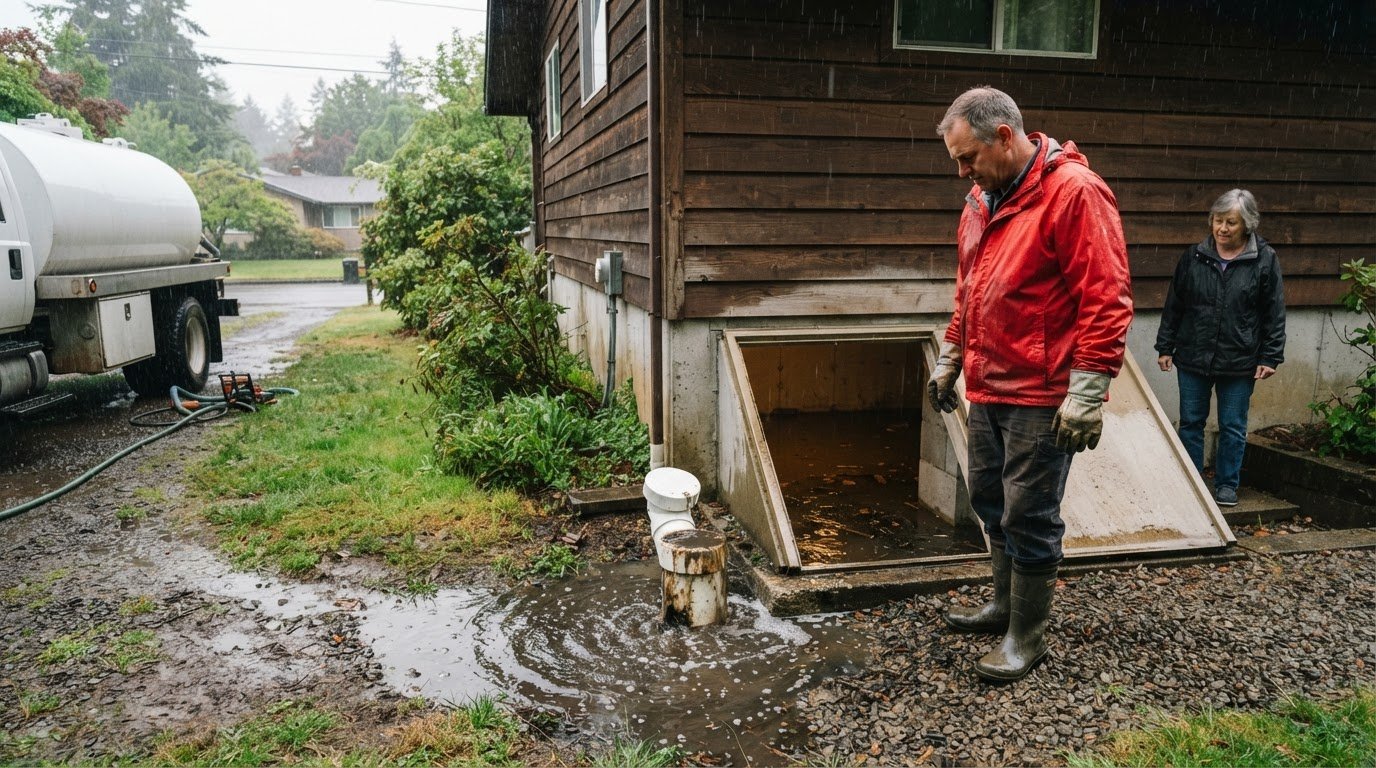
Maintaining a septic system in Oregon’s climate means protecting the drain field from runoff and heavy traffic, spreading water use through the week, and keeping up with inspections and pumping. The U.S. Environmental Protection Agency recommends inspecting septic systems at least every three years; household tanks are usually pumped every three to five years, according to the agency.
Oregon’s wet and dry seasons place different demands on a septic system. Heavy rain can saturate drain-field soil, while prolonged dry weather can harden it and affect how wastewater filters through the ground.
Good care starts with practical habits, not guesswork. This guide explains how to protect the drain field, plan routine maintenance, conserve water, and recognize signs such as persistent odors, standing water, or slow drains that may point to a weather-related problem.
Key Takeaways
- Keep vehicles, heavy equipment, and deep-rooted plants away from septic components to help protect pipes and drain-field soil.
- Use inspection and pumping records to plan routine care, and protect exposed septic pipes during freezing weather.
- Spread laundry and other water-heavy tasks throughout the week, and keep grease, wipes, and harsh chemicals out of septic drains.
- Pay attention to standing water, persistent odors, and slow drains, especially after heavy rain or prolonged dry weather.
Protecting the drain field from vehicles, roots, and construction
Protecting the drain field is central to maintaining a septic system in Oregon’s climate. Heavy rain can saturate the soil and limit its ability to absorb and filter wastewater, so keep excess runoff and pressure away from the field.
During the rainy season, direct roof gutters, downspouts, and surface runoff away from the septic tank and drain field. In winter, protect septic pipes during freezing weather, and keep vehicles and heavy equipment off septic components.
Soil type, slope, and groundwater affect how water moves through a property and drain field. Poor soils or high groundwater may call for a more complex system. On sloped properties, direct runoff away from the field.
Keeping Vehicles and Construction Off the Drain Field
Keep vehicles, heavy equipment, and livestock off the septic tank, drain lines, drain field, and replacement area. Their weight can compact wet soil or damage pipes, interfering with wastewater movement and treatment.
Before landscaping or construction, use permit records to locate septic components and the replacement area. Don’t dig, build, or park over these spots, and keep the replacement area clear in case the existing system fails.
Managing Roots Near the Drain Field
Keep trees and shrubs away from drain lines. Roots can enter and clog pipes or damage the field, disrupting wastewater distribution even when the tank is working properly.
Use grass over and near the drain field instead of planting trees or shrubs there. Grass covers the soil without the same risk of invasive roots and helps limit erosion.
Managing water at its source is another part of maintaining a septic system in Oregon’s climate. Direct roof, driveway, and patio runoff away from the tank and field, and don’t irrigate the drain field. Keep roof drains, footing drains, and sump-pump discharge from sending extra water toward septic components.
Heavy rain and flooding can leave surrounding soil unable to absorb and filter wastewater, increasing the risk of backups or overflow. Watch for slow sinks or toilets, persistent odors, standing water, or soggy ground near the field. Saturated soil can interfere with treatment and may lead to damage or repairs.
Routine inspections and year-round maintenance
Oregon property owners are responsible for operating and maintaining their septic systems. Owners of alternative treatment technology, commercial sand filter, recirculating gravel filter, or pressurized distribution systems must keep a service contract with a certified service provider for the life of the system.
Scheduling Inspections and Tank Pumping
Inspections assess a system’s condition, while pumping removes accumulated solids from the tank. The U.S. Environmental Protection Agency recommends inspecting septic systems at least every three years; tanks are usually pumped every three to five years.
Oregon homeowners are also advised to inspect tanks approximately every 5 to 7 years for solids accumulation. Pumping is advised when solids exceed 40 percent. Keep records of inspection findings and pumping dates so the next service reflects the tank’s actual condition.
Planning Preventive Maintenance
Track service, permits, repairs, and system changes to help prevent small problems from disrupting wastewater treatment. Keep these records together with the locations of the tank and drain field, so an inspector can review the system’s history.
Make the system accessible year-round: keep tank covers clear for inspection and pumping, and install risers if necessary. Protect septic pipes during freezing weather. When buying a home with an existing system, arrange a qualified inspection before relying on it.
Maintaining Alternative Septic Systems
Alternative systems use components such as pumps or mechanical equipment, so their maintenance needs differ from a basic tank and drain field. The U.S. Environmental Protection Agency recommends inspecting systems with electrical float switches, pumps, or mechanical components once a year.
Owners of alternative treatment technology, commercial sand filter, recirculating gravel filter, and pressurized distribution systems must maintain a service contract with a certified service provider for the system’s life. Keep service records with the contract to track repairs and recurring issues.
Understanding Homeowner Maintenance Requirements
Oregon’s framework for onsite wastewater system operation and maintenance is set out in Oregon Administrative Rules 340-71 and 340-73 and Oregon Revised Statutes 454 and 468B. Property owners remain responsible for operating and maintaining their systems.
Use permit records to identify the system type and replacement area, then keep inspection, pumping, and repair records current. These details help an inspector assess whether solids need pumping or components need attention, rather than relying on a calendar alone.

Water conservation and environmentally friendly products
During heavy rainfall around Canby, extra household water can add pressure to a septic system while drain-field soil is saturated. Manage indoor water use and keep materials that disrupt treatment out of household drains.
Conserving Water to Prevent System Overloading
Space household water use so wastewater doesn’t overwhelm the tank and drain field. During rainy periods, run full laundry and dishwasher loads, and spread them across the week instead of doing them all at once.
Fix dripping taps and running toilets promptly, since leaks add water without helping your household. Spread showers and other water-heavy tasks through the day. Regular pumping can help prevent system overload during heavy rain, while inspections can identify developing problems before they lead to costly repairs.
For Canby homeowners with private wells, remember that well-water testing and septic maintenance answer different questions. A water-quality test doesn’t show how much water a well can produce; a separate flow test measures sustainable gallons per minute. Keeping the results distinct helps you understand water quality without mistaking it for a septic-system evaluation.
Choosing What Goes Down the Drain
Responsible septic care means keeping materials out of drains if they can clog pipes or disrupt the bacteria that break down waste. Don’t flush wipes, paper towels, diapers, feminine hygiene products, dental floss, or cigarette butts.
Keep cooking grease, oil, paint, paint thinner, medicines, and chemical cleaners out of sinks and toilets. Large amounts of food waste can add excess solids to the tank, while bleach and other harsh chemicals can harm treatment bacteria. Additives aren’t a substitute for pumping and may harm the system.
Oregon has required permits for septic systems since 1972, and state requirements cover system alteration and repair. Septic repair or replacement work may involve permitting, so account for the applicable requirements before work begins.
Warning signs of weather-related septic problems
Canby homeowners may notice different septic symptoms after heavy rain or prolonged dry weather. Pay attention to changes inside the home and around the drain field, especially when they follow a shift in soil moisture.
Recognizing Septic System Failure
Slow sinks or toilets, sewage backing up into the lowest house drains, and persistent odors near the septic system are warning signs. Note which fixtures are affected and whether the problem began during or after a wet spell.
One slow drain may point to a clogged drain rather than a saturated field, but several slow fixtures after heavy rain deserve attention. Note when symptoms started and whether they change as conditions dry. These details help an inspector distinguish a drainage problem from a wider system issue.
Identifying Drain-Field Problems
Standing water, soft or soggy ground, and persistent odors near the drain field can signal that wastewater isn’t filtering properly. Around Canby, heavy rainfall can saturate the soil and limit its ability to absorb and treat wastewater.
Dry spells can bring different challenges. Soil around a field may harden and become less able to absorb wastewater. Changing moisture can also make clay soil swell and shrink, potentially cracking tanks or misaligning drain pipes. Soil conditions can affect system structures as well as filtration.
After a storm or a long dry period, observe the area from stable ground and note where water collects. Avoid walking or driving over soggy areas, and don’t dig to inspect buried parts. Record new odors, recurring backups, or standing water, then arrange a professional evaluation if symptoms continue. Specific observations help an inspector assess the issue.
If weather-related symptoms persist, schedule a septic system inspection to help identify the cause. Early evaluation can clarify whether the issue involves the drain field, a clogged drain, or another system component, and help determine what attention is needed next.
Lil’ Stinky Septic Service: Septic Tank Pumping
Lil’ Stinky Septic Service provides septic tank pumping and inspections for routine maintenance and warning signs. Pumping removes accumulated solids from the tank. If slow drains or odors keep recurring, an inspection can help identify whether the issue involves the tank or another system component.
Oregon’s rainy periods can put extra stress on a system. Keep service records and share changes you’ve noticed, such as symptoms that began after heavy rain. This context helps guide the next maintenance step. Pumping can remove solids from a tank, but it won’t fix every drain-field problem.
For help with septic tank pumping or an inspection, contact Lil’ Stinky Septic Service.
Make Septic Care Part of Your Home Routine
Seasons change, but your septic system remains essential to your home. Make maintaining a septic system in Oregon’s climate a household habit: know where key components are, keep maintenance information accessible, and agree on who will respond if something changes. Preparation can make decisions clearer when heavy rain or dry conditions put new pressure on the system.
Some concerns call for more than a change in household water use. An inspection can help identify what needs attention; pumping removes accumulated tank solids, while installation is relevant when a system needs replacement or a new setup. Lil’ Stinky Septic Service offers septic inspections, septic tank pumping, and septic installation.
Take the next step that fits your system’s condition. Contact Lil’ Stinky Septic Service to discuss septic care for your property, and keep moving forward with a practical plan.
Frequently Asked Questions
How often should a septic tank be inspected and pumped in Oregon?
The U.S. Environmental Protection Agency recommends inspections at least every three years, and says household tanks are usually pumped every three to five years. Oregon homeowners are also advised to inspect tanks approximately every 5 to 7 years; pumping is advised when solids exceed 40 percent. Pumping timing depends on solids accumulation, household size, and water use, so an inspection helps assess the tank’s condition.
How does Oregon’s wet climate affect septic drain fields and system maintenance?
Heavy rain can saturate drain-field soil and limit its ability to absorb and filter wastewater. Extra household water can add pressure while the soil is wet. During prolonged rainfall, spread water use out and consider how roof runoff moves across your property. Soil type and groundwater levels also affect how well a site disperses wastewater, so conditions vary between properties.