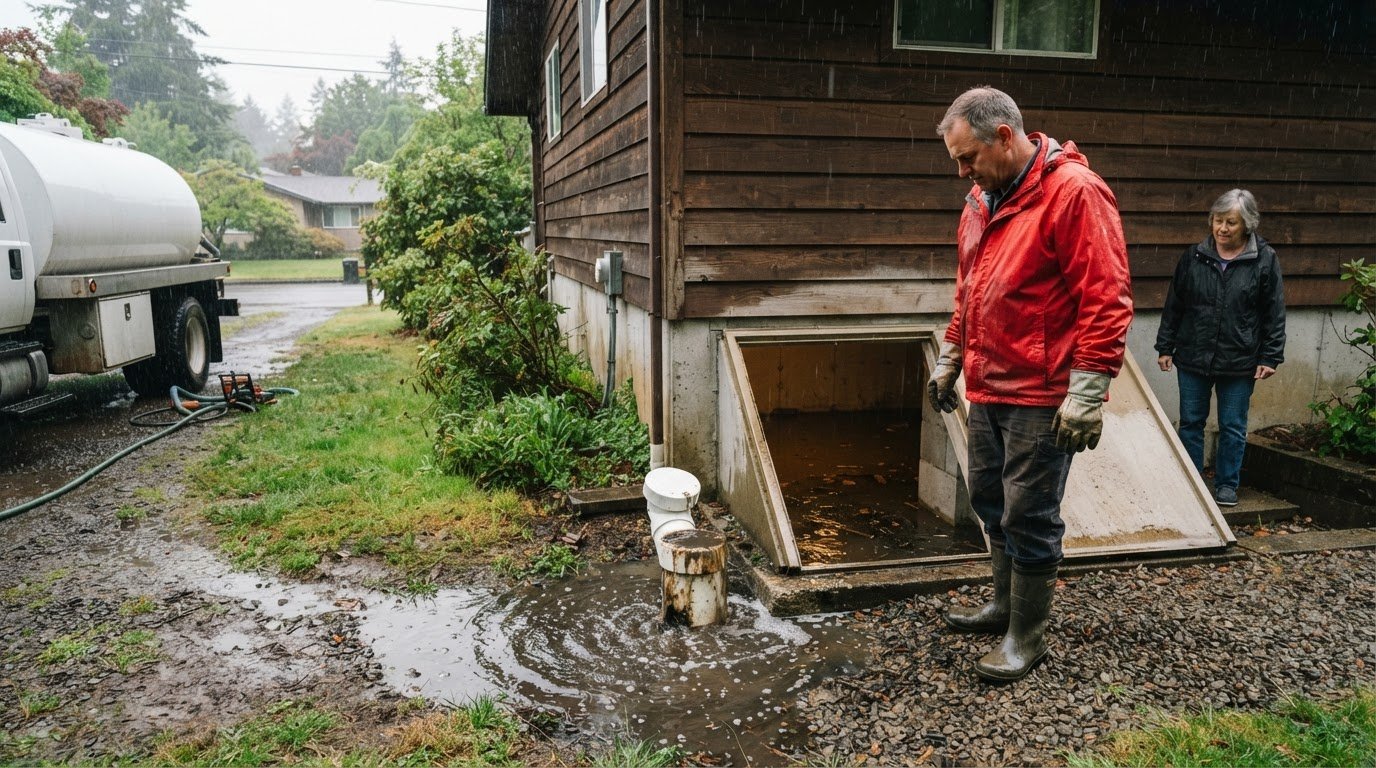
A septic failure calls for action, but the right next step depends on the work and the site. While Marion County septic system rules place permits under Oregon DEQ’s Onsite Sewage Disposal Rules, property owners near the Canby area frequently navigate these same standards when managing regional projects. Permits include exceptions for properties served by community sewer and systems reserved under Water Pollution Control Facilities rules. According to the Oregon Department of Environmental Quality, a failing septic system must be repaired immediately to eliminate the public health hazard under OAR 340-071-0215.
It’s understandable to want a clear answer before starting a repair or replacement. When servicing properties that impact local watersheds near Canby and Marion County, the permit path depends on whether work reconnects to an existing system, increases its flow, or involves a new system. Site evaluation and soil-test results also affect the design, including drainfield size.
This guide from Lil’ Stinky Septic Service explains how permits, site evaluations, soil testing, drainfield sizing, and Oregon rules fit together for regional property owners. You’ll learn what may affect approval and what to understand before work begins, so you can plan your next step with a clearer picture of the requirements.
Key Takeaways
- Learn which repair or replacement projects may need a permit and how the applicable rules shape the next steps.
- See how a site evaluation and soil test help assess whether undeveloped or partitioned property can support a septic system.
- Understand how soil conditions and loading rates influence drainfield sizing.
- Find out what to consider before work begins, from evaluating the property to planning a compliant system.
What happens during the site evaluation and soil test?
A site evaluation assesses whether a property is suitable for an onsite sewage system. Soil testing examines how the ground absorbs and treats wastewater. Together, these findings help determine whether the proposed system and drainfield suit the site.
In Marion County, the County Building Inspection office issues septic permits as a contract agent of the Oregon Department of Environmental Quality (DEQ). Oregon DEQ rules govern the local process, not Florida county health department procedures. First identify the project: a new system, replacement, or repair may require a permit. Properties served by community sewer and systems reserved under Water Pollution Control Facilities rules are exceptions to the county’s usual permit process.
A permit application provides the information needed to review covered septic work before it begins. Use the applicable Marion County forms and include the property and project details requested. The review determines which evaluations or inspections apply. Permit and site-evaluation fees are project costs, and the application type and required review affect the charges. Don’t apply Florida fee ranges to a Marion County project.
An inspection checks work against the permitted design at a required stage. For permitted repair installations, Oregon DEQ requires compliance with pre-cover inspection requirements. Arrange the inspection before covering the work so it can be reviewed at the proper stage. For other installation work, follow the permit’s inspection sequence and have the permitted work completed accordingly.
For existing systems, respond promptly to signs of failure. A failing septic system in Marion County must be repaired immediately to eliminate the public health hazard under OAR 340-071-0215. Pumping and inspection needs depend on system condition and accumulated solids; don’t assume one schedule fits every property. Review the system’s condition and address problems before they worsen.
Site evaluations for undeveloped or partitioned property
A site evaluation reviews land for a proposed onsite sewage system. For undeveloped property, map the intended building area, access points, slopes, and visible drainage features. Note existing structures and wastewater systems, too. These details help show how a system could fit the parcel, while soil testing helps assess how the ground can receive and treat sewage.
A partitioned property is land divided into separate parcels. Assess each proposed parcel in relation to its intended use and septic needs, rather than relying on the original property boundary. For example, a planned home far from suitable drainfield space may affect the layout. Marion County Building Inspection issues permits as a contract agent of Oregon DEQ, so its review follows Oregon’s onsite sewage framework.
Begin with the proposed project and its expected wastewater flow. Marion County recommends a Septic Site Evaluation when a proposed new system exceeds 50% of existing system capacity or 300 gallons per day. For reconnection to an existing system, a Septic Authorization may apply when the flow increase stays within 50% of capacity and no more than 300 gallons per day, whichever limit is less. These thresholds help distinguish a limited connection from a project needing evaluation.
Gather a parcel map, the planned building location, and records for any existing system before preparing the application. Then identify where soil testing and system placement need review. The findings can guide whether the proposed design fits the land or needs a different layout. For a practical next step, organize the parcel details before planning a septic evaluation; clear site information helps keep the review focused on the actual property and project.
Drainfield sizing and soil loading rates
A drainfield disperses treated wastewater into the soil. Its size must suit the expected wastewater flow and the soil’s capacity to receive it. A soil loading rate describes how much wastewater an area of soil can accept over time. These factors help guide drainfield design and permitting in Marion County.
Soil conditions matter because water moves through different soils at different rates. Site evaluations and soil tests provide information about the proposed drainfield area. The system design uses those findings alongside expected wastewater flow. For example, a household’s planned use affects how much sewage the system must handle. Design must account for that demand, not just the open space available.
Drainfield sizing means selecting the area and layout required for the proposed system. A higher expected flow may call for a different design than a lower flow, and soil that absorbs wastewater slowly can also affect the area or configuration. Show buildings, access routes, and other site features on the property plan. This helps reviewers assess whether the drainfield fits without conflicting with planned use.
Use these steps to understand the design basis:
- Identify the proposed system use and expected wastewater flow.
- Review the soil-test findings for the proposed drainfield area.
- Compare the planned layout with the usable space on the parcel.
- Submit the design through Marion County’s onsite sewage permitting process.
Marion County permits follow Oregon DEQ’s Onsite Sewage Disposal Rules, except for properties served by community sewer and systems reserved under Water Pollution Control Facilities rules. The permitted design connects site conditions, expected flow, and drainfield layout. Include the evaluation findings with the application so reviewers can assess how the proposed system fits the property.

Septic system rules and statutes
Marion County septic permits follow Oregon’s onsite sewage disposal rules, with defined exceptions. These rules guide system review and inspection, as well as the process for handling system failures.
Rules Near Wells and Waterways
Separation rules set siting requirements to protect water sources from onsite sewage. When planning a Marion County project, consider the proposed system’s location alongside soil and other site conditions.
There are no Marion County well, waterway, wetland, or flood-zone setback figures in the applicable facts here, so don’t apply Florida distances to Oregon property. Include wells, waterways, wetlands, and flood-prone areas on the site plan. That gives the review a clear picture of nearby features and the proposed system location.
Violations, Penalties, and Risks
A septic violation involves a system or project that fails to meet applicable permit requirements. Marion County issues permits under Oregon DEQ’s Onsite Sewage Disposal Rules, except for properties served by community sewer and systems reserved under Water Pollution Control Facilities rules. Systems with flows over 2,500 gallons per day require permitting through Oregon DEQ under its Water Pollution Control Facilities program.
A failing system creates a public health hazard that requires immediate repair under OAR 340-071-0215. The available Marion County rule facts don’t provide a penalty amount, so focus first on correcting the failure and following the permit process. After permitted repair installation, the installer must meet pre-cover inspection requirements, according to the Oregon Department of Environmental Quality.
Florida inspection options are separate from Oregon’s Marion County process. Starting July 1, 2022, owners or contractors with owner authorization have the option to hire a private provider to perform inspections of OSTDS, according to the Florida Department of Health. This Florida provision does not establish inspection rules for Marion County, Oregon.
If a failing system needs evaluation, arrange a septic inspection to identify the issue and understand the next steps.
Lil’ Stinky Septic Service: Septic Tank Pumping
Lil’ Stinky Septic Service provides Septic Pumping when your tank needs pumping and Septic Inspections when you need a clearer picture of system condition. Pumping supports routine care; an inspection can help assess a system when planning work or addressing concerns.
For a new system, Lil’ Stinky Septic Service also provides Septic Installations and Alternative Treatment Systems (ATT). The right service depends on the task: pumping addresses the tank, an inspection assesses the system, and installation is for a new-system project. Distinguishing these needs helps you choose a practical next step for your Marion County project.
Contact Lil’ Stinky Septic Service to discuss your septic needs, or visit lilstinkyseptic.com.
Make Your Next Septic Decision With Confidence
Before changing a property or scheduling work, clarify what you need: assessing system condition, planning an installation, or arranging routine tank care. A focused starting point helps organize project conversations and records. Keep relevant property documents together and note planned site changes. Those details help frame the next step around your project rather than assumptions.
Use Marion County septic system rules to prepare for a project, while keeping in mind that specific requirements depend on the work and property. Lil’ Stinky Septic Service provides Septic Pumping, Septic Inspections, and Septic Installations. Choose the service that fits your project, then discuss your situation and the information you’ve gathered.
Contact Lil’ Stinky Septic Service to discuss your septic needs and take the next step with a clearer plan.
Frequently Asked Questions
Do I need a permit to repair or replace a septic tank in Florida?
Yes. Florida Statutes Section 381.0065 requires a permit before constructing, repairing, modifying, abandoning, or operating an onsite sewage treatment and disposal system. The rule includes repairs, so don’t assume a tank replacement is exempt. The permitting agency depends on the county’s arrangement. This answer is about Florida, not Marion County, Oregon, where a different state’s rules apply.
Who issues septic permits in Marion County?
For Marion County, Oregon, Marion County Building Inspection issues septic permits and acts as a contract agent of the Oregon Department of Environmental Quality. Oregon DEQ’s Onsite Sewage Disposal Rules govern the county’s permitting process. A system with flows over 2,500 gallons per day falls under Oregon DEQ’s Water Pollution Control Facilities program instead, so the expected flow can affect which permit process applies.
Will my system have to be an advanced nutrient-reducing system?
Don’t apply Florida’s nutrient-reduction requirements to a property in Marion County, Oregon. Oregon’s onsite sewage rules govern permitting, and site conditions and intended use shape the design. An Alternative Treatment System may suit a shallow water table, small lot, or poor soil conditions. Advanced treatment is not right for every property; the site and project determine the design.
Which Marion County does the search refer to, and which agency regulates septic systems there?
This article covers Marion County, Oregon, not Marion County, Florida. In Oregon, Marion County Building Inspection issues local septic permits as a contract agent of the Oregon Department of Environmental Quality. Oregon DEQ rules govern onsite sewage systems, while higher-flow systems may fall under its Water Pollution Control Facilities program. Lil’ Stinky Septic Service is based in Canby, Oregon, and serves the surrounding area.
What permits are required to install, repair, or replace a septic system in Marion County?
Under Marion County septic system rules, covered onsite system work follows the county permit process under Oregon DEQ’s Onsite Sewage Disposal Rules. A limited flow increase when reconnecting to an existing system may qualify for Septic Authorization, subject to county capacity and daily-flow thresholds. Properties served by community sewer and systems reserved under Water Pollution Control Facilities rules are exceptions to the usual county permit process.
What are Marion County’s septic system site evaluation and soil testing requirements?
The Marion County septic system rules use site evaluation to assess whether a parcel can support the proposed system; soil testing helps assess the ground for wastewater treatment and dispersal. For a new system, Marion County recommends a Septic Site Evaluation when proposed flow exceeds 50% of existing system capacity or 300 gallons per day. Parcel layout, intended use, soil findings, and proposed flow inform the evaluation and design.