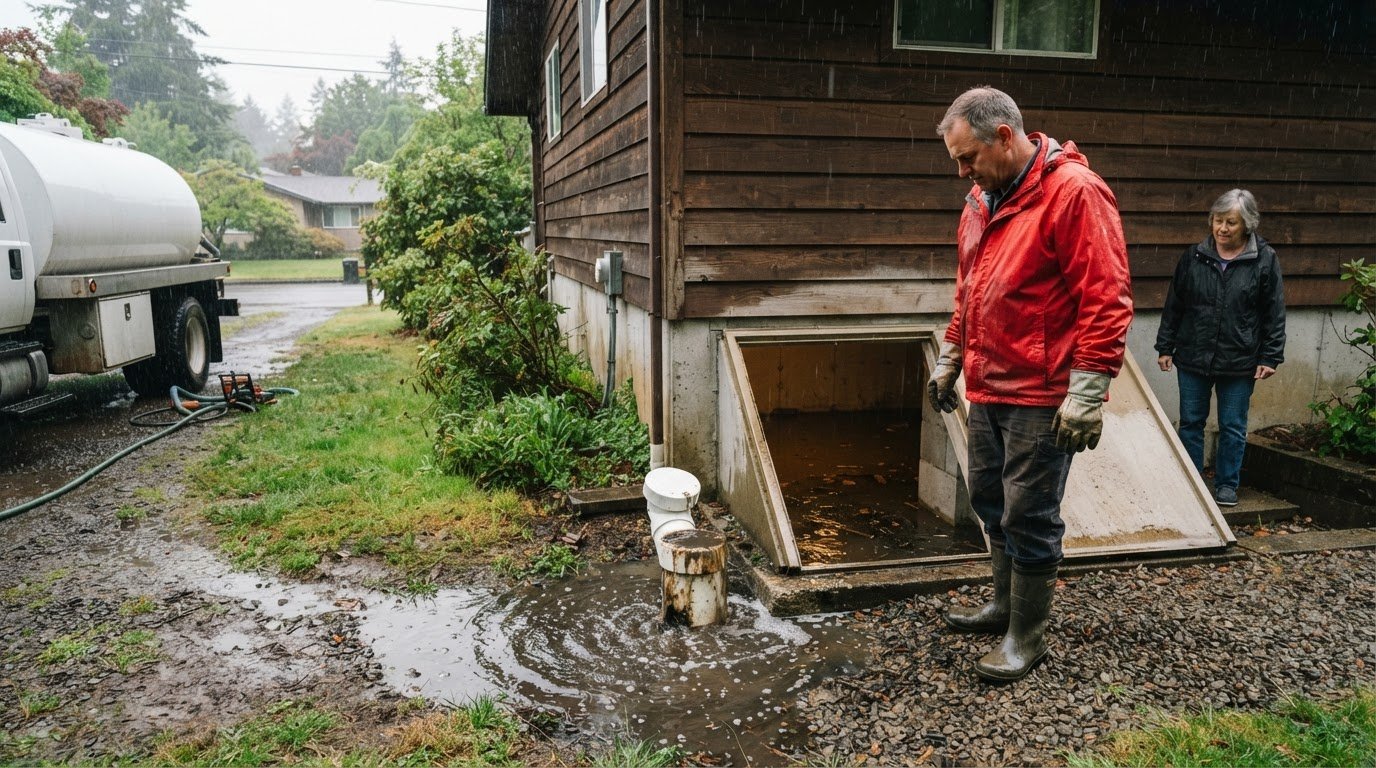
A standard home inspection doesn’t evaluate a property’s septic system, so a Multnomah County septic inspection is a separate step for understanding the system’s condition. It looks at key parts of the system, including the tank and drain field, and can help identify concerns that may need attention. A Septic Review Certification involves documentation such as site plans, septic component maps, and floor plans, and may include a site visit.
It’s reasonable to want a clear picture of what’s working, what needs attention, and what paperwork applies before making decisions about a property. Septic systems are out of sight, but a focused inspection helps make their condition easier to understand.
This guide explains what a septic inspection covers, how tank access and drain field checks work, and what to expect from the inspection process. You’ll also learn how requirements can vary by project in Multnomah County, so you can identify a practical next step for your situation.
Key Takeaways
- A septic inspection is a separate assessment from a standard home inspection, and Oregon doesn’t require one for every real estate sale.
- Tank access, pumping needs, and baffle condition are important parts of understanding how the system is functioning.
- For a dwelling with 4 or fewer bedrooms, the septic tank must have a capacity of at least 1,000 gallons, according to the Oregon Secretary of State.
- Learn which drain field warning signs matter and what a load test can help reveal about system performance.
What is a septic system inspection?
A septic inspection evaluates a septic system separately because a standard home inspection doesn’t assess it. To schedule county-permitted work, follow Portland’s inspection schedule: east-county inspections are Wednesday and Friday, and west-county inspections are Tuesday and Thursday; find septic records by searching the property’s parcel number and selecting “Department of Environmental Quality, Onsite Septic” and “Any Word.”
Inspections During Home Purchases
Before buying a home, arrange a septic inspection separately from the general property inspection. Oregon doesn’t require an inspection for every real estate sale, but a separate assessment can help buyers understand the system’s condition before deciding how to proceed. Review the findings for maintenance, repair, or replacement concerns, and compare available installation records with the system’s visible components.
A clear report gives buyers practical information to discuss during a transaction. For example, a concern involving the tank or drain field may affect repair planning and negotiations, but an inspection does not determine the property’s value.
Inspections During Home Sales
Sellers can arrange an inspection before listing to learn whether the septic system needs attention. Keep the written findings together with available maintenance and installation records so buyers can understand the system’s history. If the report identifies a repair need, both parties have a specific issue to discuss instead of uncertainty about an underground system.
Use the results to plan disclosures and answer buyer questions with documented information. An inspection can inform a sale, but it doesn’t guarantee a higher selling price or remove the need to address identified concerns.
County Inspection Requirements
Oregon doesn’t require a septic inspection for every property sale. In Multnomah County, however, an evaluation is required when a septic system was installed more than 5 years ago and has never been used. Portland permits and inspects septic systems throughout the county under an intergovernmental agreement with Multnomah County and the Oregon Department of Environmental Quality.
For records, use the property’s parcel number, also called a map ID or map and tax lot. Tax lot information is available through ORMap; then search septic records using the jurisdiction and search-by options noted above. For county inspection scheduling, Portland sets east-county days on Wednesday and Friday, and west-county days on Tuesday and Thursday.
Tank access, pumping, and baffle condition
A tank inspection examines access, capacity, visible condition, and components that help wastewater flow correctly. The EPA recommends septic system inspections every one to three years, while pumping follows a separate maintenance schedule.
Tank Access and Burial Depth
Start by locating the tank and determining whether its access lids are exposed or buried. If the tank is underground, burial depth affects how easily an inspector can reach the lids and examine the interior. Keep the tank location and any available installation records handy to help distinguish the tank from nearby drain field components.
Capacity also matters. For a dwelling with 4 or fewer bedrooms, the septic tank must have a capacity of at least 1,000 gallons, according to the Oregon Secretary of State. Compare the recorded tank size with the home’s bedroom count, and note any mismatch for follow-up.
Baffles, Filters, and Tank Condition
During an inspection, check for visible damage or deterioration in the tank and its inlet and outlet baffles. Baffles direct wastewater through the tank, while an effluent filter helps keep solids from flowing toward the drain field. A damaged, missing, or obstructed component may need closer review or repair.
Ask for findings that identify which components were accessible and their apparent condition. If the tank is pumped, its interior can be examined more clearly. Keep the written record to track changes between inspections and support maintenance decisions.
The EPA recommends pumping a septic tank every three to five years. Actual pumping needs depend on household use, tank size, and how quickly solids accumulate, so use inspection findings to guide timing rather than treating pumping and inspection as the same task. If you’re planning routine maintenance, review these septic tank maintenance details alongside the tank’s condition and service history.

Drain field warning signs and load testing
A septic system moves wastewater from the house into a tank, then sends liquid effluent to the drain field. The tank holds solids while the drain field disperses liquid into the surrounding soil. Because each component affects the next, recurring household symptoms may point to a problem beyond a single drain. A system evaluation considers how the parts work together, not just whether wastewater leaves one fixture.
Watch for slow drains across several fixtures, repeated backups, sewage odors, or unusually wet ground over the drain field. One slow sink may have a local blockage, while several slow drains or recurring backups can suggest a larger system issue. Note when symptoms began and whether multiple fixtures are affected. This timeline helps an inspector assess whether the issue may involve household plumbing, the tank, or the drain field.
Wet weather can change what you observe. Heavy or prolonged rain can saturate soil around a drain field and make it harder for wastewater to disperse. If the yard becomes wet or odors appear after rainfall, note where they occur and whether they persist as conditions change. Don’t treat one rainy-day observation as a complete system evaluation; the inspection should consider the site and other components together.
A load test evaluates how the system responds when water enters it during an inspection. The inspector observes whether wastewater moves through the system and whether warning signs appear during use. A load test adds useful information, but it doesn’t replace checking the drain field and surrounding ground. Share examples, such as a backup after laundry or slow drains after several showers, to help connect household use with observed performance.
Keep people and pets away from sewage that surfaces in the yard. Record its location, the weather, and household symptoms, then arrange a professional evaluation. Clear observations help distinguish a recurring drain problem from signs involving the septic tank or drain field.
Does Multnomah County require septic system inspections?
Oregon doesn’t require a septic inspection for every real estate sale. In Multnomah County, an evaluation is required if a system was installed more than 5 years ago and has never been used. Portland permits and inspects septic systems throughout the county under an intergovernmental agreement with Multnomah County and the Oregon Department of Environmental Quality. That requirement is different from a buyer choosing an inspection for a home purchase.
Requirements also depend on the work planned. A new septic system on a vacant parcel qualifies as new construction. So does work that increases the existing system’s design capacity by more than 300 gallons per day. An alteration qualifies as new construction when it increases existing design capacity by more than 50%. New construction and drain field repair or alteration require an approved Site Evaluation Report.
Before installation, alteration, or repair begins, Multnomah County requires permits and fees. The permit path varies for a minor repair, major repair, alteration, or new system, so identify the project type first. A septic permit plan review is expected to take 20 working days. Respond to a permit checksheet promptly: an application may be cancelled if the applicant doesn’t respond within 90 days.
For a proposed project, start by identifying the work and gathering the property’s septic records. That helps clarify whether the next step is a system evaluation, a permit, or both. If you want an inspection of your system’s condition or need professional guidance for your property, Lil’ Stinky Septic Service can help you understand local requirements and use the findings to plan your next steps.
Lil’ Stinky Septic Service: Septic Tank Pumping
Lil’ Stinky Septic Service provides septic tank pumping and inspections to help you act on inspection findings. Turn to these services when routine maintenance is due or an inspection identifies a need to assess the tank further. If the property requires a new or altered system, septic installation and ATT systems are also available.
Use the inspection report to guide your next step. Pumping removes accumulated tank contents, while an inspection assesses system condition. If the report points to a larger system project, installation may be more relevant than routine maintenance. Match the service to the issue identified and keep the findings with your property records.
Contact Lil’ Stinky Septic Service to discuss your septic system needs.
Turn Inspection Findings Into a Clear Next Step
Use your inspection report as a working document, not just a snapshot of the property. Keep it with septic records, note completed maintenance, and record changes such as recurring odors or slow drains. This creates a useful history for future decisions and helps keep property details organized through ownership changes.
If a finding needs action, focus on the specific component and recommended work. A Multnomah County septic inspection can clarify the system’s condition, but the next step should follow the report rather than assumptions about what might be wrong. Keep questions tied to the observations, and track follow-up work alongside the report.
Lil’ Stinky Septic Service offers septic inspections, septic tank pumping, and septic installation to support different system needs. If you’re ready to discuss your situation, contact Lil’ Stinky Septic Service. A clear record and a practical next step can help you move forward with confidence.
Frequently Asked Questions
Can an inspection prevent major repairs?
An inspection does not prevent major repairs by itself. It can identify developing concerns while there may still be time to plan maintenance instead of responding to a failure. For example, an inspector may document a damaged component or unusual wastewater movement for follow-up. Use the findings to prioritize repairs, record completed work, and compare later observations with the system’s earlier condition.
What is a drain field and how do inspectors evaluate it?
A drain field is the soil area that receives liquid wastewater from a septic tank. Inspectors assess visible conditions, including unusually wet ground, odors, or wastewater surfacing, and consider symptoms alongside recent weather and system use. They may also observe the system during a load test. Note where and when signs appear, such as pooling after laundry or heavy rain.
What does a Multnomah County septic inspection include?
An inspection typically examines accessible tank components and checks for visible signs of trouble around the drain field. Findings can connect symptoms, such as recurring backups, with possible system concerns. Based in Canby, Lil’ Stinky Septic Service provides an eight-page DEQ inspection form. Keep the written report with property records so future maintenance decisions and transaction discussions can refer to documented findings.
Are septic inspections required when buying or selling a home in Multnomah County?
No, Oregon doesn’t require an inspection for every home sale. Multnomah County requires an evaluation when a septic system was installed more than 5 years ago and has never been used. Buyers or sellers may still arrange an inspection to understand the system’s condition before closing. Share the report and available maintenance records so discussions are based on documented information.