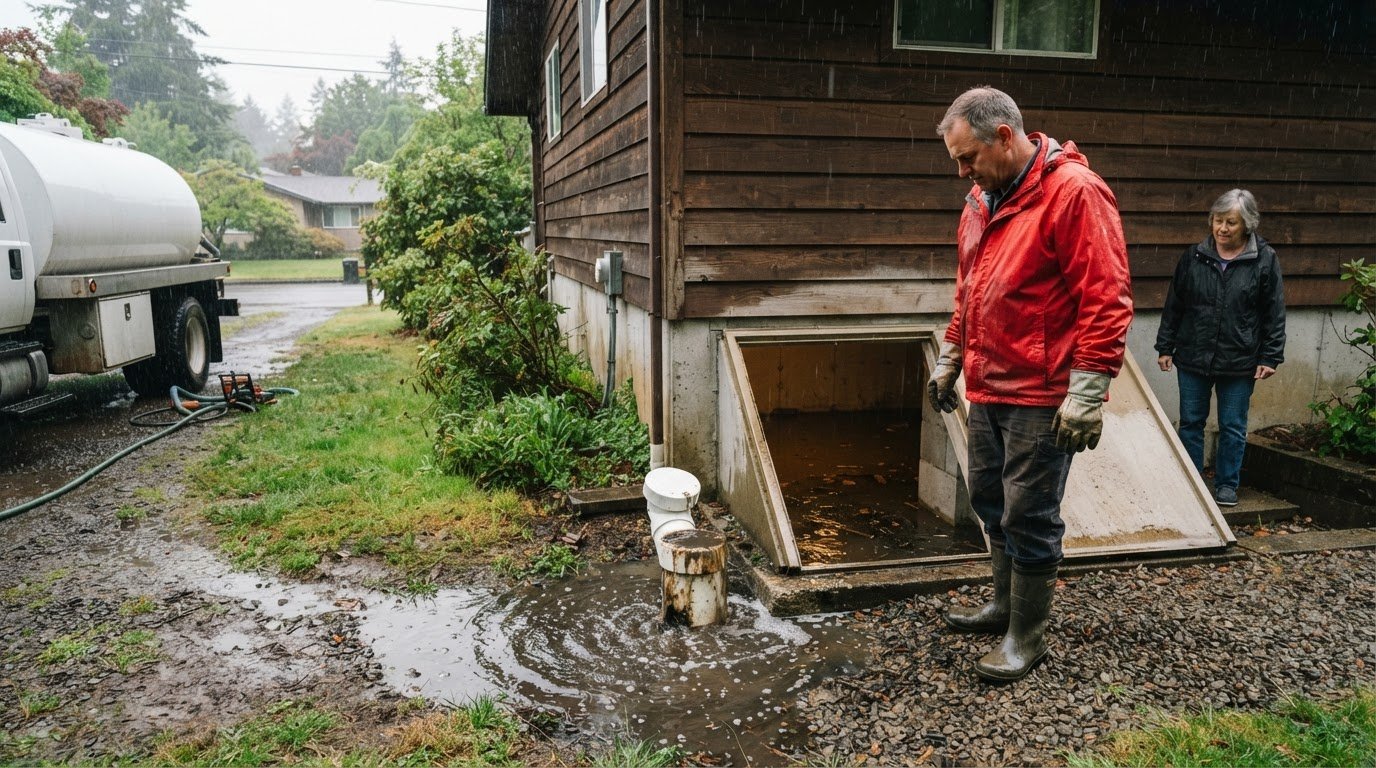
An old septic system isn’t automatically a bad buy, but its condition matters more than its age alone. Properly maintained septic systems can last 20 to 40 years, so the risk of buying a house with an old septic system comes down to hidden wear, maintenance history, and whether the system can handle the home’s wastewater.
It’s reasonable to be cautious about the risk of buying a house with an old septic system: problems in the tank or drain field can remain hidden even when everything appears fine. A thorough assessment before closing helps you understand what needs attention and gives you a clearer basis for discussing repairs.
This guide explains how a septic system treats wastewater, which rules may apply to a property in Canby, and what to look for when assessing an older system. You’ll also learn how an inspection can uncover concerns and how to use the findings to discuss repairs with the seller before you commit.
Key Takeaways
- Assess the system’s maintenance history and working condition, not just its age, before deciding whether the home is a sound purchase.
- Learn what a functional septic inspection can uncover and which inspection details matter when reviewing the findings.
- Understand how local requirements and the type of repair can affect your next steps and your purchase decision.
- Use documented inspection findings to frame a clear repair request or negotiate terms before closing.
1. What is a septic system?
A septic system treats household wastewater on the property instead of sending it to a municipal sewer. In many septic systems, wastewater enters a buried tank, where heavier material settles and lighter material floats. The liquid then moves through a filter and into a drain field, where soil provides further treatment. Naturally present bacteria can transform up to 50% of tank solids into liquids and gases.
A septic inspection assesses whether the system operates and identifies visible concerns in the tank and drain field. For a property transfer, it may include routine maintenance checks and a more detailed assessment by a qualified septic contractor. The inspector may review tank condition, baffles, sludge levels, leaks, and signs of drain-field trouble. Confirm whether pumping is included in the inspection scope, since an inspection quote may not cover it. Pumping can also help reveal defects that would otherwise remain hidden.
Routine care helps owners spot problems before wastewater backs up or affects the environment. The U.S. EPA recommends inspecting typical household septic systems every three years and pumping them every three to five years. Actual service needs depend on household size, water use, tank capacity, and solids accumulation. Keep maintenance records with the home documents. They help show when the system was last inspected or pumped and what work followed.
Arrange a pre-purchase septic inspection during the buying process instead of relying only on a general home inspection. A general inspection may not assess buried septic components or confirm that the system operates properly. Share available service records with the inspector and request written findings that distinguish observed defects from recommended maintenance. A camera inspection of septic lines can help identify root intrusion, pipe damage, or blockages.
Use the written report to negotiate specific work. If the inspection identifies a damaged baffle, for example, request a repair or an agreed adjustment before closing. Clarify in the purchase terms who will arrange and pay for the work. Buyers commonly arrange and pay for inspections, but the cost is negotiable, and a lender may require an inspection before closing.
2. Are there any regulations you must follow?
A septic tank and drain field are connected stages of wastewater treatment. In the tank, heavier solids settle and oils float, while liquid wastewater flows toward the drain field. Perforated pipes distribute it through the soil, which filters and treats the effluent. A problem in either stage can affect the whole system, so inspection findings should identify whether the concern involves the tank, pipes, or drain field.
Repair and replacement costs depend on the failed components and the work the site requires. Repairing a baffle or pipe is different from replacing a tank or rebuilding a drain field. Equipment access, soil conditions, system design, and the scope of work can also affect a project. A written inspection report helps distinguish immediate repairs from routine maintenance, such as pumping a tank that remains structurally sound.
Some properties have an area set aside for a future or replacement drain field. Keep it clear: buildings, parked vehicles, and deep-rooted trees can compact treatment soil or damage pipes. A shed built over a reserve area, for example, could limit future repair options. The location and protection requirements depend on the property’s approved system and local rules, so review the septic records to identify designated areas.
Local requirements may apply to septic installation, repairs, and replacement. An older system’s original approval does not, on its own, establish what work is acceptable today. Keep inspection reports, permits, and maintenance records with the purchase documents. If a report identifies a failed component, specify the required work in the purchase agreement before closing.
A mortgage lender may require a septic inspection before closing. That does not establish a blanket requirement for home insurers to demand an inspection or repairs. If an inspection identifies work, use its written findings to negotiate who will arrange and pay for it, and specify the agreed work in the purchase terms. A professional septic inspection can document system condition and help clarify repair needs before the sale proceeds.
3. Checking system type, age, condition, and regulatory compliance
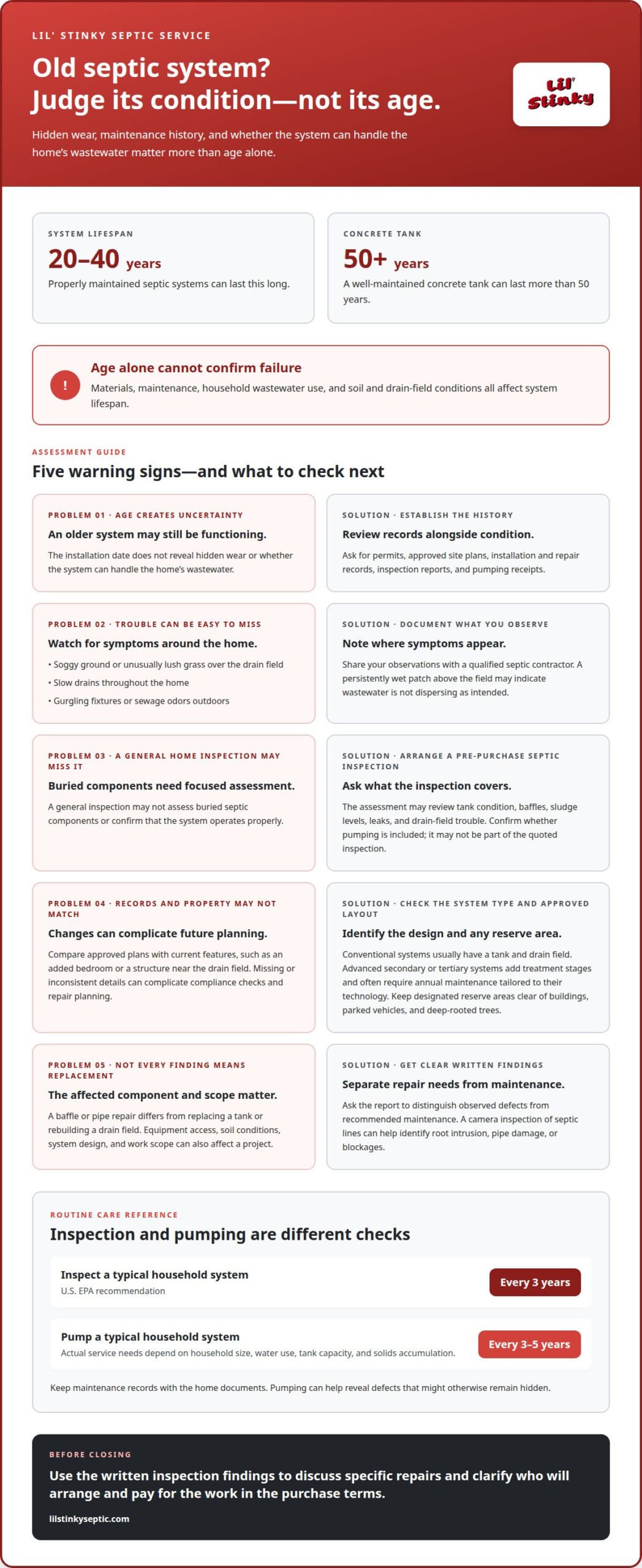
Start by identifying the system type and installation date in the property’s septic records. A conventional system usually has a tank and drain field, while advanced secondary or tertiary systems add treatment stages. This distinction matters because maintenance needs differ. Advanced systems often require annual maintenance tailored to their technology.
Ask the seller for permits, approved site plans, installation and repair records, inspection reports, and pumping receipts. These documents can show the tank and drain field locations, approved design, and changes made since installation. Compare the records with current property features, such as an added bedroom or a structure near the drain field. Missing or inconsistent details can complicate compliance checks and future repair planning.
Properly maintained septic systems can last 20 to 40 years, and a well-maintained concrete tank can last more than 50 years. Materials, maintenance, household wastewater use, and soil and drain-field conditions all affect lifespan. That’s why age alone can’t establish whether a system has failed.
During a property visit, look for soggy ground, unusually lush grass over the drain field, slow drains throughout the home, gurgling fixtures, or sewage odors outdoors. A persistently wet patch above the field, for example, may indicate that wastewater isn’t dispersing as intended. Note where symptoms appear and share those observations during the assessment.
Request the installation permit and site plan, repair and maintenance records, pumping receipts, and inspection findings. These documents help buyers understand the system’s history and whether completed work matches the approved design. Some U.S. states require sellers to provide a formal written septic disclosure before a buyer signs a purchase agreement.
To assess the risk of buying a house with an old septic system, compare its documented history with the inspection findings and applicable local requirements. Clear records can help distinguish manageable maintenance from unresolved defects. They also give you evidence to assess the risk and address necessary work during purchase negotiations.
4. Negotiating septic repairs in a home purchase
Base negotiations on the written inspection report, not a general concern about the system’s age. Ask the inspector to distinguish urgent defects from routine maintenance and describe each affected component. A damaged tank baffle, leaking tank, and failing drain field each call for a different repair plan. Clear findings make it easier to agree on specific work before closing.
Choose a practical resolution with the seller. They may complete agreed repairs before closing, or both parties may negotiate an adjustment to the purchase terms. Put the decision in writing, including the required work, who will arrange it, and what documentation the buyer will receive. If repairs are completed before closing, request the final report and applicable permit records for the transaction documents.
What financing, disclosure, and legal issues arise when buying a house with a failing septic system? A lender may require a septic inspection before closing, so schedule it early enough to address findings within the purchase timeline. Some states require sellers to provide written septic disclosures before a purchase agreement is signed. Local rules and the property’s permit history can affect which repairs are acceptable.
Don’t assume a failing system can connect to a public sewer. Sewer access and any required approvals depend on the property and local conditions. The system may need on-site repair or replacement, which can be costly and affect your decision to proceed. Request written findings that explain whether wastewater is reaching the drain field and whether liquid is surfacing or backing up. These details help define the scope of negotiations.
Set a response deadline that fits the closing schedule, and keep repair commitments in the signed agreement. If the seller declines the requested work, compare the documented repair scope with your budget and purchase terms before proceeding. For a property with identified septic concerns, arrange a septic inspection to clarify the system’s condition and support an informed negotiation.
Lil’ Stinky Septic Service: ATT Systems
Lil’ Stinky Septic Service provides Alternative Treatment Systems (ATT) for property owners evaluating wastewater treatment options. If an inspection identifies concerns that routine maintenance cannot address, a septic inspection can clarify the system’s condition and help define the next step.
If an older system needs routine care, septic pumping supports scheduled maintenance. If inspection findings point to a failed or unsuitable system, septic installation may be the relevant service. The right approach depends on the property’s system, inspection findings, and required work, so use the report to guide the discussion.
Bring the inspection report and available maintenance records when discussing an older septic system. These details help connect the identified concern with a practical service, whether that means pumping, installation, or an ATT System. Contact Lil’ Stinky Septic Service to discuss your septic system needs.
Make your next step a documented one
Before deciding, turn the inspection findings into a clear written plan: identify required work, agree on who will arrange it, and record how completion will be documented. This gives both sides a shared reference and helps prevent repair expectations from becoming assumptions after closing.
The risk of buying a house with an old septic system is easier to weigh when you know which concerns are manageable and which could affect your decision to proceed. If questions remain about the system or next steps, a professional assessment can help you make a more informed choice. You might proceed with agreed repairs, adjust the purchase terms, or reconsider the property.
For help with your septic system, contact Lil’ Stinky Septic Service. With clear findings and a written plan, you can move forward with greater confidence.
Frequently Asked Questions
What is a septic system?
A septic system treats wastewater on the property instead of carrying it to a public sewer. Household wastewater enters a tank, where solids separate from liquid. The liquid then flows to a drain field for further treatment in the soil. For buyers, the key point is that the tank and field work together, so looking only at the visible tank won’t reveal the condition of the full system.
Are there any regulations you must follow?
Requirements depend on the property’s location and system. Rules may cover permits, installation, repairs, disclosures, and where system components can be placed. In Canby, review the property’s septic records to identify its approved layout and documented work, then consider applicable local requirements before agreeing to repairs. Don’t assume an older system’s existing arrangement automatically meets current requirements for new work.
Are there any signs of a failing system?
Yes. Wastewater surfacing outdoors, persistent sewage odors, or plumbing problems affecting several fixtures can signal trouble. A slow sink may have a localized blockage, while symptoms in multiple areas can point to a shared line or septic concern. Note where and when symptoms occur, then include them in the pre-purchase assessment alongside the system’s documented condition.
Do septic tanks hurt resale value?
A septic tank doesn’t automatically reduce a home’s resale value. Buyers may be more cautious if the system has unresolved defects, unclear maintenance records, or work that could affect the purchase. A documented inspection and clear repair history can help explain the system’s condition to future buyers. The effect on an individual sale depends on the property and inspection findings, not age alone.
Is the tank big enough?
Tank capacity must suit the home’s wastewater load and the system’s approved design. Household size and water use affect how much wastewater and solids enter the tank, and overloading can contribute to backups. Compare the recorded system design with the home’s current use, especially if occupancy or the property layout has changed. An inspection can help determine whether the system’s performance raises capacity concerns.
Is there a reserve field and where is it located?
A reserve field is an area set aside for a possible future drain field if the existing field can’t serve the property. Septic site plans or permit records may show its location and the approved layout relative to the home and other property features. Keep the area clear of buildings, vehicles, and deep-rooted trees so future access and treatment options aren’t obstructed.