
What if the alarm is warning you before sewage reaches your home? If you’re searching “septic alarm going off what to do Canby,” start by limiting water use and staying clear of septic equipment. An alarm deserves prompt attention, but its sound alone can’t tell you what’s causing the problem.
It’s understandable to worry about a backup or property damage when you’re unsure what’s safe to check. You can take practical steps without opening a tank or electrical equipment. This guide explains what to do, what clues to record, and when to arrange professional help.
You’ll learn what an alarm may indicate, how to silence it if your system has a silence button, and why reducing water use matters while you arrange service. We’ll also cover warning signs such as sewage backing up, multiple blocked drains, or standing water near the system. If the alarm persists, Lil’ Stinky Septic Service brings more than 25 years of experience to septic assessments in Canby and can recommend next steps based on the system’s observed condition.
Key Takeaways
- For septic alarm going off what to do Canby, begin with safe observations and note when the alert started. Don’t open or adjust equipment.
- Panel labels and system setup can help explain what the alarm monitors, but the sound alone can’t identify a failed component.
- Use symptoms such as slow drains or sewage backup to judge urgency, not to guess at the cause.
- Record any power interruption and recent changes in household water use before arranging service.
- If the alarm persists or wastewater symptoms appear, a local technician can assess the system and recommend next steps based on the conditions found.
Septic Alarm Going Off in Canby? Start With These Safe Steps
A septic alarm is a warning, not a diagnosis or proof that your system has failed. It means installed monitoring equipment has detected a condition that needs attention, but the meaning depends on your system’s design. If you’re searching for septic alarm going off what to do Canby, first reduce water use, observe the panel safely, and note what you see. Don’t open equipment or try to identify a failed part yourself.
What to do in the first few minutes
Follow these steps while keeping people and pets away from wastewater, wet areas, and exposed equipment:
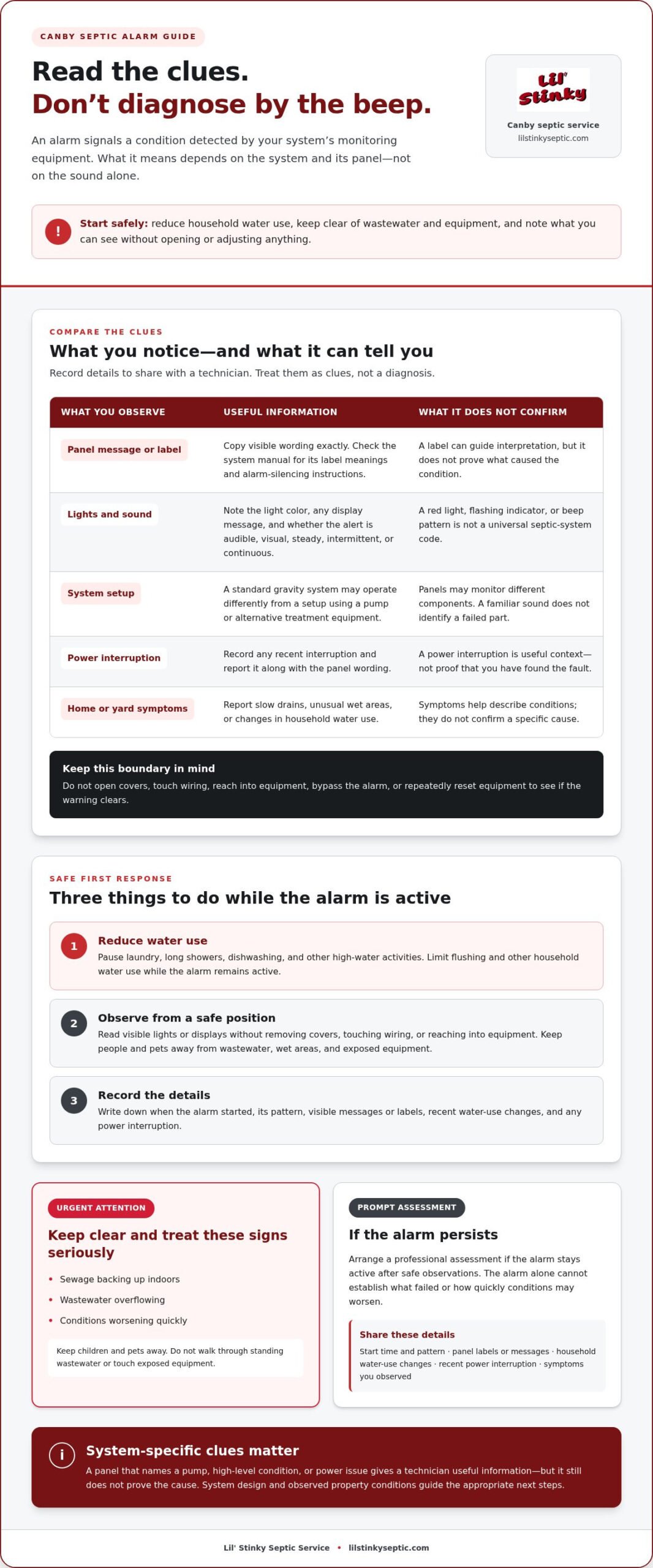
- Reduce water use. Pause laundry, long showers, dishwashing, and other high-water activities. Limit flushing and other household water use while the alarm remains active.
- Observe the panel from a safe position. Read any visible display or indicator lights without removing covers, touching wiring, or reaching into the equipment. Note labels or messages exactly as they appear.
- Record the alarm pattern and start time. Write down when you first noticed the alert and whether it’s audible, visual, continuous, or intermittent. These details help a technician understand what the system is reporting.
Don’t bypass the alarm or repeatedly reset equipment to see if the warning clears. Avoid opening electrical panels or handling components. Septic equipment varies by system, so a step that applies to one setup may be unsafe or unsuitable for another. For general background on how tanks and other system parts work together, see How a Septic Tank Works.
When an alarm needs prompt professional attention
Pay attention to what’s happening around the home, not just to the alarm. Sewage backing up indoors, wastewater overflowing, or conditions worsening quickly calls for urgent attention. Keep clear of contaminated areas and keep children and pets away. Don’t walk through standing wastewater or touch exposed equipment.
If the alarm stays active after these safe observations, arrange a prompt professional assessment. The urgency depends on the system design and conditions at your property, so the alarm alone can’t establish what has failed or how quickly the system may worsen. Slow drains or unusual wet areas are useful clues to report, but they don’t confirm a specific cause.
When you call, share the alarm’s start time and pattern, any panel labels or messages you could read safely, and changes in household water use or a recent power interruption. Based in Canby, Lil’ Stinky Septic Service provides emergency response. A technician can assess the system and recommend next steps based on the conditions observed.
What a Septic Alarm May Signal: Read the Clues, Not Just the Beep
A septic alarm comes from monitoring equipment installed as part of a particular system. It signals that the equipment has detected a condition, but what that means depends on what the system monitors and how its panel is configured. The beep alone can’t tell you whether the concern involves a pump, float switch, treatment equipment, or something else. Don’t treat a familiar-sounding alarm as a universal code.
The alarm code and system manual guide interpretation. If the panel identifies a high-water condition, power issue, or equipment alert, record that wording. Don’t assume a light or sound means the same thing across different systems, and don’t use a general online description to diagnose your equipment.
Alarm lights, sounds, and display messages
Note the exact panel label, display message, light color, and alarm pattern. Is it steady or intermittent? Is there a visible message as well as a sound? These details help describe what you’re seeing without requiring you to open or adjust anything. Check the system manual for the meaning of its labels and instructions for silencing the alarm.
Manufacturers and system configurations differ. A red light, flashing indicator, or particular beep pattern isn’t a universal septic code. If the manual doesn’t clearly explain the message, leave the equipment alone and share the exact details with a qualified technician.
Why system type matters in Canby homes
Alarm equipment isn’t identical across conventional and alternative treatment technology (ATT) systems. A standard gravity system may operate differently from a setup that uses a pump or treatment equipment, and the monitoring panel may track different components. The alarm’s significance and safe next steps depend on the system installed at your property.
For example, a panel that explicitly names a pump or high-level condition gives a technician a useful clue, but it still doesn’t prove the cause. A power indicator may point to a different concern if the panel identifies it. A recent power interruption is worth reporting, not a reason to assume you’ve found the fault. For septic alarm going off what to do Canby, rely on the equipment’s labels and instructions rather than guessing from the sound.
Oregon DEQ and Clackamas County provide local septic-system guidance, but requirements and recommendations depend on the system and circumstances. Don’t apply an online rule without confirming it applies to your property. Keep the manual, panel wording, and any available system information together for the technician. If the warning remains unclear or persistent, a local septic system assessment can help determine the appropriate response based on the equipment and conditions observed.
Is a Septic Alarm an Emergency? Compare the Warning With What You See
An active alarm deserves attention, but the right response depends on what else is happening at your property. Normal drainage and no visible wastewater are different clues from multiple slow drains or sewage backing up indoors. Symptoms help guide urgency, but they don’t identify which component is involved.
An alarm is an indication from monitoring equipment, not a confirmed septic-system diagnosis. Use the comparison below to decide how promptly to act, not to guess at a repair.
What you notice
How to respond
Alarm only, drains working normally
Limit water use, check the panel manual for an approved silence control, and note whether the warning stays active. A persistent alarm still warrants professional assessment.
Alarm plus slow drains
Stop nonessential water use and arrange prompt guidance. Slow drains are useful symptoms to report, but they don’t prove a specific septic component has failed.
Alarm plus sewage backup or surfacing wastewater
Treat the situation as urgent. Stop using water where possible, keep people and pets away from wastewater, and seek prompt septic service.
Alarm only, with normal drains
If fixtures are draining normally and you don’t see wastewater, that’s reassuring, but it doesn’t clear the alarm. Keep household water use low while you observe whether the warning remains active. If the system manual describes a silence control, follow its instructions. Silencing the sound only quiets the alert; it doesn’t show that the underlying condition has cleared.
A warning that stays active, returns, or changes should be assessed by a professional, even when there’s no backup. The system may be monitoring equipment or conditions you can’t assess from the panel alone. Don’t wait for a visible problem before reporting a persistent alert.
Alarm with slow drains, wet ground, or backup
Slow drains or unexpectedly wet ground near the system make the situation more urgent, especially if conditions are worsening. Pause nonessential water use and don’t touch or walk through wastewater. If sewage surfaces outdoors or enters the home, seek prompt service and keep children and pets clear of the affected area.
These signs don’t prove the tank is full, a pump has failed, or the drainfield is the cause. Describe what you see and where it’s happening, then let a technician assess the system. For “septic alarm going off what to do Canby,” use the combination of the alarm and visible symptoms to judge urgency rather than assuming a diagnosis.
Canby Septic Alarm Checklist: What to Record Before Calling
A clear description helps a technician understand what you’re seeing and decide what to assess first. You don’t need to troubleshoot the equipment. Record what you can observe safely, and leave covers, wiring, and controls untouched.
Information that helps diagnose the warning
Use your phone or a notepad to capture these details before you call. If a symptom changes, update your notes rather than trying to identify the cause.
- Alarm timing: Note when the warning began and whether it has stayed active, stopped, or returned.
- Panel clues: Record visible labels or message text, light color, and whether the sound is continuous or intermittent. If it’s safe, photograph the closed panel display without removing its cover.
- System type: Include whether you know the system is conventional or an ATT system. If you’re unsure, say so rather than guessing.
- Recent changes: Mention any power interruption and unusual household water use, such as several loads of laundry or a period of heavier use. These are useful facts, not proof of what triggered the warning.
- Other symptoms: Describe slow drains, sewage backup, unusual wet ground, or visible wastewater. Note where it is and whether the condition is getting worse.
Stick to what you observed. For example, say “the alarm stopped and came back later,” rather than deciding the system has reset. This keeps the call factual and helps the technician assess the warning in context.
What to avoid while waiting for service
Don’t enter a septic tank, lift heavy covers, touch wiring, or bypass safety equipment. Avoid repeated resets or adjustments. These steps can expose you to hazards or interfere with the system, and they won’t establish why the alarm sounded.
Keep people, pets, vehicles, and foot traffic away from wastewater and ground that looks wet or feels soft. Don’t add chemicals or products that promise to silence the alarm, and don’t attempt a home repair based only on a panel light or online advice. Leave equipment closed for a qualified technician to inspect.
If the alarm persists or you notice sewage backup or surfacing wastewater, use your notes to explain the situation and arrange prompt help. For urgent warning signs, you can contact Lil’ Stinky for emergency septic service in Canby. Share the panel wording, when the alarm started, and any symptoms so the technician can assess the system based on the conditions at your property.
Septic Alarm Service in Canby: When Lil’ Stinky Should Take Over
A septic alarm that stays active, returns after stopping, or appears alongside slow drains, wet ground, or wastewater symptoms needs a professional assessment. Safe observations can tell you what the system is showing, but they can’t confirm the cause. Don’t wait for a backup before arranging help if the warning keeps returning.
Lil’ Stinky Septic Service is based in Canby and serves Clackamas County and the greater Portland area. With more than 25 years of experience, the team assesses septic systems and recommends a response based on the equipment and conditions at your property. The company provides 24/7 emergency response and is a licensed contractor, CCB #189693.
What happens during a septic alarm service call
A service visit starts with a system-specific assessment, not an assumption that one part needs replacing. The technician considers the alarm information alongside the system setup and conditions observed on site. The findings help determine whether maintenance, septic tank pumping, or another appropriate septic service is needed. The alarm alone doesn’t guarantee a particular repair or outcome.
Similar warning signs can have different explanations depending on the equipment installed. A technician can use the panel details and property symptoms as clues, then recommend next steps based on an assessment rather than a remote guess.
Get local help for a persistent septic alarm
Before calling, have your notes ready: when the alarm started, what the panel displays, whether the warning returned, and any slow drains, wet ground, or wastewater you’ve noticed. Mention a recent power interruption or unusually heavy water use as context, not as a confirmed cause. Keep reducing nonessential water use while you await guidance, and stay away from wastewater and exposed equipment.
If you’re deciding septic alarm going off what to do Canby, persistent or recurring alerts and any signs of sewage backup are good reasons to bring in a professional. Sharing clear observations helps the technician understand the situation and assess the right next step. For urgent help, call Lil’ Stinky for 24/7 emergency septic service.
Take the Next Step With Confidence
You don’t need to solve the alarm yourself. Act on what you can safely observe and let a professional assess what the system is signaling. If you’re still wondering “septic alarm going off what to do Canby,” don’t wait for a warning to turn into a backup before arranging help.
Keep your notes nearby, continue limiting water use, and share any changes in the alarm or conditions around your property. Clear details can help the technician understand the situation and determine what needs attention. Avoid opening equipment or trying a fix based on a guess.
Call Lil’ Stinky for 24/7 emergency septic service if the alarm persists or you see wastewater symptoms. A calm, safe response is a solid first move, and local help can guide you toward the right next step.
Frequently Asked Questions
What should I do first when my septic alarm goes off?
First, reduce water use and look at the alarm panel without opening it. If you’re searching “septic alarm going off what to do Canby,” focus on safe observations, not repairs. Record the display message, indicator light, sound pattern, and when the warning began. Follow your equipment manual for system-specific instructions. If wastewater is backing up or surfacing, stay clear of it and arrange prompt professional help.
Does a septic alarm mean my tank is full?
No, an alarm doesn’t necessarily mean the tank is full. Monitoring equipment may alert you to different conditions depending on the system, including a high water level or a component-related warning. The panel’s wording and system manual can provide context, but they can’t always establish the cause. Note what the display says and describe any symptoms. A qualified technician can determine whether pumping or another response is appropriate.
Can I silence a septic alarm and keep using water?
Use a silence control only if your system’s manual identifies it and explains how to operate it. Silencing the noise doesn’t clear the warning or confirm that the system is working normally. Keep water use low while the alarm is active, and don’t switch off or bypass components. If the alert returns or you notice a change in drainage, treat that as new information and arrange an assessment.
Is a septic alarm an emergency if the drains are working normally?
Normal drainage may mean there’s no visible backup right now, but it doesn’t confirm the alarm has cleared. A warning that stays on or returns should be assessed, even if fixtures seem normal. Note whether the panel changes and whether the alert follows a power interruption or a period of heavier water use. If sewage backs up or wastewater surfaces, keep clear and seek prompt professional help.
Should I check the breaker when a septic alarm goes off?
Check a breaker only if your equipment instructions support that step and you can access it safely without removing covers or touching wiring. If you’re unsure which breaker serves the system, don’t guess. Avoid repeated resets, especially if it trips again. A power outage or interruption is useful context for the technician, but it doesn’t by itself identify why the alarm sounded.
Who can help with a septic alarm in Canby, Oregon?
Lil’ Stinky Septic Service can assess a persistent alarm in Canby and recommend next steps based on the system and conditions observed. When you call, describe the panel message, when the alarm started, and any changes in drainage or wet ground. You don’t need to identify the cause first. Keep the equipment closed and stay away from wastewater while arranging professional guidance.
Can I keep using the toilet while the septic alarm is sounding?
Limit flushing while the alarm remains active, particularly if it persists or other symptoms appear. Avoid unnecessary water use elsewhere in the home, since several fixtures running at once add to the system’s demand. If a toilet won’t drain, multiple drains slow down, or sewage backs up, stop using affected plumbing and seek prompt service. Follow your equipment manual and any instructions from the technician.