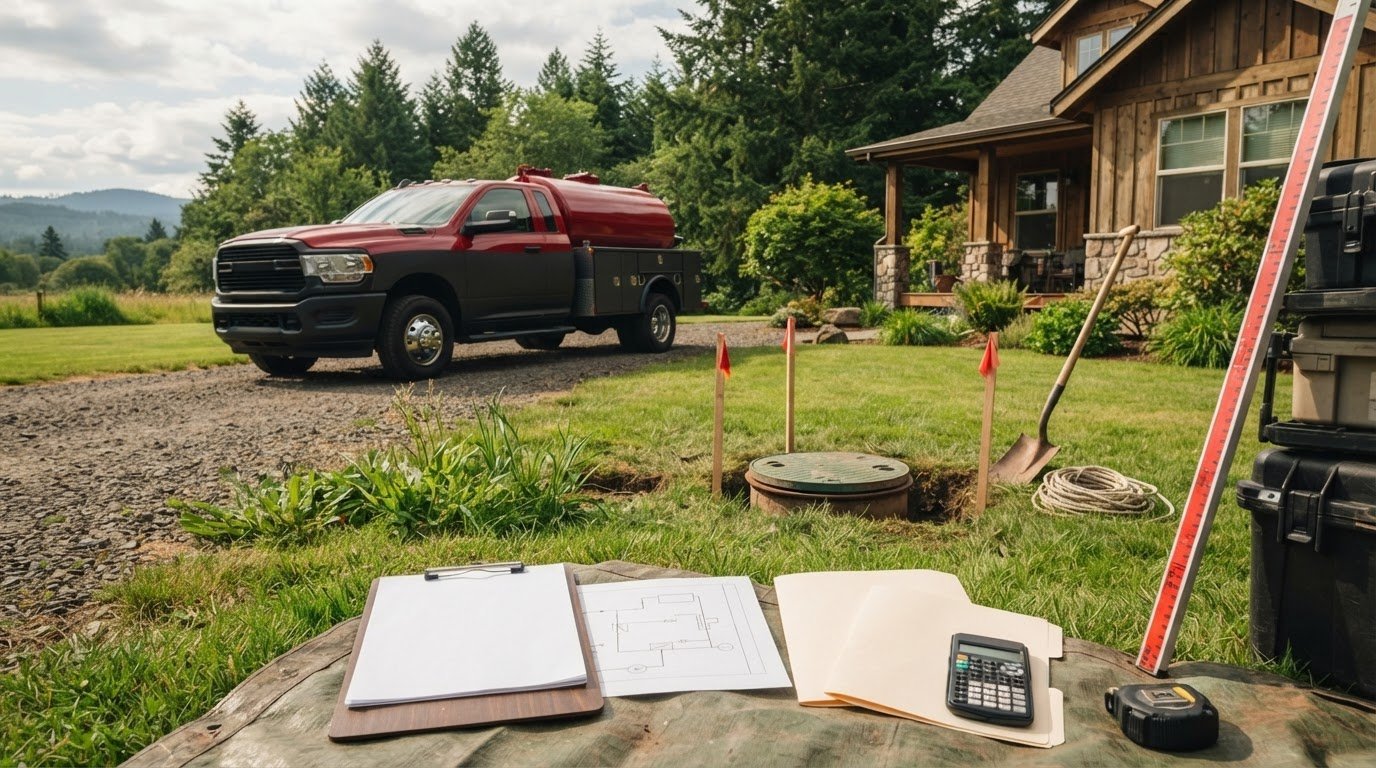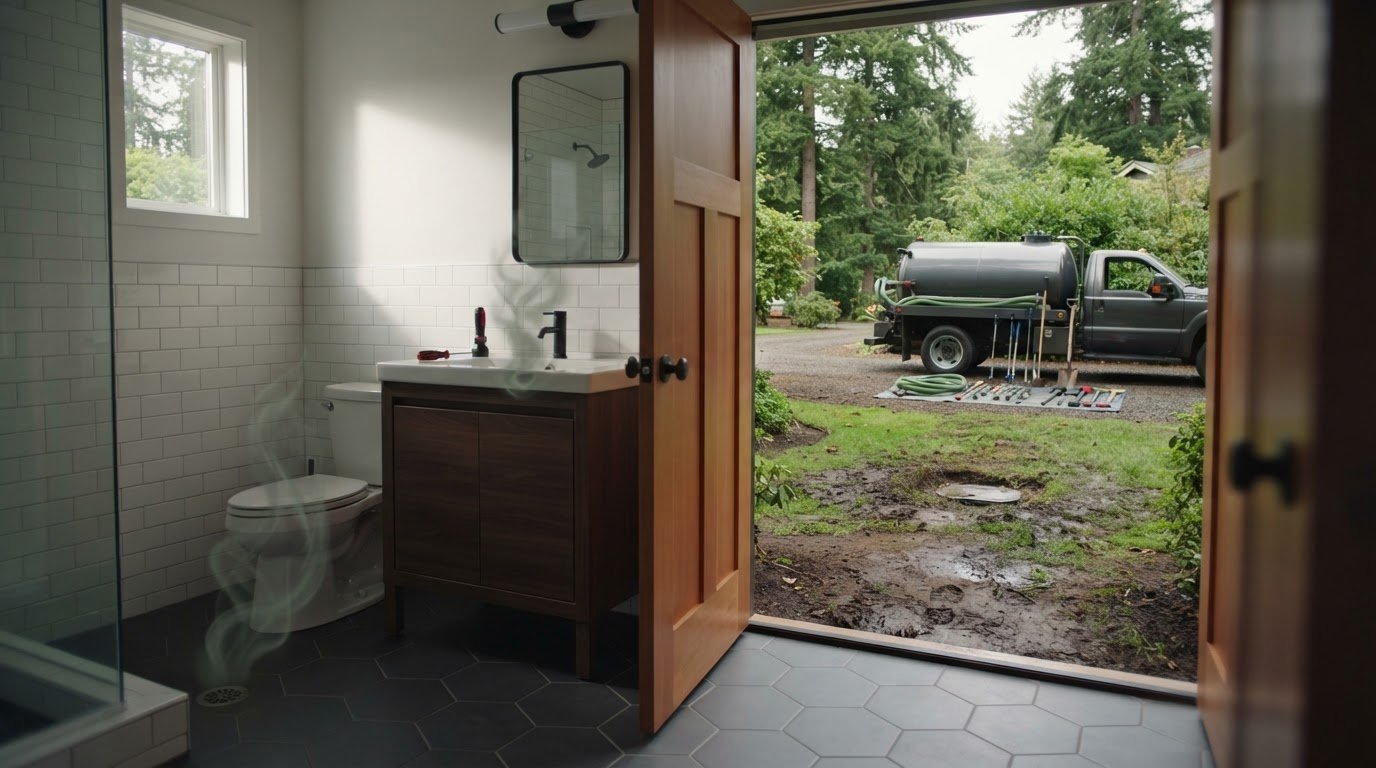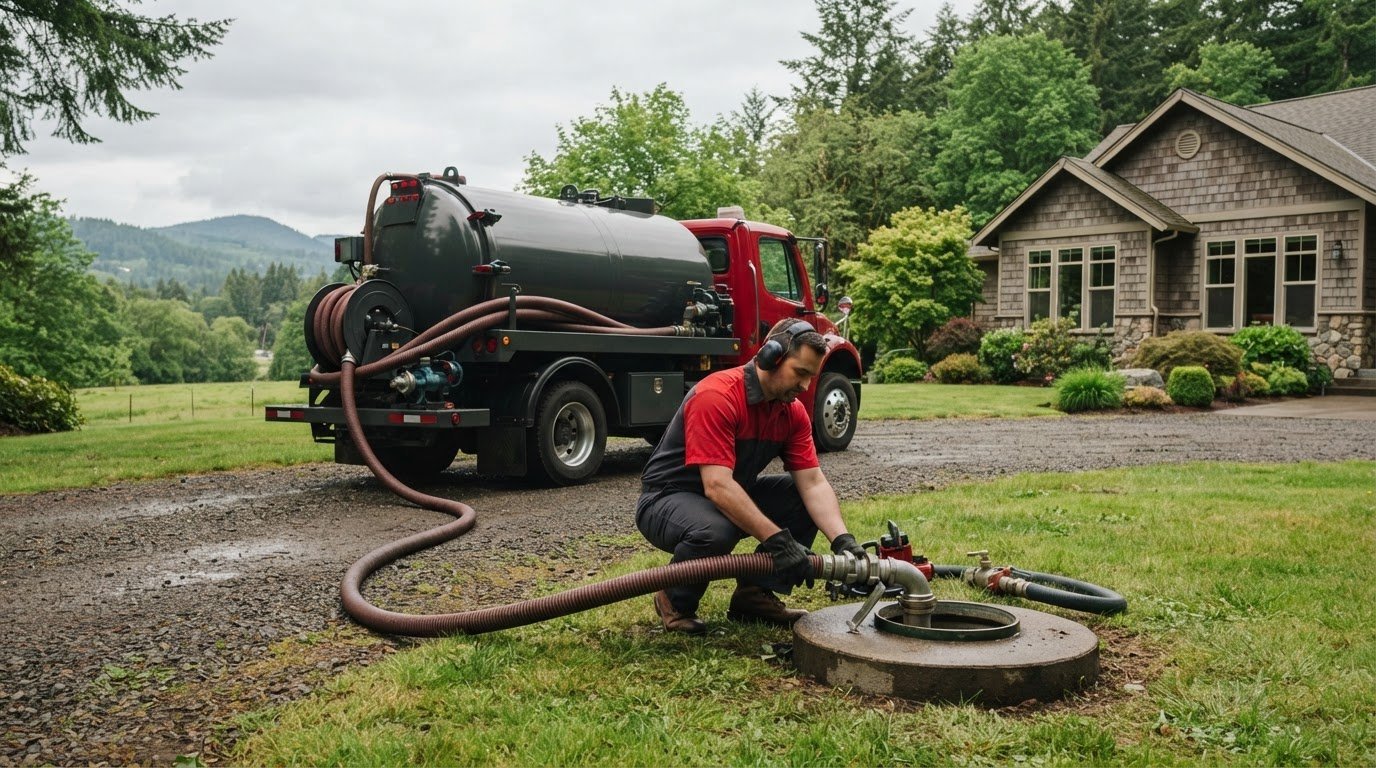
What if the right septic drain field for your Canby property isn’t the one that looks simplest on paper? With septic drain field installation Canby homeowners need to account for soil, site layout, and the design approved for the property. Start with findings from a site evaluation, not assumptions about what worked elsewhere.
Before work begins, it’s natural to ask whether your property can support a conventional system, what approvals are needed, and how the work could affect your yard. The answers depend on an evaluation of your specific property and the installation plan that follows.
This guide explains the main stages, from site evaluation and approvals to installation and final checks. You’ll learn what soil findings can mean, how conventional and Alternative Treatment Technology (ATT) systems differ, and what to ask before approving a proposal. Lil’ Stinky Septic Service is based in Canby and provides septic system design and installation, including ATT systems. Use this information to prepare for a practical conversation with a local contractor about your property.
Key Takeaways
- A drain field works with the septic tank and distribution components to disperse wastewater into suitable soil, though system layouts can differ.
- For septic drain field installation Canby homeowners should expect site findings to inform the design and determine which options are appropriate.
- Compare conventional gravity and ATT approaches by asking how each fits your property, rather than assuming one design works everywhere.
- Plan for assessment, design, approvals, site work, installation, verification, and restoration. Confirm current requirements with the relevant authorities.
- Before choosing an installer, review current credentials, insurance, the written scope, approval responsibilities, and how project updates will be handled.
What a septic drain field does, and why Canby site conditions matter
A septic drain field receives wastewater from the tank and disperses it into suitable soil, where the soil helps filter and treat the wastewater. The layout and components vary by system, so a setup that works on another property is not proof that the same design will work on yours. For a foundational overview of septic drain fields, see how trenches and distribution components support this process.
For septic drain field installation Canby property owners need a plan based on the actual site. Property boundaries, buildings, equipment access, and the area available for work can all affect placement. Soil and other evaluation findings help determine which options are feasible. An online checklist can help you prepare questions, but it cannot establish whether your property supports a particular design.
How the septic tank and drain field work together
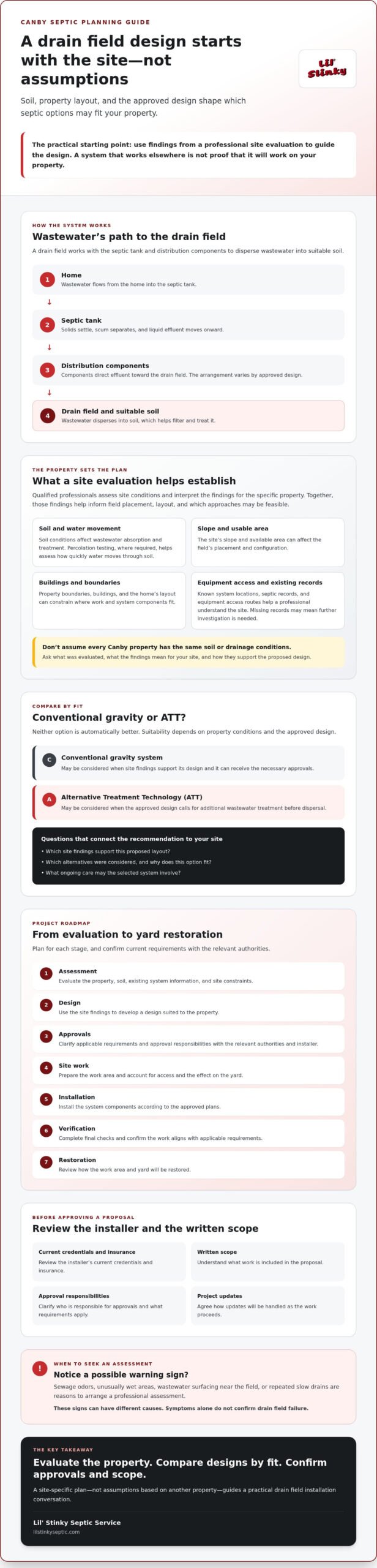
Wastewater flows from the home into the septic tank, where solids settle and scum separates from the liquid. The liquid effluent then moves through distribution components toward the drain field. Depending on the approved design, those components may distribute it across one or more areas. The field must fit both the site and the approved plans, so don’t assume every system uses the same arrangement.
Sewage odors, unusually wet areas, wastewater surfacing near the field, or repeated slow drains are reasons to arrange a professional assessment. These signs can have different causes, so symptoms alone do not confirm drain field failure.
What a Canby property assessment needs to establish
Gather any available septic records and note the home’s layout, known system locations, equipment access routes, and the area being considered for work. This information helps a professional identify what exists and what may constrain a new or replacement design. Missing records don’t determine whether a project is possible, but they may mean further investigation is needed.
Qualified professionals should select and interpret soil tests and other evaluations for the specific property. Findings can influence placement, configuration, and whether a conventional or alternative approach should be considered. Don’t assume Canby properties share the same soil or drainage conditions. Ask what was evaluated, what the results mean for your site, and how those findings support the proposed design.
How soil evaluation and design shape a Canby drain field installation
Soil findings are more than a pass-or-fail result. They help a designer assess where wastewater can be dispersed and what configuration may fit the property. For septic drain field installation Canby homeowners should expect assessment findings, the proposed design, and applicable authority requirements to guide the plan. The evaluation steps depend on the site and the authorities reviewing the project.
What soil and site findings can tell the designer
A soil evaluation examines conditions that affect wastewater absorption and treatment. Percolation testing, where required, helps assess how quickly water moves through soil. Confirm the tests and procedures that apply to your project rather than relying on a general online guide.
The designer also needs to consider slope, usable area, equipment access, buildings, and other site constraints. Together, these findings can affect field placement and layout. Don’t assume a design or outcome before a qualified professional assesses the site and reviews applicable requirements.
When a conventional or ATT design may be considered
A conventional gravity system may be considered when site findings support its design and it can receive the necessary approvals. An Alternative Treatment Technology (ATT) system may be considered when the approved design calls for additional wastewater treatment before dispersal. Neither option is automatically better. Suitability depends on property conditions and the approved design.
Ask the designer to connect the recommendation to specific site findings: why the proposed layout fits, which alternatives were considered, and what ongoing care the selected system may involve. The U.S. Environmental Protection Agency offers a plain-language overview of how septic systems work, which can help you understand the system before discussing its design.
For broader project-planning context, review this Oregon septic installation cost and planning guide. It can help you prepare questions, but it cannot determine your property’s design or predict project pricing.
To discuss site-specific installation questions, consider contacting a Canby septic installation provider and asking what assessment information is needed to explain the available options.
Can every Canby property support a drain field? Compare options before deciding
Not every property calls for the same drain field design. A system label alone cannot show whether a proposal fits your land. Site assessment findings and the required review determine which options can be considered. The U.S. Environmental Protection Agency explains how a typical septic system works, but only a property-specific evaluation can help establish what may work at your home.
Use this comparison to frame questions, not to choose a system before the design is reviewed.
| Approach | General description | Suitability |
|---|---|---|
| Conventional gravity | Uses gravity to move wastewater through system components toward the drain field. | Site-dependent; assessment findings and approvals guide whether it’s an option. |
| Alternative Treatment Technology (ATT) | Uses an alternative treatment approach when the approved design calls for it. | Site-dependent; ask what property findings support this recommendation. |
Neither approach is universally better. A recommendation should connect the property’s evaluation results to the proposed design, rather than rely on a system name or a general claim about local conditions. For septic drain field installation Canby homeowners should ask why the design is recommended before comparing proposals.
Questions that clarify a proposed system recommendation
- Which assessment findings support this drain field design and its proposed location?
- Were other system approaches considered? If so, why were they accepted or ruled out?
- What plans, records, and approvals need to be completed before construction begins?
Ask for explanations in plain language. A useful answer should show how the site evidence connects to the design and distinguish confirmed requirements from steps still under review.
How to compare installation proposals fairly
Compare the written scope, design responsibilities, approval steps, site preparation, and restoration assumptions. Check that each proposal describes work matching the design under review, and note exclusions such as tasks or restoration that aren’t included. Don’t compare only system names or bottom-line figures, since the work covered may differ.
Before approving a proposal, ask who will update you if site conditions differ from initial expectations and how proposed changes will be explained. A local provider such as Lil’ Stinky Septic Service can discuss installation options, but feasibility and approvals depend on project-specific review.
What happens during septic drain field installation in Canby?
A drain field project moves through checkpoints, from evaluating the property to documenting completed work. The sequence and details can vary with the site and system design. Before work begins, verify current Oregon DEQ and Clackamas County requirements with the relevant authorities. Check which office handles each approval rather than assuming.
Approvals, site preparation, and installation
- 1. Assessment: A qualified professional reviews the property, available system records, and conditions relevant to the proposed work.
- 2. Design: Assessment findings inform a site-specific plan, including the drain field layout and system approach.
- 3. Approvals: Confirm which documents and approvals are required, who submits them, and whether they’re complete before construction proceeds.
- 4. Site preparation: Discuss equipment access, the work zone, and how areas outside it will be protected. Move or secure items as agreed with the installer.
- 5. Installation: The installer completes the work according to the approved plans. Your practical check is that the work follows the design, not whether technical details match a generic description online.
Weather, access, equipment needs, and conditions uncovered during site work can affect scheduling. Ask how the installer will communicate changes if the actual site differs from initial expectations. A fixed duration cannot be responsibly promised without project-specific review.
Final checks, restoration, and homeowner handoff
- 6. Inspection or verification: Confirm what inspections or other checks apply, who arranges them, and what must be completed before the project is considered finished. For background on records and inspection questions, see this Oregon septic inspection and DEQ compliance guide.
- 7. Restoration: Review what site cleanup or restoration is included and what remains your responsibility. Get any exclusions in writing.
Before closing out the project, ask for the final design, permit and inspection records, completion documents, and system care instructions. Keep them with your property records for future maintenance, repairs, or property questions.
For septic drain field installation Canby homeowners can ask Lil’ Stinky Septic Service about installation planning, including what site information is needed and how project steps and records will be explained.
Choosing a septic drain field installer in Canby and planning your next step
A useful proposal identifies who is qualified to do the work, what the scope includes, and how decisions will be handled if site findings change the plan. For septic drain field installation Canby homeowners should verify the credentials that apply to the specific septic work, not rely on a contractor’s general license number alone.
What to confirm before hiring an installer
- Current credentials: Check the contractor’s license status and confirm any septic-specific qualifications with the relevant Oregon authority. A CCB number by itself doesn’t establish every authorization that may apply.
- Insurance: Request proof of current insurance and confirm what it covers for the proposed work.
- Written scope: Get a clear description of the work, design responsibilities, approval steps, included site preparation and restoration, and exclusions.
- Communication: Ask who will contact you if new site findings affect the design, scope, or schedule, and how proposed changes will be documented.
Compare proposals on these details, not just system labels. If an approval is pending, ask who is responsible for the next step and what must be resolved before construction begins.
How Lil’ Stinky can help with the next step
Lil’ Stinky Septic Service is based in Canby and offers septic system design and installation, including standard gravity and Alternative Treatment Technology systems. The business reports more than 25 years of experience and lists CCB #189693. Verify current CCB status and any applicable septic-specific qualifications before hiring. The right system still depends on assessment findings and the design approved for your property.
To make an initial discussion more useful, gather available septic records and note what you know about the system, the area being considered for work, and your main questions. Ask what information is needed to assess the property and explain possible next steps. Suitability cannot be confirmed without project-specific review.
Contact Lil’ Stinky about septic installation to discuss your property, available records, and assessment needs.
Take the next step with a site-specific plan
A dependable drain field plan starts with evidence about your property. Soil and site evaluation help shape the design, while local approvals and the approved plan guide the work. When comparing conventional gravity and ATT recommendations, ask why each option fits or does not fit your site rather than choosing by system name alone.
For septic drain field installation Canby homeowners can make a more informed start by gathering existing system records and asking what assessment findings support the proposed design. Confirm the installer’s current credentials, insurance, written scope, approval responsibilities, and plan for communicating changes.
Lil’ Stinky Septic Service is based in Canby and offers septic system design and installation. The business reports more than 25 years of experience and CCB #189693; verify current license status and any applicable septic-specific qualifications before hiring. To discuss your records and assessment needs, talk with Lil’ Stinky about septic drain field installation. A property-specific conversation is a practical first step toward understanding your options.
Frequently Asked Questions
How do I know if my Canby property can support a septic drain field?
Only a property-specific assessment can determine whether your Canby site can support a drain field and which design may be feasible. A qualified professional considers soil evaluation results, available space, slope, access, existing system records, and other site features. Online checklists can help you prepare, but they can’t confirm suitability. Ask how the findings support the proposed location and design before agreeing to a plan.
Does septic drain field installation in Canby require a permit?
Yes, a construction permit is required for septic system installation in Clackamas County, according to current county requirements. The applicable process and approvals can depend on the proposed work and system design, so verify details with Clackamas County and Oregon DEQ before construction. Ask your installer which documents are needed, who handles submissions, and how you’ll know required approvals are complete before work begins.
What soil tests are used before installing a septic drain field?
Soil evaluation helps establish whether and how the site can absorb and treat wastewater. Percolation testing may be part of the evaluation, where required, to assess how quickly water moves through soil. The appropriate tests and procedures depend on the property and applicable authority requirements. Ask the qualified professional what was tested, what the results mean, and how they inform the proposed drain field design.
Can an existing septic drain field be replaced in the same location?
Possibly, but the existing location isn’t automatically suitable for a replacement. Current site conditions, soil findings, usable space, system records, and the proposed design all matter. A qualified professional must assess the property, and required approvals must be confirmed before work proceeds. Ask whether the existing area was evaluated, what findings support reusing it, and whether another location or design needs consideration.
How long does septic drain field installation take in Canby?
There isn’t one reliable timeline for every Canby project. Assessment and design, approval steps, weather, equipment access, and conditions discovered during site work can all affect scheduling. Ask the installer to explain the expected sequence and what could change the schedule for your property. Confirm when updates will be provided if approvals take longer than expected or site findings require a change to the plan.
What is the difference between a conventional drain field and an ATT system?
A conventional gravity system moves wastewater through the system using gravity, while an Alternative Treatment Technology (ATT) system provides an alternative treatment approach when the approved design calls for it. Neither is automatically the better choice for every property. Suitability depends on assessment findings and design review. Ask why a particular system is recommended, what site evidence supports it, and what care the system may require.
Who can install a septic drain field in Canby, Oregon?
Residential septic work should be completed by an installer with the applicable current credentials and qualifications. Verify requirements with the relevant Oregon authority; a contractor’s CCB number alone may not establish every septic-specific authorization. Lil’ Stinky Septic Service is based in Canby and offers septic system design and installation. The business reports more than 25 years of experience and CCB #189693, which homeowners should verify before hiring.