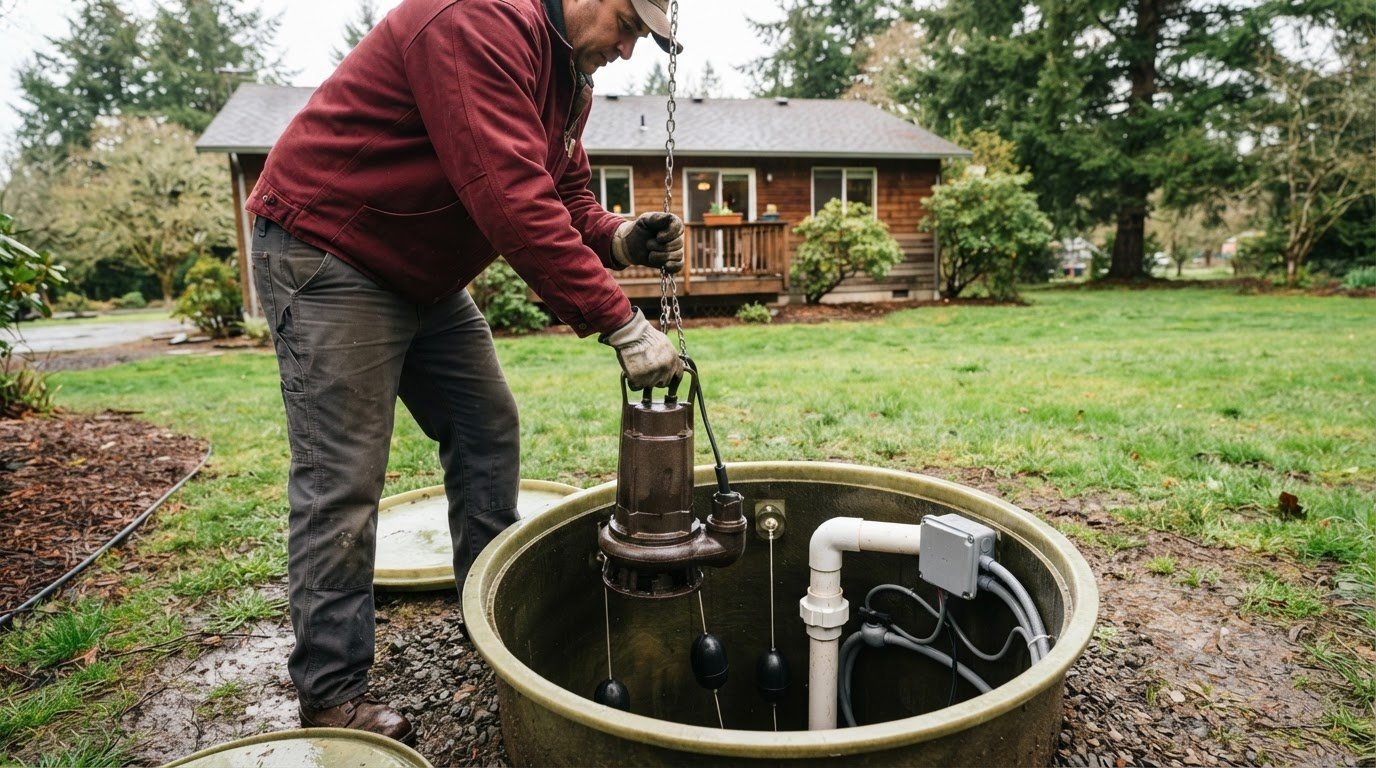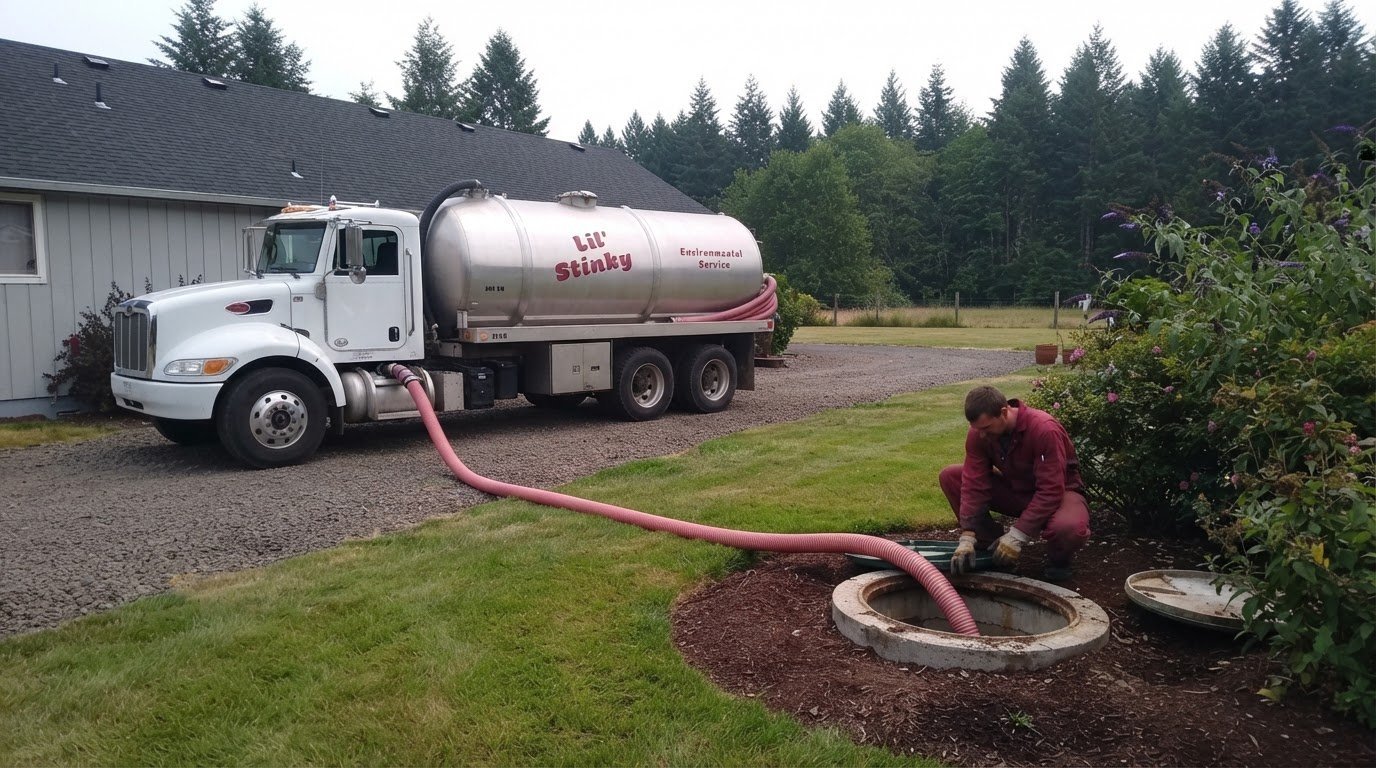
A failing leach field does not always need complete replacement. Septic leach field repair in Canby starts by identifying the cause: a damaged or blocked line may need a targeted repair, while wider drainfield failure calls for a different plan.
Slow drains, sewage odors, or wet areas near the field can be stressful, especially when you need a clear answer. The right response depends on the cause, so an assessment can distinguish a line problem from a failing field and identify a suitable next step.
This guide explains how emergency service, septic tank pumping, and line repairs fit into the repair process, what can affect the work and its cost, and what to expect from a free estimate. You’ll also learn how regular inspection and care can help you spot concerns sooner, and when a repair may need a broader solution.
Key Takeaways
- Recognize warning signs of drainfield trouble and understand when prompt professional attention matters.
- Learn how a septic line issue can differ from broader field failure, and what a repair assessment can reveal.
- See what to look for in a Canby septic repair provider, including how the repair process is approached.
- Understand which site and system conditions shape a repair estimate, so you know what to expect before work begins.
Drain field failure and emergency service
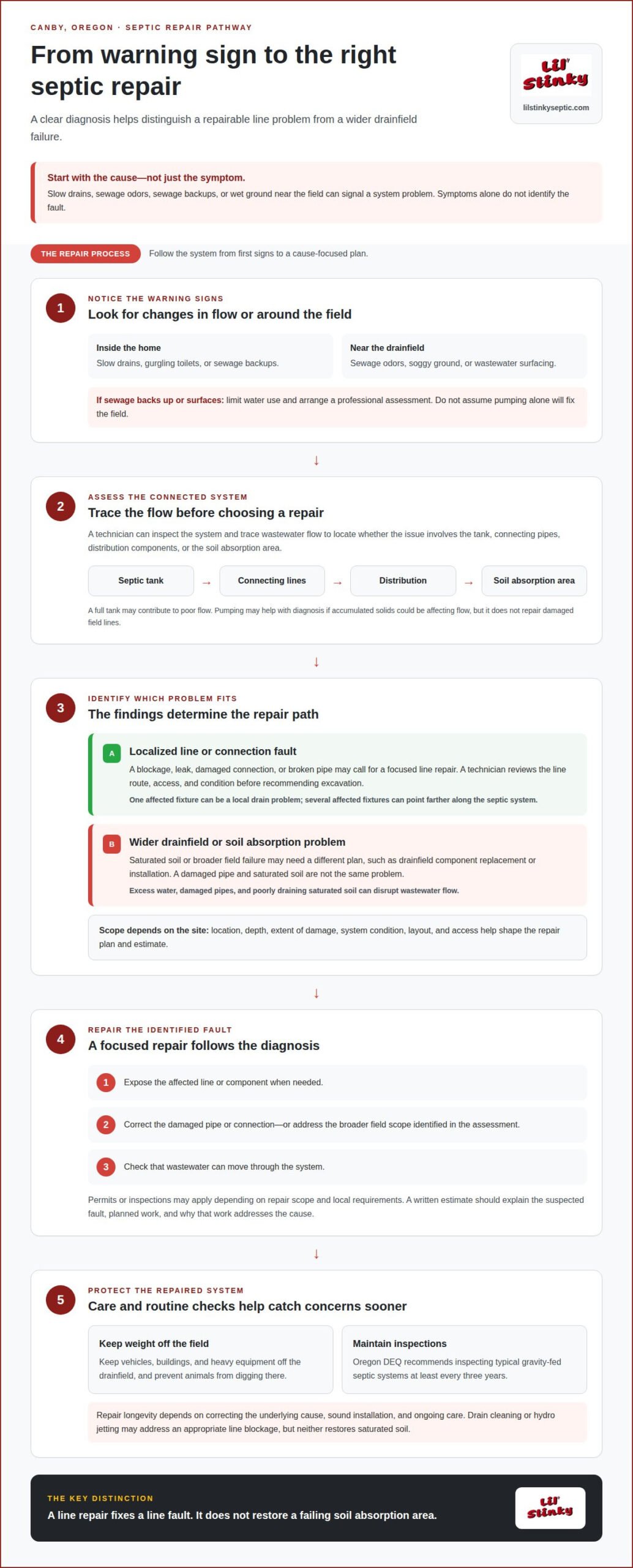
A failing drainfield can send wastewater to the surface instead of dispersing it underground. Sewage odors, soggy ground, or slow drains are reasons to arrange a prompt professional assessment.
Failure Causes and Drainfield Protection
A drainfield distributes treated wastewater into the surrounding soil. Excess water, damaged pipes, or saturated soil can disrupt that flow. In the Willamette Valley, wet conditions can add stress where soil drains poorly. Keep vehicles, buildings, and heavy equipment off the field, and prevent animals from digging there. These steps help protect the pipes and the soil’s ability to absorb wastewater.
Oregon Department of Environmental Quality recommends inspecting typical gravity-fed septic systems at least every three years. If sewage backs up or surfacing wastewater appears, limit water use and arrange an assessment rather than assuming pumping alone will fix the field.
Drain Field Installation and Repair
Repair starts by determining whether the problem is in a pipe, distribution component, or soil absorption area. A technician can inspect the system and trace wastewater flow before recommending a localized leach field repair or drainfield installation. The system’s condition and layout guide that decision.
Permits or inspections may apply depending on the repair scope and local requirements. An inspection can document the system’s condition and help determine the work needed. Septic pumping may help with diagnosis if accumulated solids could be affecting flow, but it does not repair damaged field lines.
Canby Leach Field Repair Companies
For septic leach field repair in Canby, choose a provider that assesses the tank, lines, and field as connected parts. Ask for a clear explanation of the suspected fault, the proposed repair, and how the work addresses its cause rather than just visible symptoms. A written estimate should describe the planned scope.
Homeowners insurance coverage in Oregon depends on the policy wording and cause of damage. Review the policy’s covered-loss terms and exclusions, since there is no single coverage answer for every failed field.
Repair Time and Longevity
Repair time depends on the assessment, site access, and whether the work involves a line or a larger part of the field. A blocked section may require less work than replacing drainfield components. Once the fault and repair scope are clear, the provider can explain the work sequence.
Repair longevity depends on correcting the underlying cause, sound installation, and ongoing care. Drain cleaning or hydro jetting may address a line blockage when appropriate, but neither restores saturated soil. Keep vehicles off the field and maintain routine inspections to help protect the repaired system.
Septic line repairs
A damaged line can interrupt wastewater flow between the septic tank and drainfield. Gurgling toilets, several slow drains, or sewage backups can indicate a system problem, but symptoms alone do not identify the fault. A technician needs to trace the route and assess the tank, connecting pipes, and distribution components.
The cause matters because a blockage and a broken pipe need different responses. A professional assessment looks for restricted flow, leakage, or a damaged connection, then relates the findings to the affected area. For example, one backed-up fixture may have a local drain problem, while several affected fixtures can point to an issue farther along the septic system.
Before recommending excavation, the technician can review access points and assess the line’s condition. The location, depth, and extent of damage shape the repair plan. A localized defect may allow a focused repair; widespread deterioration or damage near the drainfield may require broader work. The estimate should explain which section needs attention and why.
A full septic tank can also contribute to poor flow. If accumulated solids are suspected, pumping may help determine whether the tank is affecting the line, but it will not mend a cracked or collapsed pipe. The assessment helps distinguish a tank issue from a line repair need, rather than treating every backup the same way.
After locating the fault, the repair process typically involves exposing the affected section, correcting the damaged connection or pipe, and checking that wastewater can move through the system. The site conditions and repair scope determine how much disruption is involved. Clear communication about the finding, proposed work, and expected restoration helps you understand what the repair addresses. For help evaluating the system, explore septic system service options.
Septic leach field repair companies in Canby, Oregon
Choosing help for septic leach field repair in Canby starts with a clear diagnosis, not a guess based on one symptom. A thorough assessment considers the septic tank, connecting lines, distribution components, and absorption area together. That matters because a slow drain may come from a line restriction, while wastewater surfacing near the field can point to a broader problem.
For a Canby property, the repair plan should connect observed conditions to the proposed work. The assessment can identify the affected component, explain whether a targeted line repair is suitable, and distinguish it from drainfield replacement or installation. A damaged pipe and saturated soil, for example, call for different approaches. The estimate should describe the work and the reason for it.
Clear communication also helps prevent unnecessary excavation. A repair professional can explain what the inspection found, which area needs attention, and how the work addresses the cause. If septic pumping is part of the evaluation, the explanation should clarify whether tank contents may be affecting flow. Pumping alone does not repair a damaged line or restore a failing absorption area.
In Oregon, a conventional septic system has a tank and a drainfield, so a repair assessment should account for both. The Oregon Department of Environmental Quality says typical gravity-fed systems should be inspected at least every three years. That routine inspection can help document system condition, while a repair assessment focuses on current symptoms and the affected component.
Before work begins, the proposed scope should make the next steps clear: diagnosis, repair method, and any needed follow-up inspection. Lil’ Stinky Septic Service offers free estimates, giving Canby homeowners a chance to review the recommended work before deciding. The key is to match the repair to the identified fault, whether it is in a line, tank connection, or the field itself.
How much does septic leach field repair cost in Canby, OR?
Repair pricing in Canby depends on the diagnosed fault and the work needed to address it. A damaged line may call for a focused repair, while extensive drainfield failure can require broader excavation and replacement. The estimate should reflect the actual scope, not assume every wet area needs a new field.
The price depends on the specific problem and is provided through a free estimate. Factors include the extent of damage, soil conditions, site access, materials, and restoration work.
For example, a pipe near an accessible service area may require less excavation than a damaged line beneath established landscaping. Soil conditions can also affect access to the affected section. If the field itself can no longer absorb wastewater, replacing components involves different work from repairing one connection.
A clear estimate should link each cost item to a finding. It should identify the affected component, describe the proposed repair, and explain whether excavation, replacement parts, or surface restoration are included. If septic pumping or an inspection is recommended, the estimate should distinguish that work from the repair itself. This helps you understand what the proposed scope addresses.
Before approving work, review how the estimate handles unexpected conditions. For instance, excavation may reveal damage that was not visible during the initial assessment. Ask how any proposed scope change will be discussed before additional work proceeds. A written estimate helps align the diagnosis, repair plan, and expected work.
Free estimates can help Canby homeowners understand the recommended scope before deciding how to proceed. Share the symptoms, such as sewage odors or recurring backups, and describe when they occur. Those details help focus the assessment, but the system’s condition and site layout determine the repair plan. Request a septic repair estimate to discuss the work needed for your property.
Lil’ Stinky Septic Service
Lil’ Stinky Septic can assess septic system problems and identify a practical next step for Canby property owners. Turn to the team when recurring backups, sewage odors, or wet ground raise concerns about your tank, lines, or drainfield. A septic inspection can clarify the system’s condition; septic pumping may address accumulated solids, while septic installation may be appropriate if the existing system needs replacement. The company also provides Alternative Treatment Systems (ATT).
If symptoms are urgent, Lil’ Stinky Septic Service offers 24/7 emergency response. Share what you’ve noticed and when it occurs so the assessment can focus on the problem. Contact Lil’ Stinky Septic Service to discuss your septic system concerns.
Take the Next Step Toward a Clear Repair Plan
For septic leach field repair in Canby, turn your observations into a focused conversation. Note where symptoms appear, when they began, and whether they change after heavy household water use. These details can help frame the assessment without assuming the tank, line, or field is at fault.
Use Lil’ Stinky Septic’s free estimate to understand the recommended scope before deciding how to proceed. A clear plan connects the system’s observed condition with the proposed work, helping you make an informed choice for your property. If sewage is surfacing or wastewater is backing up, seek professional guidance promptly.
Contact Lil’ Stinky Septic Service to discuss your concerns and request an estimate. A straightforward conversation can help you move from uncertainty toward a practical next step.
Frequently Asked Questions
What are common signs of a failing septic leach field?
Persistent pooling, outdoor sewage odors, and wastewater backing up into fixtures can signal a problem. One symptom alone does not confirm a failed field: a clogged household drain can also cause a backup. Note whether several fixtures are affected and whether wet ground remains after dry weather. These details help a professional distinguish a field concern from a localized plumbing issue.
Can a septic leach field be repaired, or does it need replacement?
A leach field may be repairable when the failure is limited to a damaged component and the remaining field still functions. Replacement may be necessary when the absorption area no longer disperses wastewater effectively. The location and extent of damage, soil conditions, and system layout all matter. An assessment determines whether targeted work can address the cause.
What steps do professionals take to diagnose and repair a septic leach field?
Professionals begin by reviewing the symptoms and identifying the system’s components and layout. They assess the tank, connecting lines, and field to locate the source before recommending work. A line blockage, for example, calls for a different response than soil that cannot absorb wastewater. Once the repair scope is clear, they explain the work and any follow-up assessment needed.
How can professionals help homeowners prevent septic leach field failure?
Professionals can assess system condition, recommend maintenance, and identify risks such as vehicle traffic over the field. Regular tank pumping is generally recommended every 3 to 5 years, depending on system conditions. Homeowners can also avoid flushing cigarette butts, hair, or food scraps, which are difficult to decompose. These habits support routine care but can’t reverse existing damage.
What risks come with delaying septic leach field repairs?
Delaying an assessment can allow wastewater to keep backing up or surfacing instead of dispersing underground. An improperly maintained septic system can also contaminate groundwater and surface waters.