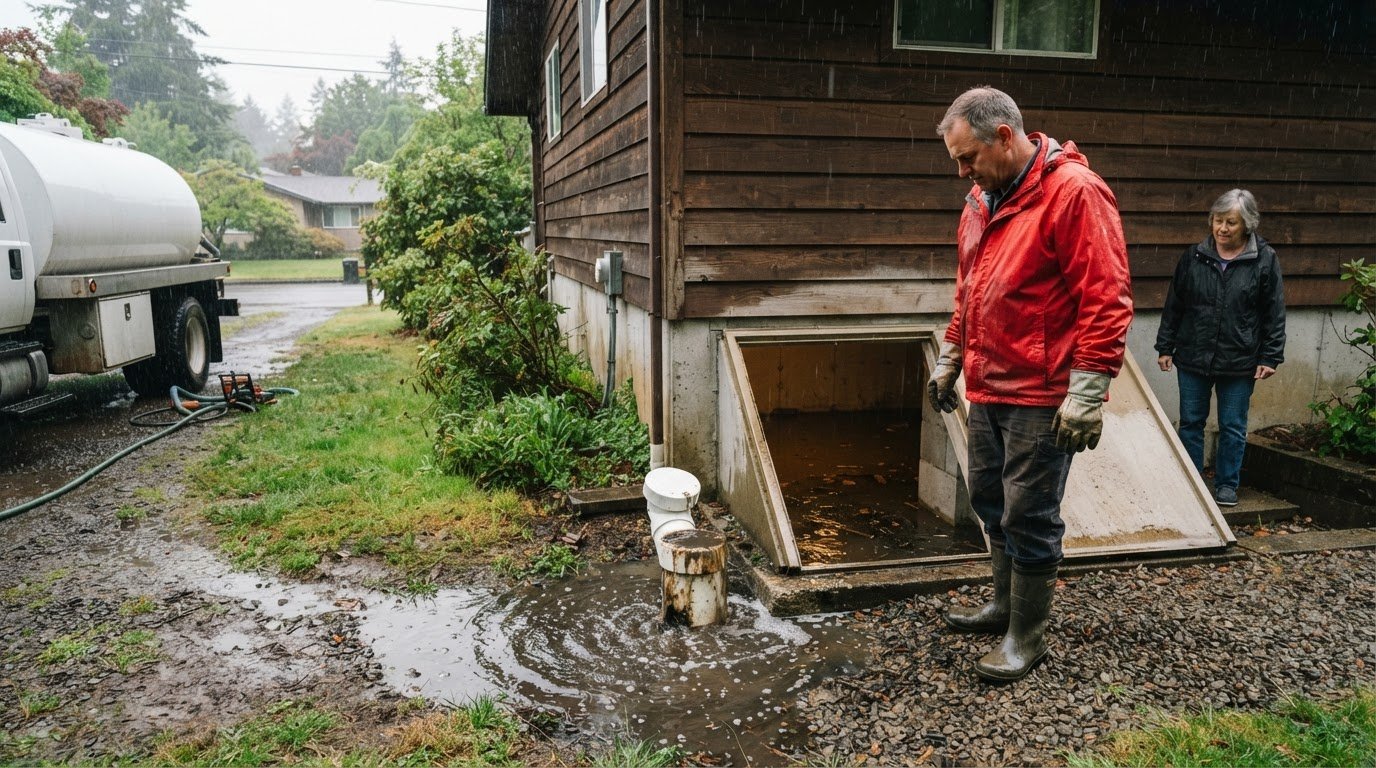
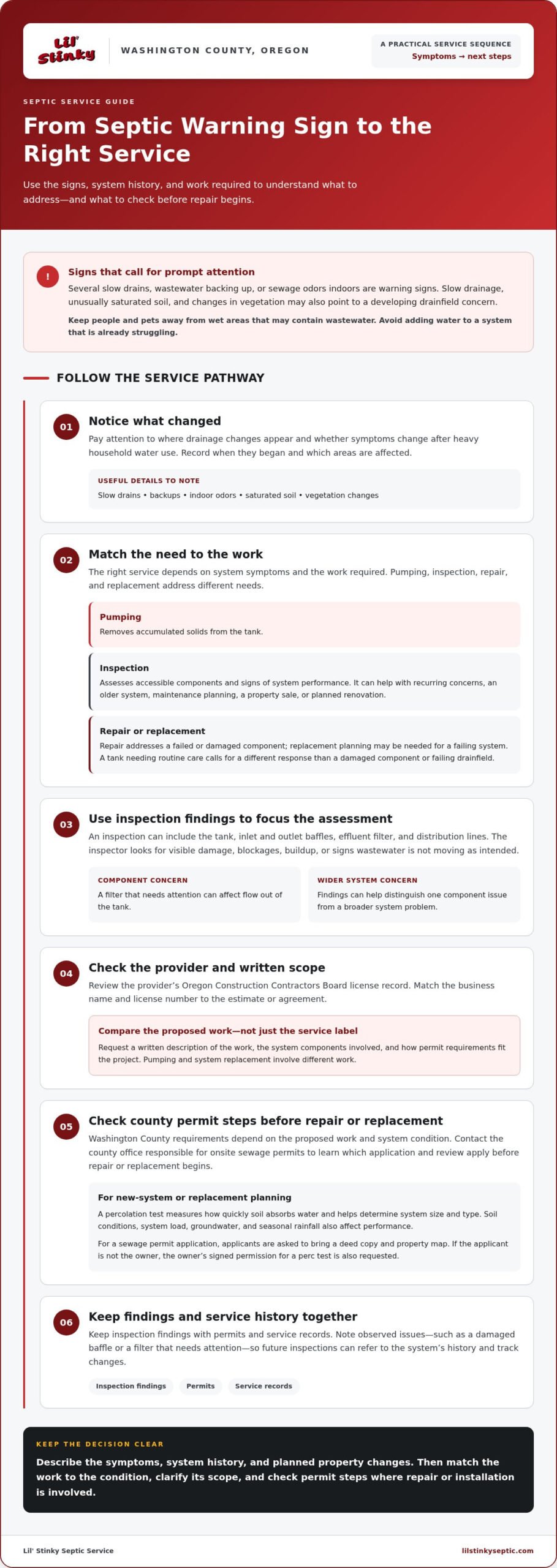
A septic problem is easier to address when you understand what the signs may mean. Septic service in Washington County, OR, can include routine care or help with a developing concern, depending on how your system is performing. Slow drainage, saturated ground, or changes in vegetation may point to drainfield concerns, so note changes around your home.
It’s understandable to want a clear answer before deciding what to do next. This guide explains what septic care can include, when an inspection may help, and what to consider when a system needs attention. Understanding how pumping, inspections, repairs, and installation fit together can help you choose a practical next step for your property.
Key Takeaways
- Learn what an inspection can reveal about tanks, baffles, filters, and distribution lines, and when it may help you assess a system.
- Recognize how drainage changes and saturated soil can signal a developing concern, then understand the practical next steps for service.
- Compare the roles of pumping, inspections, installation, and other septic system options to identify the kind of help your property may need.
- Understand what to consider when choosing septic service in Washington County, including the work required and how local system conditions can shape it.
Inspection of tanks, baffles, filters, and distribution lines
A septic inspection reviews accessible system components and signs of performance. For a home sale, renovation, or recurring concern, a documented assessment can clarify the next step.
Tank and Distribution Line Checks
An inspection can include the tank, inlet and outlet baffles, effluent filter, and distribution lines. The inspector looks for visible damage, blockages, buildup, or signs that wastewater is not moving through the system as intended. For example, a filter that needs attention can affect flow out of the tank. The findings help distinguish a component concern from a wider system issue.
To review septic permits and records for a Washington County property, gather the address or parcel details and request the onsite wastewater file from the county office responsible for septic records. Review available permits, system plans, and prior inspection documents together to compare the site layout with the recorded work.
Inspection Reasons and Benefits
Inspections can help with routine maintenance planning, assessment of an older system, and identifying concerns before a property sale. They’re also useful when drainage problems recur or you’re planning an addition, basement finish, or major property change. An inspection gives you a clearer picture of component condition and can help prioritize follow-up work.
During a home purchase or sale, arrange a septic inspection to understand the system’s condition and review its records. Treat a well inspection as a separate part of property due diligence because it assesses the water supply, not the septic system. Reviewing both gives buyers information about two distinct parts of a home’s infrastructure.
Keep inspection findings with permits and service records. Note observed issues, such as a damaged baffle or a filter that needs attention, and use them to plan maintenance. These records give future inspections a useful reference and help you track changes without relying on memory.
Septic inspections can be useful at different stages of property ownership: during a real estate transaction, as part of routine maintenance, with an older system, before an addition or renovation, or when concerns recur. An inspection helps assess the system in each situation.
Septic pumping, repair, and service
Choose the next step based on the system’s symptoms and the work required. Pumping removes accumulated solids; a repair addresses a failed or damaged component.
Washington County requirements depend on the proposed work and system condition. Before repair or replacement begins, contact the county office responsible for onsite sewage permits to learn which application and review apply.
Available Septic Services
The right service may be pumping, inspection, repair, or system replacement. A tank needing routine care calls for a different response than a damaged component or a failing drainfield. Describe the symptoms, system history, and planned property changes so the work can address the issue.
For a repair or installation, identify the work scope and permit steps before construction is scheduled. Permit review can depend on the existing system and proposed changes, so don’t assume every service call involves the same work.
Pumping Service Providers
When choosing septic service in Washington County, OR, identify the work you need, then review the provider’s Oregon Construction Contractors Board license record. Match the business name and license number to the estimate or agreement. Pumping and system replacement involve different work, so be clear about the service required.
Compare the proposed scope, not just the service label. Request a written description of the work, the system components involved, and how permit requirements fit the project. This helps clarify what the visit or repair will address.
Emergency Service Warning Signs
Act promptly if several drains slow, wastewater backs up, or sewage odors appear indoors. Slow drainage, unusually saturated soil, and changes in vegetation may also signal developing drainfield concerns. Keep people and pets away from wet areas that may contain wastewater, and avoid adding water to a system that is already struggling.
For a malfunction, describe where symptoms appear and when they began. Before a contractor starts repair work, contact the county office about applicable permit steps. If pumping is the identified need, arrange septic tank pumping as the practical next step.
What septic services are available in Washington County, Oregon?
Properties without public sewage collection rely on onsite septic systems to manage wastewater. In Washington County, property needs may include system assessment, routine maintenance, site testing, or replacement planning.
For an existing system, an inspection can help assess performance before a home sale or renovation, or when concerns recur. Slow drainage, saturated soil, and vegetation changes may point to developing drainfield problems. Record where symptoms appear and whether they change after heavy household water use. These details help focus the assessment on the affected area.
New systems and replacement plans depend on site suitability. A percolation test measures how quickly soil absorbs water, helping determine the system’s size and type. Soil conditions, system load, groundwater, and seasonal rainfall also affect performance. For a sewage permit application, applicants are asked to bring a deed copy and property map. If the applicant isn’t the owner, the owner’s signed permission for a perc test is also requested.
The Washington County Sewage Council assigns a Sewage Officer after a property owner visits to discuss the sewage permit application process. For a property subdivision, sewage planning documents must be arranged through the council before a survey is approved. These steps matter because the site plan must account for sewage disposal, not just proposed lot boundaries.
When a system is failing, Washington County may issue a replacement permit based on available information. Most septic malfunctions require a repair permit, and property owners are advised to contact the Washington County Sewage Council before work begins. This helps clarify the required approval before the existing system is changed.
Which septic tank pumping companies serve Washington County, OR?
Washington County is within the greater Portland area served by septic service providers. To identify the right pumping service, start with your property’s location and the work needed. A routine tank visit differs from a call prompted by slow drainage or possible system failure.
Before arranging a visit, locate the tank access and gather any available system records. Note recent symptoms, such as slow drains, odors, or wet ground near the drainfield. These details help describe the situation and distinguish a pumping need from a concern that may require inspection or repair.
Pumping removes accumulated solids from the septic tank, while an inspection assesses system condition. The right service depends on the issue, the tank’s condition, and the system layout. For example, a household preparing for a sale may need an inspection, while a tank requiring routine care needs pumping.
Washington County properties can have different site conditions, system designs, and wastewater loads, all of which affect the work involved. Keep permits, previous service notes, and inspection findings together. Sharing them gives the technician useful context about the system and changes over time.
For a clear next step, identify whether you need tank pumping or a broader system assessment, then use a service that covers Washington County. If pumping is the need, arrange septic tank pumping for your property. If symptoms include saturated soil or recurring slow drainage, note those signs as well, since they can point to drain field concerns beyond the tank.
The Washington County Sewage Council’s dye test traces whether wastewater and gray water flow into the septic tank rather than elsewhere on the property. It can help clarify where those flows go. When seeking guidance, describe the concern, including whether it involves wastewater or gray water.
Residents with a sewage malfunction in their community are instructed to contact their municipal office, which will forward the concern to the Washington County Sewage Council. For a sewage malfunction, follow that route rather than assuming tank pumping is the right first step. Explain the issue clearly so it can be passed along through the stated process.
Lil’ Stinky Septic Service: Septic Tank Pumping
Lil’ Stinky Septic Service provides expert septic tank pumping for routine tank care and other essential pumping needs. If you’re unsure whether pumping will address your specific problem, a professional septic inspection can assess your system’s condition and identify concerns that may require alternative solutions.
For property owners planning a new or replacement system, Lil’ Stinky Septic Service also handles septic installation and ATT systems. The right next step depends on your property’s unique requirements: pumping focuses on clearing the tank, an inspection evaluates overall system health, and installation addresses the complete setup.
When discussing your septic needs, be sure to share any warning signs you’ve noticed, such as slow drainage or unusually saturated ground. Contact Lil’ Stinky Septic Service for reliable septic service Washington County OR homeowners can trust for pumping, thorough inspections, and comprehensive system care.
Take the Next Step Toward Confident System Care
Make your next decision easier by writing down what you’ve noticed and what you need from your septic system. A clear note about a recurring concern, planned property work, or an upcoming sale helps focus the conversation on your priorities. That preparation makes septic service in Washington County, OR, a practical part of caring for your property.
Lil’ Stinky Septic Service provides septic tank pumping, septic inspections, and septic installation. Choose the service that matches your immediate need, whether you’re planning routine care or addressing a system concern. A clear conversation can help identify a sensible next step for your property.
Contact Lil’ Stinky Septic Service to discuss your septic system needs. A little planning now can help you move forward with greater confidence.
Frequently Asked Questions
How often should septic tanks be inspected and pumped in Washington County?
Track tank condition, household water use, and previous service records to plan inspection and pumping. Use inspection findings to guide the next pumping visit instead of relying on a generic calendar interval. In Canby, keep receipts and notes together so changes in service history are easy to spot. Lil’ Stinky Septic Service provides septic inspections and pumping to help homeowners plan care around their system’s needs.
What septic services are available for failing systems, drain fields, and septic tank replacement in Washington County?
Lil’ Stinky Septic Service provides septic inspections, septic installation, and ATT systems. An inspection can help assess a problem; installation may address replacement, while ATT systems suit certain site conditions. For repair work in Washington County, the Sewage Council advises owners to contact it before work begins, since most septic malfunctions require a repair permit.