Working with a small lot doesn’t automatically disqualify a property from having a functional, code-compliant septic system — but it does require more careful planning. When conventional systems don’t fit, advanced treatment options can make an otherwise unbuildable or unsellable lot viable. The right solution depends on your soil conditions, lot size, setback requirements, and local regulations.
Many homeowners and builders run into the same frustrations: failed perc tests, insufficient drain field space, or systems that work for a few years before backing up. We’ll walk through why conventional septic systems struggle on tight properties, what alternative solutions are available, and how Advanced Treatment Technology (ATT) systems are changing what’s possible on constrained sites.
From site assessment to cost comparisons, we cover the practical information needed to make a confident, informed decision — whether you’re building new, replacing a failing system, or evaluating a property before purchase.
Septic System Challenges on Small Lots
Small lots create real constraints for septic system design — limited square footage, strict setback rules, poor soil conditions, and drainage problems can all make a standard septic installation impossible or impractical.
Limited Space and Zoning Restrictions
Most conventional septic systems require a primary drainfield plus a reserve area for future repairs or replacement. On a small lot, finding enough room for both is often the first obstacle we run into.
Local health departments typically enforce minimum setback distances from:
- Property lines (commonly 5–10 ft)
- Wells or water sources (often 50–100 ft)
- Structures and driveways (typically 10–20 ft)
- Streams or wetlands (50 ft or more in many jurisdictions)
Once we subtract all setbacks from a small parcel, the usable area for a drainfield can shrink dramatically. On lots under half an acre, there often isn’t enough room left for a conventional system at all.
Soil Quality and Drainage Issues
Even when space exists, soil conditions can disqualify a standard drainfield. Clay-heavy soils absorb water too slowly, causing effluent to pool at the surface. Shallow rocky soils don’t provide enough depth for proper filtration before wastewater reaches groundwater.
The two most common soil problems we see on small lots:
| Soil Issue | What It Means for Septic |
| High clay content | Poor drainage, effluent backs up |
| Shallow bedrock | Insufficient treatment depth |
| Compacted fill soil | Reduced absorption capacity |
| Sandy or gravelly soil | Too fast — inadequate treatment time |
Soil conditions aren’t always visible from the surface, which is why a full soil evaluation matters before any system is designed.
Failed Perc Tests and High Water Tables
A percolation (perc) test measures how quickly soil absorbs water. Conventional systems require soil that absorbs at a rate within a specific range — typically between 1 and 60 minutes per inch. Soil that absorbs too slowly or too quickly fails.
A high water table compounds this problem. If seasonal groundwater sits within 24 inches of the surface, there isn’t enough unsaturated soil to treat effluent before it reaches the water supply.
A failed perc test doesn’t necessarily mean a lot is unbuildable. It does mean a conventional gravity-fed system isn’t an option, and an engineered alternative will be required.
Conventional Septic System Limitations
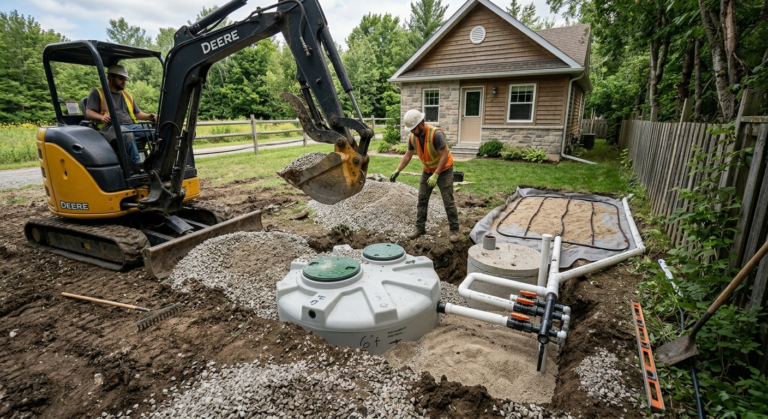
Conventional septic systems were designed for properties with ample land and favorable soil conditions — two things small lots rarely offer. Understanding where these systems fall short helps explain why so many small-lot homeowners end up with failing systems, permit denials, or costly repairs.
How Traditional Systems Work
A conventional septic system moves wastewater through two main components: a septic tank and a drain field (also called a leach field).
- Wastewater flows from the home into the septic tank
- Solids settle and separate; liquid effluent rises to the top
- Effluent exits the tank and disperses through perforated pipes buried in gravel trenches
- The surrounding soil filters and absorbs the liquid
The drain field does the heavy lifting. It requires unsaturated, permeable soil to absorb and treat effluent before it reaches groundwater. This process works well when there is enough suitable land — but that condition is the first thing a small lot challenges.
Why Space Constraints Impact Performance
A standard drain field for a 3-bedroom home typically requires 900–1,500 square feet of suitable soil area, plus an equal-sized reserve area for future repairs. On a small lot, that square footage may simply not exist.
Even when space is technically available, small lots often push the drain field closer to:
- Property lines (setback minimums of 5–10 feet are common)
- Wells or water sources (minimum 50–100 feet depending on jurisdiction)
- Structures, driveways, and trees that compact soil or damage pipes
Compacted or disrupted soil loses its absorption capacity. Once that happens, effluent backs up rather than dispersing properly.
Common Signs of System Failure
When a conventional system runs out of functional drain field space, the warning signs are hard to miss:
| Sign | What It Indicates |
| Sewage odors in the yard | Effluent surfacing above ground |
| Slow drains throughout the home | Drain field saturation |
| Wet, spongy patches over the drain field | Pooling effluent below the surface |
| Sewage backup inside the home | Complete system overload |
These aren’t just inconveniences. Surfacing effluent is a public health violation in most jurisdictions and can trigger mandatory system replacement.
Alternative Septic Solutions for Tight Properties
When a conventional drain field isn’t possible, mound systems, drip irrigation dispersal, and recirculating sand filters each offer a viable path forward depending on your site’s specific constraints.
Mound Systems and Raised Beds
A mound system elevates the drain field above the natural soil surface, which solves two common small-lot problems: shallow bedrock and poor soil absorption. Engineered fill — typically clean sand — is placed above the native ground, and effluent disperses through that imported material instead.
Mound systems do consume more surface area than a standard trench system. However, they can be shaped and graded to fit narrow or irregular parcels when designed correctly.
Key considerations:
- Requires 2–4 feet of engineered fill in many cases
- The mound footprint must meet setback requirements from property lines, wells, and structures
- Regular inspection of the pump and distribution system is necessary
They work well on lots with high water tables or slowly permeable soils like clay where a traditional leach field would saturate and fail.
Drip Irrigation Dispersal
Drip dispersal delivers treated effluent directly into the shallow root zone of the soil through a network of small-diameter tubing. Because the tubing is buried only 6–12 inches deep and can follow the contours of a lot, it adapts to oddly shaped or restricted parcels far better than trenched systems.
The system requires a pump, filter, and timer to distribute effluent in controlled doses. This prevents surface ponding and keeps the soil aerobic, which improves treatment.
| Feature | Drip Dispersal | Conventional Trench |
| Installation depth | 6–12 inches | 24–36 inches |
| Flexibility on irregular lots | High | Low |
| Ongoing maintenance | Moderate | Low |
Drip systems are typically paired with an ATT unit to meet the effluent quality standards required before drip distribution.
Recirculating Sand Filters
A recirculating sand filter (RSF) passes effluent repeatedly through a sand media bed before final dispersal. Each pass improves treatment quality, which allows the final dispersal area to be significantly smaller than a standard system would require.
This size reduction is the primary reason RSFs are used on constrained lots. A well-designed RSF can reduce the required dispersal footprint by 50% or more compared to a conventional system.
The sand filter itself occupies a compact concrete or fiberglass bed and can be installed above or below grade. Maintenance involves:
- Periodic inspection of the recirculation pump
- Monitoring effluent distribution across the sand surface
- Replacing sand media if clogging occurs, typically after 15–20 years
Advanced Treatment Technology (ATT) Systems: A Tailored Approach for Small Lots
ATT systems process wastewater to a higher standard before it reaches the soil, which means they require significantly less drain field space than conventional systems. This makes them one of the most practical options available when lot size, soil conditions, or setback requirements limit what a standard system can do.
What Makes ATT Systems Different
A conventional septic system relies almost entirely on the soil to treat wastewater after it leaves the tank. ATT systems handle most of that treatment mechanically or biologically before the effluent ever reaches the ground.
Common ATT technologies include:
- Media filters (sand, peat, or textile)
- Aerobic treatment units (ATUs) that inject oxygen to accelerate bacterial breakdown
- Drip irrigation systems that distribute highly treated effluent in small, controlled doses
- Constructed wetland systems
Because the effluent leaving an ATT system is already treated to a much higher quality — often meeting NSF/ANSI Standard 40 Class I — it places far less demand on the soil for final treatment.
Core Benefits for Limited-Space Properties
The reduced soil loading rate is the most direct advantage on a small lot. A conventional system might require 1,500–2,500 square feet of drain field. An ATT-based system with drip irrigation or a textile filter can often operate in 30–50% less space.
Key practical benefits include:
| Benefit | Why It Matters on Small Lots |
| Smaller drain field footprint | More usable yard space |
| Flexible component placement | Works around setbacks and structures |
| Higher effluent quality | Approved in areas where conventional systems are not |
| Scalable design | Sized to match actual household flow |
ATT systems also allow designers to split or relocate system components, which matters when working around property lines, wells, or existing structures.
Performance in Challenging Soil and Water Conditions
Small lots frequently come with difficult soil profiles — tight clay, shallow bedrock, or a seasonally high water table. These are exactly the conditions that cause conventional systems to fail perc tests or receive permit denials.
ATT systems address this directly. Because the effluent is pre-treated, it can be dispersed at much lower application rates, reducing the risk of saturation and surfacing. A drip dispersal system, for example, applies effluent in timed micro-doses measured in gallons per square foot per day, staying well within what even marginal soils can absorb.
In high water table areas, some ATT configurations are engineered to discharge above the seasonal high water mark, which removes the constraint entirely.
Real-World Example: Small Lot Success with ATT
Consider a 0.4-acre residential lot with a failed perc test due to clay soil at 18 inches. A conventional system was not approvable. The solution was a textile media filter paired with a pressurized drip dispersal field — the entire system fit within a 600 square foot footprint.
The system met state secondary treatment standards, received permit approval, and the property closed on schedule. The homeowner retained usable backyard space and the system has operated without issue.
This type of outcome is repeatable. ATT systems are not a last resort — they are a reliable engineering solution for lots that conventional designs simply cannot serve.
Assessing Your Site: What to Know Before Choosing a Septic Solution
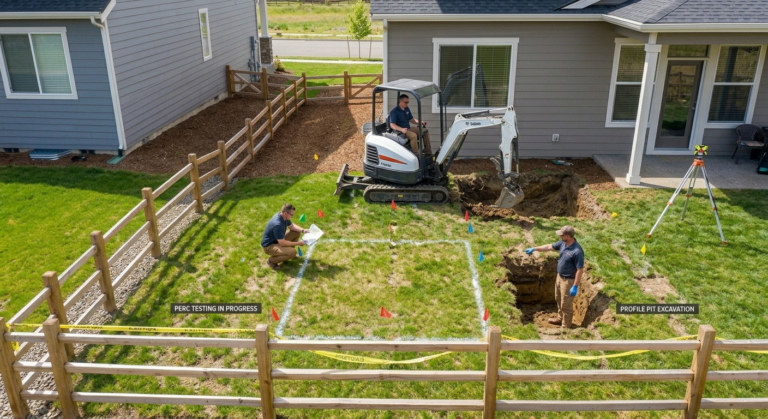
Before committing to any septic system, a proper site assessment determines what will actually work on your property — and what won’t. Soil conditions, lot boundaries, and local code requirements all directly shape your options.
Importance of Professional Site Evaluation
A licensed site evaluator or soil scientist will conduct a percolation test and soil profile analysis to measure how quickly water moves through your soil. These results are not optional — they are the foundation of every system decision we make.
Key factors assessed during a site evaluation include:
- Soil texture and permeability (sandy, clay, loam)
- Seasonal high water table depth
- Available square footage for drain field placement
- Setback distances from wells, property lines, and structures
On small lots, these measurements often eliminate conventional gravity-fed systems from consideration entirely. A professional evaluation tells us which systems are permitted, not just which ones are preferred.
Understanding Local Regulations
Every municipality has specific rules governing septic system design, installation, and minimum lot requirements. We must obtain permits before any installation begins, and the system design must be approved by the local health or environmental department.
Regulations vary significantly by location. Some jurisdictions require:
| Requirement | Typical Range |
| Setback from well | 50–100 ft |
| Setback from property line | 5–25 ft |
| Minimum lot size for conventional systems | Varies widely |
| Required system maintenance contracts | Often mandatory for ATT systems |
Ignoring these rules can result in fines, mandatory system removal, or complications when selling the property. We always recommend confirming requirements with the local permitting office before purchasing land intended for residential use.
Working with Experienced Installers
Not every septic installer has experience with the range of systems suited to small or restricted lots. We need someone who is licensed, familiar with local codes, and has a track record with alternative and advanced treatment systems specifically.
Ask potential installers:
- How many systems have you installed on lots under [your lot size]?
- Are you certified to install ATT or drip irrigation systems?
- Can you provide references from similar projects?
An experienced installer catches site challenges early, coordinates with regulators, and recommends systems based on what has actually performed well in comparable conditions — not just what is easiest to install.
Cost Considerations and Long-Term Value
Septic systems on small lots often come with higher upfront costs than standard installations, but the right choice can save significant money over time and protect property value.
Comparing Installation Costs
Conventional gravity-fed septic systems are the least expensive to install, typically ranging from $3,000 to $7,000. However, small lots rarely qualify for them due to setback requirements and limited drain field space.
Here’s how common small-lot options compare:
| System Type | Typical Installation Cost |
| Conventional gravity system | $3,000 – $7,000 |
| Mound system | $10,000 – $20,000 |
| Aerobic treatment unit (ATU/ATT) | $10,000 – $20,000 |
| Drip irrigation system | $15,000 – $25,000 |
ATT systems sit in a similar price range to mound systems but typically require a smaller footprint, which matters when lot size is limited.
Maintenance and Longevity
ATT systems require more active maintenance than conventional systems. Most require a service contract, with annual costs typically running $300 to $600 for inspections, filter cleaning, and mechanical checks.
Conventional systems have lower annual maintenance costs but fail more frequently on difficult lots — leading to drain field replacement costs of $5,000 to $15,000 or more.
A well-maintained ATT system can last 20 to 30 years. Neglecting routine service is the most common reason for premature failure, so budgeting for ongoing maintenance is not optional — it’s part of the system’s design.
Resale Value and Environmental Impact
A permitted, functioning septic system is a baseline requirement for selling a property. On a small lot, a failed or undersized system can reduce resale value significantly or block a sale entirely.
ATT systems, when properly documented and maintained, reassure buyers and inspectors. They signal that the property meets current regulatory standards.
From an environmental standpoint, ATT systems discharge treated effluent that meets nitrogen and pathogen reduction standards conventional systems cannot match. This matters on small lots where the drain field sits closer to wells, streams, or neighboring properties.
Conclusion
Small lots don’t have to mean dead-end options when it comes to wastewater management. The right system exists for nearly every challenging property — it just takes knowing where to look.
Here’s a quick recap of what actually works on tight properties:
- Mound systems work well where shallow soil depth is the issue
- Drip irrigation systems distribute effluent across a smaller footprint efficiently
- Aerobic treatment units (ATUs) handle high water tables and poor perc results
- ATT systems are often the most reliable path forward when conventional systems simply won’t pass inspection
The key takeaway is that a failed perc test or a compact lot is not the end of the road. We’ve seen properties that looked completely unbuildable become fully functional homes once the right alternative system was identified and installed.
Working with a qualified engineer or septic specialist early in the process saves significant time and money. Many homeowners wait until they’ve already hit a wall before consulting a professional — and that delay can be costly.
If you’re dealing with a small lot, restrictive soil conditions, or a property that has already failed conventional testing, we encourage you to reach out to a licensed septic professional in your area. Getting the right assessment upfront gives you a clear picture of your options before you commit to a purchase or a build. The solution is out there — it just needs to be matched correctly to your site.
Frequently Asked Questions
Small lot septic design raises specific questions about space constraints, soil conditions, setback rules, system costs, and when alternative technology becomes the only viable path forward.
What septic options can work when the yard is too small for a traditional drainfield?
When a lot is too small for a conventional gravity-fed drainfield, several alternatives can work depending on site conditions. Mound systems raise the drainfield above grade, reducing the horizontal footprint. Drip irrigation systems distribute treated effluent through subsurface emitters in a grid pattern, which can be configured around irregular or narrow lot shapes.
Aerobic treatment units (ATUs) combined with drip dispersal are one of the most compact combinations available. Pressure-dosed systems distribute effluent in controlled doses, allowing smaller trench areas to recover between cycles. Chamber systems can also reduce total square footage compared to gravel-and-pipe trenches in some soil types.
How do setback requirements and property-line clearances limit on-site wastewater designs on compact parcels?
Setback rules vary by state and county, but typical minimums require septic tanks to sit at least 5–10 feet from property lines, with drainfields set back 10–25 feet. Wells, surface water, and structures each carry their own clearance distances, often 50–100 feet for drainfield-to-well separation.
On a half-acre lot with a house, driveway, and well already placed, the usable area for a drainfield can shrink to a fraction of what the design actually requires. We often see situations where the geometry of the lot — not the soil quality — is the primary limiting factor. In those cases, reducing the required drainfield footprint through advanced treatment is sometimes the only way to fit a compliant system on the property.
Why do small properties fail percolation tests more often, and what can be done when they do?
Small lots tend to be what’s left after more buildable land has already been developed. They are disproportionately located in areas with clay-heavy soils, shallow bedrock, or high seasonal water tables — conditions that slow percolation and commonly produce failing perc test results.
A failed perc test means the soil cannot absorb effluent fast enough to meet minimum standards for a conventional system. When that happens, we have a few paths forward. Soil remediation through fracturing or imported fill is sometimes permitted. More commonly, the solution is shifting to a system that either pre-treats effluent to a higher standard before dispersal or uses a dispersal method — like drip irrigation — that works with slower-absorbing soils.
When is an advanced treatment system required, and how does it reduce the drainfield footprint?
Most jurisdictions require an advanced treatment system when a site fails conventional standards — failed perc tests, proximity to sensitive water bodies, or insufficient setback distances are the most common triggers. Some counties also mandate advanced treatment on lots below a certain acreage threshold.
ATT systems treat wastewater to a significantly higher quality before it reaches the soil. Because the effluent entering the drainfield carries lower levels of biological oxygen demand (BOD) and total suspended solids (TSS), the soil does not have to work as hard to complete treatment. This directly translates to a smaller required drainfield area — in many jurisdictions, advanced pre-treatment can reduce the required dispersal area by 50% or more.
That size reduction is critical on tight lots. A drainfield that would have needed 2,000 square feet under conventional standards might qualify for 900–1,000 square feet after advanced treatment, which can be the difference between a buildable lot and an unbuildable one.
What are the typical costs, maintenance needs, and operating requirements for alternative on-site wastewater systems?
Alternative systems cost more upfront than conventional septic. A standard gravity system might run $8,000–$15,000 installed, while an ATU with drip dispersal can range from $20,000–$40,000 or higher depending on site conditions, system capacity, and local labor rates.
Ongoing maintenance is a real factor. Most advanced treatment systems require a service contract, with inspections every 3–6 months. ATUs have mechanical components — air pumps, blowers, and float switches — that need periodic servicing and eventual replacement. Annual operating costs for a maintained ATU system typically fall between $300–$600 per year for a residential installation.
Permitting, monitoring reports, and effluent sampling may also be required annually depending on the jurisdiction. We recommend budgeting for these costs from the start rather than treating them as surprises after installation.
How do high groundwater, clay-heavy soils, or nearby wells change the most practical system choice for a tight site?
High groundwater limits how deep a drainfield can be buried, often requiring a mound or elevated drip system to achieve adequate separation between the dispersal zone and the seasonal high water table. Most regulations require at least 12–24 inches of separation between the bottom of the drainfield and the high groundwater mark.
Clay soils reduce hydraulic conductivity, meaning effluent moves through them slowly. On a small lot with clay, a conventional drainfield may simply not have enough area to disperse effluent at the rate the household generates it. Pre-treating effluent to a higher standard before dispersal — or switching to drip irrigation, which applies effluent in small, timed doses — are both effective strategies for clay-heavy sites.
Proximity to a private well tightens the usable area significantly. If a well sits near the center of a small parcel, the required separation distance can eliminate most of the lot as a viable drainfield location. In those situations, we typically look at drip dispersal systems first, since their smaller footprint and flexible layout offer the best chance of fitting within the remaining compliant area.