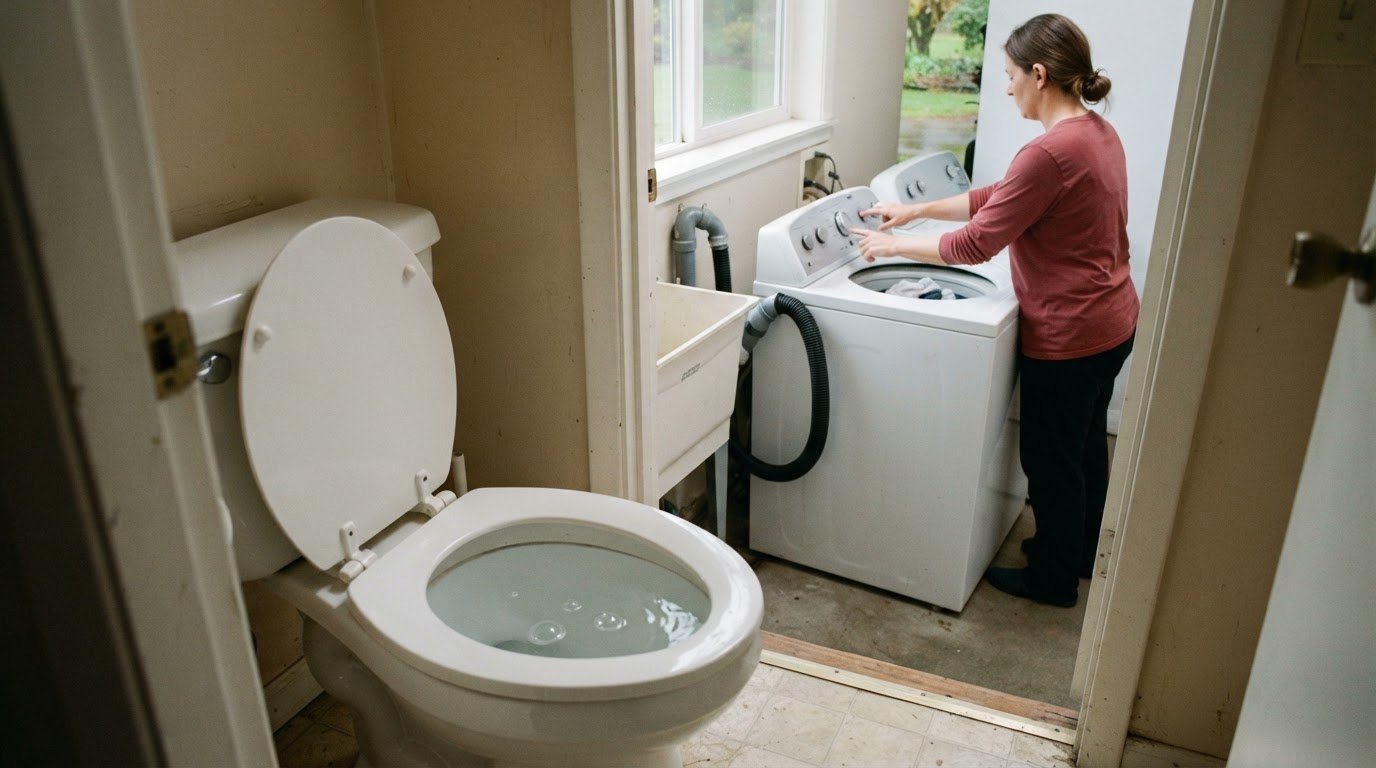
A gurgling toilet during a washer’s drain cycle doesn’t automatically mean the septic tank is full. Toilet gurgling when the washer drains can point to a septic-system problem, a blocked plumbing vent, or a restriction in a shared drain line. Whether other fixtures are affected, drains are slow, or wastewater is backing up helps narrow down the cause.
It’s understandable to suspect the septic system when a large load of laundry triggers bubbling in the bathroom. But the same symptom can happen when air can’t move properly through the plumbing, so pumping isn’t always the right fix. If the toilet bubbles, pause the washer and limit water use to reduce the risk of a backup.
This guide explains how symptoms differ, how a vent or localized obstruction may contribute, and when septic tank pumping may help. You’ll also learn why recurring gurgling, slow drains, or wastewater backing up call for a closer look at the system rather than guesswork.
Key Takeaways
- Use the pattern of affected fixtures, slow drains, and backups to help distinguish a vent problem from a septic or drain obstruction.
- If the toilet bubbles during a washer drain cycle, stop the washer and reduce water use to limit the risk of wastewater backing up.
- Pumping may help when solids have reduced the tank’s available capacity, but it won’t correct a blocked vent or failing drain field.
- When the cause isn’t clear or symptoms recur, drain cleaning or a septic inspection can help identify where the flow is restricted.
Blocked plumbing vents
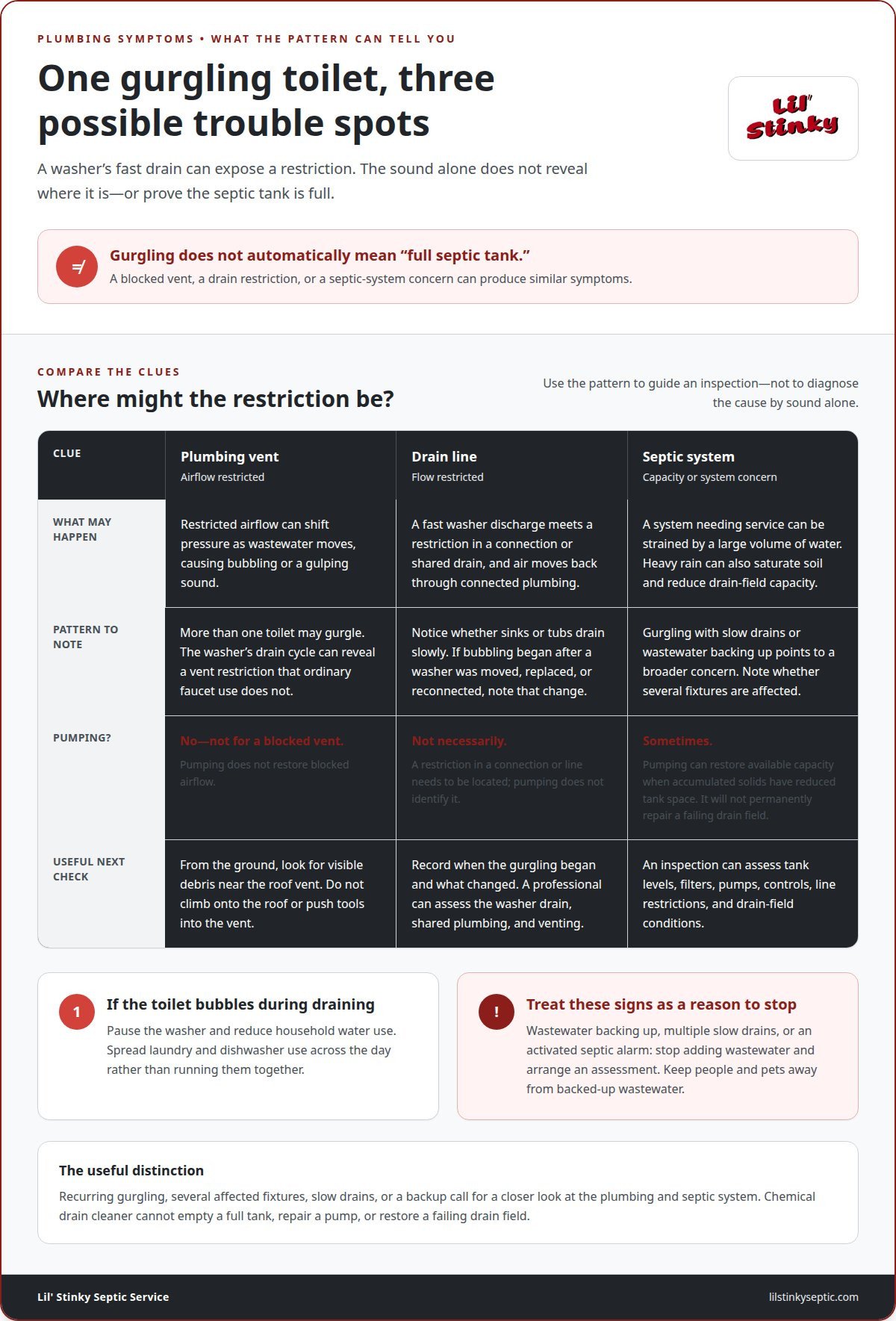
A blocked plumbing vent can make a toilet gurgle when washer water rushes through shared drains. Plumbing vents let air move through drain pipes as wastewater flows. If airflow is restricted, pressure changes can cause bubbling or a gulping sound in the bowl. That sound alone doesn’t prove the septic tank is full.
Leaves, debris, nests, snow, or ice can obstruct a roof vent stack. In cold weather, ice can restrict airflow and contribute to toilet gurgling. A vent blockage may affect fixtures in more than one bathroom. One homeowner reported that both toilets in the house gurgled. That pattern can suggest a shared airflow issue, but it doesn’t identify the cause by itself.
For safe troubleshooting, stop the washer if the toilet bubbles and reduce household water use. Note whether one or both toilets gurgle and whether sinks or tubs drain slowly. From the ground, look for visible debris around the roof vent. Don’t climb onto the roof or push tools into the vent; a blocked stack needs proper inspection.
Timing adds useful context. If bubbling begins only during the washer’s drain cycle, the fast discharge may expose a vent restriction that ordinary faucet use doesn’t reveal. If gurgling also happens after flushing or affects several fixtures, record those details. Slow drains or wastewater backing up alongside gurgling point to more than a simple noise.
Compare the signs before deciding what to do next. A roof vent blockage is one possible explanation; a drain restriction or septic-system problem can produce similar symptoms. Don’t use chemical drain cleaner as a substitute for finding the cause. It can’t empty a full septic tank, repair a pump, or restore a failing drain field. If gurgling returns, multiple fixtures are affected, or wastewater backs up, stop running laundry and arrange an inspection of the plumbing and septic system.
Will Pumping the Septic Tank Stop the Toilet From Bubbling?
Pumping can restore available capacity when accumulated solids have reduced tank space. It won’t resolve every cause of bubbling, because the washer may expose a restriction elsewhere.
Washer Discharge and Toilet Airflow
A washer sends a large volume of water through its drain in a short time. If that flow meets a restriction, displaced air can escape through a connected toilet bowl. Bubbling can also accompany a sewer-line flow or pressure problem, especially when the bowl water sits unusually low. The sound signals disrupted movement, not the location of the fault.
Spread laundry and dishwasher use across the day instead of running them together. Sending less water into the system at once can reduce strain, particularly when the system needs service. Note whether other fixtures drain slowly or wastewater backs up. Those details help assess whether tank capacity, a line restriction, or another component needs attention.
When to Stop Water Use
Stop running the washer and limit household water if bubbling comes with wastewater backing up, multiple slow drains, or an activated septic alarm. Arrange an assessment before adding more wastewater. Don’t simply reset an alarm; the system can keep filling if the underlying problem remains.
A sewage backup can expose household surfaces to contaminated wastewater and damage flooring or nearby belongings. Keep people and pets away from affected areas while the problem is addressed.
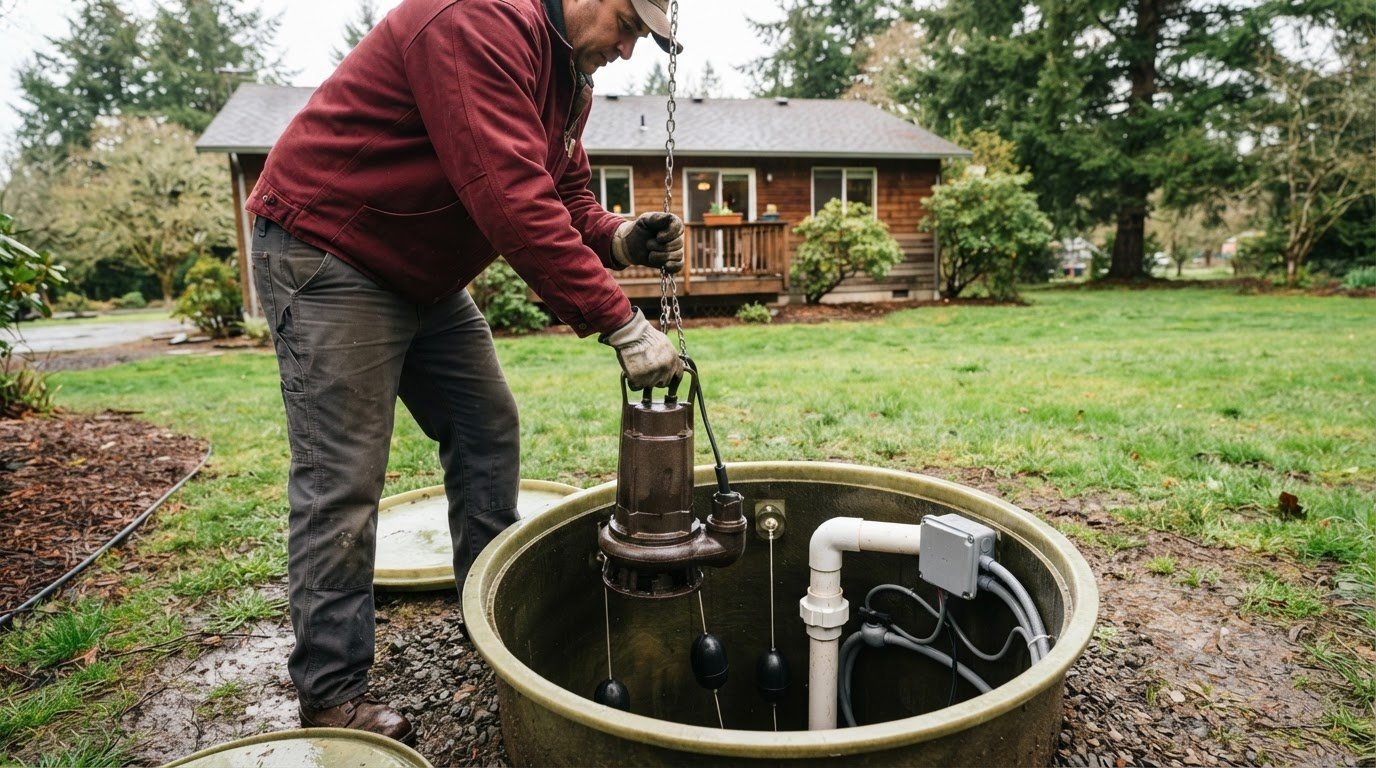
There isn’t one pumping interval that fits every household. Household size, water use, tank capacity, and how quickly solids accumulate all affect the schedule. An inspection can assess tank levels, filters, pumps, controls, line restrictions, and drain-field conditions. Pumping helps when solids have reduced tank capacity, but it won’t permanently repair a failing drain field. A septic system inspection can help identify which part needs attention.
Why Does the Washing Machine Make My Toilet Bubble?
A washer can send a large volume of water into a drain quickly. If the connection or shared drain line restricts that flow, pressure can shift through connected plumbing and make a toilet bubble. The effect may begin after a washer is moved, replaced, or connected differently during laundry-room remodeling. That timing makes the drain connection worth examining.
Local requirements may apply to washer discharge connections and plumbing vent repairs, but rules depend on the jurisdiction and work involved. Don’t assume a washer connection and a vent repair follow identical requirements. A qualified plumbing professional can assess the altered connection and applicable local requirements together.
Yes, a washer can add enough water at once to strain a septic system that needs service. Excessive household water can overload a system, particularly when it already has a problem. Michigan’s SepticSmart guidance recommends spreading out laundry and dishwasher use. Avoid running both during the same period if the toilet bubbles during washer drainage.
Heavy rain can also saturate soil and reduce a drain field’s ability to accept wastewater. In those conditions, a washer’s discharge may make toilet bubbling more likely. Watch for wastewater backing up, slow drains, or gurgling from more than one fixture. The EPA lists gurgling plumbing, slow drains, and wastewater backups as common warning signs of a malfunctioning septic system.
To narrow down a connection issue, note when the symptom began and what changed. For example, bubbling that starts after replacing the washer points toward its drain connection. Bubbling that continues with other water use may indicate a shared restriction or broader system concern. These patterns help direct an inspection, but they don’t prove the cause on their own.
If wastewater backs up, stop the washer and reduce household water use. Don’t keep testing the connection by running repeated loads. A professional can assess the washer drain, shared plumbing, venting, and septic system to locate the restriction. This matters because a connection adjustment won’t solve a separate septic-capacity or drain-field problem.
Localized drain obstructions
A partial blockage in a shared drain can slow washer discharge and send displaced air toward a toilet. The toilet may bubble only while the washer empties because that flow arrives quickly. A restriction in the laundry branch, a nearby connection, or a shared pipe can create similar symptoms. The sound alone doesn’t show where the obstruction is.
Notice which fixtures react. If one toilet gurgles while nearby sinks and tubs drain normally, the affected branch or its connection deserves attention. If several fixtures drain slowly or gurgle, the restriction may involve a shared line farther downstream. These patterns help narrow the inspection, but they don’t confirm a specific blockage.
A plumbing professional can trace the washer’s route into the drain system and assess where flow slows. The inspection may include checking accessible drain connections and determining whether the obstruction is local or farther along the shared pipe. If the washer was recently moved, its discharge connection is another relevant point to examine.
- One affected fixture: Note which toilet bubbles and whether nearby fixtures drain freely.
- Several affected fixtures: Record each slow drain or gurgling sound for the inspection.
- Wastewater backing up: Stop the washer and reduce household water use.
Don’t pour chemical drain cleaner into the plumbing as a shortcut. It can’t empty a full septic tank, repair a pump, or restore a failing drain field. A blocked septic-tank inlet baffle is another possible cause of gurgling and wastewater backing up at a low drain. This possibility makes it important to distinguish a pipe restriction from a septic-system issue.
When symptoms recur with laundry, get help locating a drain obstruction rather than repeatedly testing the line with washer loads. A focused assessment can identify whether the problem lies in a localized drain or involves a broader system concern.
Lil’ Stinky Septic Service: Drain Cleaning
Lil’ Stinky Septic Service provides drain cleaning when a washer-triggered toilet bubble may come from a localized obstruction. Clearing a drain restriction addresses a different problem than pumping a septic tank, so identifying where flow slows matters. If symptoms include recurring gurgling, slow drains, or wastewater backing up, an inspection can help determine whether the cause involves the drain or septic system.
Septic tank pumping may help when accumulated solids have reduced available tank capacity. It won’t resolve a blocked plumbing vent or a failing drain field. A septic inspection helps assess the system and determine which issue needs attention, rather than treating every gurgling toilet as a full tank.
If washer drainage keeps triggering toilet gurgling or wastewater backup, contact Lil’ Stinky Septic Service to discuss the problem.
Choose a Clear Next Step for Your Home
If your toilet gurgles when the washer drains, treat the next occurrence as a reason to act, not to keep testing the plumbing. Pause laundry, limit water use if symptoms continue, and note what changed before the noise began. That information can help pinpoint whether the concern lies in a drain or the septic system.
Lil’ Stinky Septic Service can assess septic concerns through inspections and pumping when service is appropriate. Septic installation is also available when a system needs a different solution. The right next step depends on what the inspection finds, not on the sound alone.
Recurring symptoms or wastewater backing up deserve prompt attention. Contact Lil’ Stinky Septic Service to discuss what’s happening at your home and choose a practical next step. A clear assessment can help you move forward with confidence.
Frequently Asked Questions
How Can You Tell Whether It Is a Septic Problem?
Look for a cluster of symptoms rather than relying on one toilet’s sound. Gurgling paired with slow drains or wastewater backing up points to a broader system concern; the EPA identifies these as common septic malfunction warning signs. Note whether symptoms affect several fixtures and whether they persist after laundry stops. That pattern gives an inspection more useful context than bubbling alone.
Why does a toilet gurgle when a washing machine drains into a septic system?
A toilet gurgling when a washer drains into a septic system can signal disrupted airflow or flow through connected plumbing. The washer’s rapid discharge may make air escape through the bowl, but the symptom doesn’t diagnose the cause. For example, bubbling that begins during the drain cycle links the symptom to that discharge, while gurgling at other times suggests the issue may extend beyond laundry.
Does a gurgling toilet indicate a clogged septic line or full septic tank?
No. Gurgling alone doesn’t distinguish a restricted line from reduced tank capacity, a vent blockage, or another problem. A tank with accumulated solids can lose available capacity, while a line restriction interferes with wastewater flow. Pumping addresses tank capacity, not a clogged pipe or vent. The relevant evidence comes from assessing the tank and tracing the system’s flow.
How to tell whether the blockage is in the house drain, septic tank, or drain field
Compare where and when symptoms occur. A single affected fixture narrows attention toward its branch or nearby connection; several slow fixtures suggest a shared route. Tank levels and filters help assess the tank, while the drain field’s ability to accept wastewater is another part of a septic evaluation. In Canby, an inspection can distinguish these components instead of treating every symptom as a tank issue.
What plumbing vent problems cause toilets to gurgle when a washer drains?
Debris, nests, snow, or ice blocking a roof vent stack can restrict airflow and contribute to toilet gurgling. If a toilet gurgles as a washer drains into a septic system, a vent obstruction is one possible explanation, not a diagnosis. Don’t climb onto the roof or probe the vent yourself. Share any timing or weather pattern with the professional assessing the plumbing.