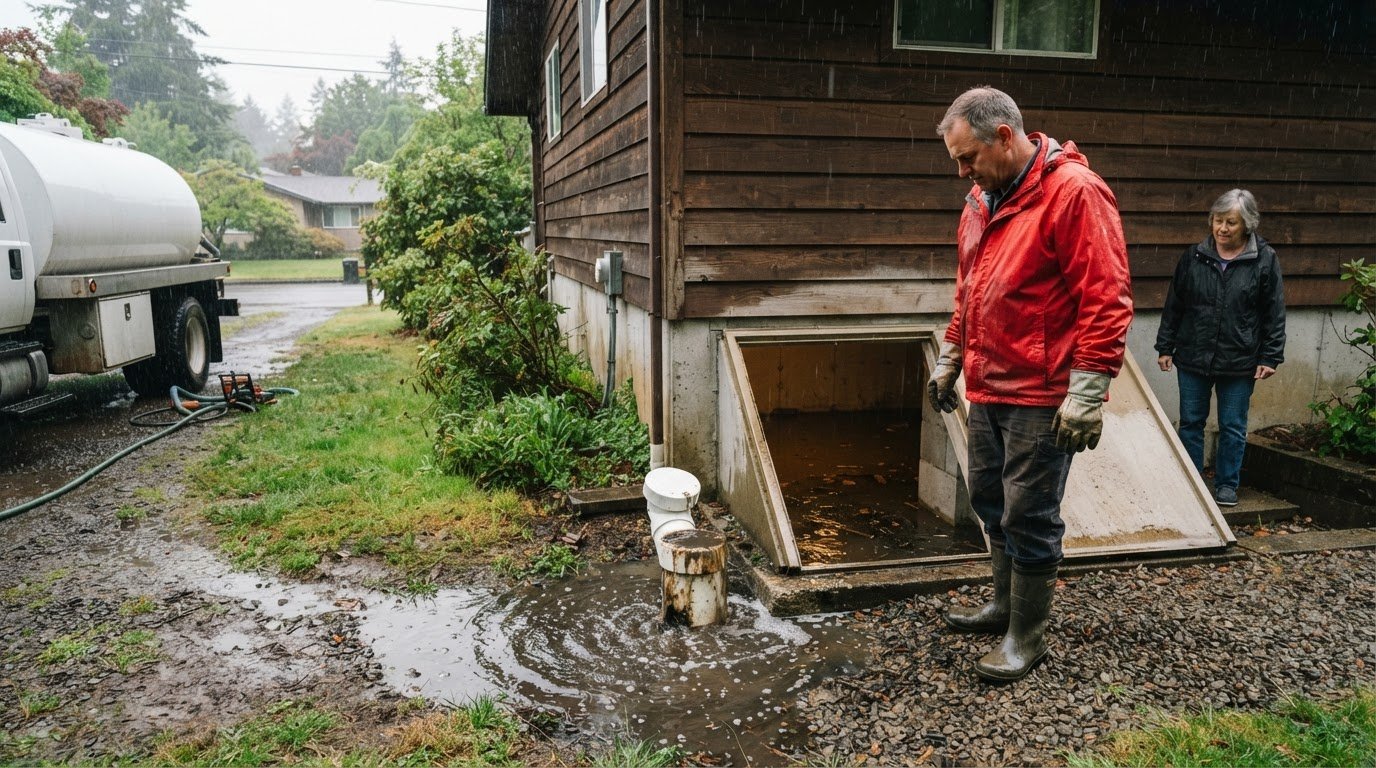
For mobile home septic tank service in Canby, use the tank’s sludge and scum levels to decide when pumping is due: pump when sludge is within 12 inches of the bottom of the outlet tee or scum is within 6 inches. Typical gravity-fed systems should be inspected at least every three years, according to the Oregon Department of Environmental Quality; alternative treatment technology and sand filter systems should be inspected every year.
Mobile-home owners in Canby can follow the same basic septic-care practices as other homeowners: protect the drainfield, keep unsuitable materials out of household drains, and use inspection findings to guide maintenance. This guide explains how a septic system handles wastewater, how sludge and scum measurements inform pumping decisions, and what to consider when planning inspections or service.
Key Takeaways
- Keep medicines, hazardous materials, and everyday waste such as hair and food scraps out of septic drains to help protect the system and surrounding water.
- Understand how wastewater moves from the tank to the drainfield, and keep vehicles, construction, and damaging activity away from that area.
- Use measured sludge and scum levels, not guesswork, to recognize when a tank needs pumping.
- Match inspection timing to your system type, since gravity-fed systems and alternative treatment systems follow different schedules.
1. Protecting health, drinking water, and the environment
A septic tank collects sewage from a home, then wastewater flows to the drainfield. That path matters in Canby because more than 70% of Oregonians depend at least partly on groundwater for drinking water. An improperly installed septic system can potentially contaminate well water used for drinking. Keep the tank, pipes, and drainfield in working order to reduce risks linked to system failure.
Protect the system by keeping harmful materials out of household drains. Don’t flush medicines or hazardous materials, and keep cigarette butts, hair, and food scraps out of the plumbing. These items can interfere with system function or add waste the tank isn’t designed to handle. Use drains for wastewater and toilet waste, not for disposing of unwanted materials.
Protect the drainfield from damage, too. Don’t drive, build, or plant on it, as these activities can harm the system. A mobile home’s weight can crush a buried tank, so don’t haul the home over the tank area. Know where the tank is before moving vehicles or planning work on the property.
Mobile-home septic systems connect like those serving site-built homes. Wastewater flows into the tank and then to the drainfield, so the same basic care applies. If you expand the home, the system may need greater capacity. Consider this when planning an addition instead of assuming the existing system can handle increased use.
These steps help protect your property and nearby water. For mobile home septic tank service in Canby, start by learning the system’s layout and condition: locate the tank and drainfield, keep damaging activity away, and prevent unsuitable materials from entering household drains. These practical habits support proper wastewater handling and help avoid preventable damage.
In South Carolina, septic system installation requires a permit, which the page says is usually issued by a county building permit office or health department. A perc test assesses how well soil absorbs water before a septic system permit is issued. Permits and soil conditions are important considerations when planning a wastewater system.
2. Septic pumping frequency
There isn’t one fixed pumping interval for every Canby septic system. Tank capacity, household use, and the amount of solids accumulating inside all affect timing. Use measured sludge and scum levels rather than relying only on a calendar reminder. A tank needs pumping when sludge rises to within 12 inches of the bottom of the outlet tee.
Keep a record after each service visit. Note the date, measured levels, and maintenance recommendations. This gives the next inspection a useful starting point and can show whether solids are building up faster than before. Changes in household use, such as adding residents, can also affect how quickly a tank fills.
When comparing septic pumping and inspection quotes in Canby, compare the scope of work, including whether the service covers pumping, inspection, or both. Also consider tank access and system details. The price depends on the requested work, access, and system configuration, and is provided after a quote request.
Which companies serve mobile homes in Canby, and what services are available? Mobile homes use the same basic septic connection as site-built homes, so residential septic companies can serve them. Common needs include pumping, inspections, installation, and alternative treatment technology systems.
Access and shared-system details can affect the work plan. When arranging service, note narrow routes, shared components, and the tank’s location. Emergency septic response is available around the clock near Canby. For routine maintenance, use measured system condition and service records to guide the next step instead of relying only on a calendar estimate.

3. Checking sludge and scum levels
Sludge and scum measurements show how much space solids occupy in a septic tank. Sludge settles at the bottom, while scum floats near the surface. The outlet tee helps show whether either layer is nearing a level that could interfere with wastewater leaving the tank. Measurements provide a more informed basis for pumping than guessing from household use alone.
In Canby, pump when the top of the sludge layer is within 12 inches of the bottom of the outlet tee. The U.S. Environmental Protection Agency states that pumping is also needed when the bottom of the scum layer is within 6 inches of the bottom of the outlet tee. Either measurement can signal that the tank needs attention.
To check levels, expose the tank’s inspection access and measure each layer in relation to the outlet tee. A qualified inspection can record sludge depth, scum depth, and the tank’s visible condition. Don’t enter a septic tank or lean into an opening. Record the results and service date so later measurements can show whether solids are accumulating.
Compare the findings with the pumping thresholds, not just the previous calendar date. For example, if the scum measurement reaches the 6-inch threshold, arrange pumping even if the tank was serviced more recently than expected. If levels remain below the thresholds, retain the readings as a baseline for the next inspection.
Measurements can help distinguish a full tank from another concern. If wastewater backs up or drains slowly, level readings can help guide the next inspection, but they won’t identify every cause. A technician can assess the tank and outlet area for issues that may need repair. Keep written findings with household maintenance records to track changes and plan future service.
4. Inspection schedules
In Canby, inspection timing depends first on the type of septic system serving the home. According to the Oregon Department of Environmental Quality, typical gravity-fed systems should be inspected at least every three years. Regular inspections help track the tank and other components and identify concerns before they grow.
Alternative treatment technology systems and sand filter systems follow a shorter interval: inspect them every year. For covered systems installed after Jan. 1, 2014, owners must maintain a service contract with a certified maintenance provider. The maintenance provider must inspect the system at least once every year and submit a report and required fees to the DEQ.
Identify the system type before setting a reminder. Review system records, including previous inspection reports and installation details, to determine whether the property has a gravity-fed system, alternative treatment technology, or a sand filter. If ownership of a mobile home has changed, gather available records from the property file so the next inspection can build on earlier findings.
Use a written schedule rather than relying on memory. Record the latest inspection date, system type, and next due date together, and keep each report with those notes. If an inspection identifies a concern, record the affected component and recommended follow-up, then note whether the work was completed. This makes later visits more useful and helps track changes over time.
An inspection is useful even when the system seems to be working normally. A technician can assess its components and identify maintenance needs before symptoms appear. Don’t wait for an odor, backup, or wet area to schedule an inspection. Follow the applicable interval and keep the inspection record current.
Set a reminder for the next date that matches your system type, then schedule a septic inspection to keep the record up to date.
Lil’ Stinky Septic Service: Septic Tank Pumping
Lil’ Stinky Septic Service provides septic tank pumping and septic inspections for mobile-home owners in Canby. Pumping removes accumulated solids, while an inspection assesses the system’s condition and identifies maintenance needs. Keep service records with tank measurements to make planning follow-up care easier.
If an inspection points to replacement or a different treatment approach, Lil’ Stinky Septic Service also provides septic installation and ATT systems. Match the service to the need: pumping based on tank measurements, inspection according to the system’s schedule, or installation when a new system is needed.
For help with septic tank pumping or an inspection in Canby, contact Lil’ Stinky Septic Service.
Make a clear plan for your septic system
Turn inspection notes and service records into a practical maintenance plan. Keep them together, mark the next service date, and update the record after each visit. This gives you a clear starting point if household use changes or a concern arises. For mobile home septic tank service in Canby, match the next step to the system’s needs. Lil’ Stinky Septic Service offers septic tank pumping, septic inspections, and septic installation.
You don’t need to wait for a problem to take action. If your records point to pumping, an upcoming inspection, or a system project, reach out with the details you have. A clear description of the concern and any past service notes can help start a focused conversation.
Contact Lil’ Stinky Septic Service to discuss your septic system needs and take the next step with confidence.
Frequently Asked Questions
Are There Mobile Home Septic Tank Requirements?
Mobile homes connect to septic systems like site-built homes, so the same basic care applies. In Canby, identify the tank location before moving or hauling a home, since its weight can crush a buried tank. If you add to the home, consider whether the existing system can handle the increased use and whether its capacity needs to change.
How often should a mobile home septic tank be pumped?
Use sludge and scum measurements to decide when pumping is due rather than relying on a fixed interval. In Canby, pump when sludge is within 12 inches of the outlet tee’s bottom, or when scum is within 6 inches. Keep the readings and service dates together. If household use changes, record that context for the next inspection.
What should I do to prepare a mobile home for septic tank pumping?
When arranging service, note the tank location, access conditions, narrow routes, and any shared system components. Keep the mobile home and vehicles off the buried tank area, since the home’s weight can crush the tank.