Imagine you’re three days from closing on your dream home in Clackamas County when your loan officer calls with bad news. Your septic paperwork was rejected because it didn’t meet the specific underwriting criteria for 2026. It’s a common nightmare, but getting a proper septic inspection report for lender Oregon requirements doesn’t have to be a gamble. Most buyers assume a standard “pass” from a contractor is enough, only to find out that banks demand much more than just a functional tank.
We know how stressful it is to balance DEQ compliance with the strict demands of a mortgage underwriter. You’re likely worried about hidden repair costs or paperwork errors that could push your move-in date back by weeks. This guide simplifies the process by showing you exactly what must appear on your 2026 report to satisfy your bank. You’ll get a clear checklist of lender-required details, an explanation of the latest DEQ rule changes, and a template to ensure your documentation is “clean” the first time it hits the desk. As a local specialist with CCB #189693, we’ll walk you through the exact steps to secure a fast, professional approval.
Key Takeaways
- Understand why a standard DEQ form often falls short of the high-risk collateral standards required by modern mortgage underwriters.
- Learn the essential components of a septic inspection report for lender Oregon requirements, including detailed system maps and verified tank materials.
- Identify the crucial differences between a basic “Time of Sale” evaluation and the long-term risk assessment banks demand for 2026 closings.
- Follow a practical pre-inspection checklist to clear access and address potential red flags before your inspector arrives.
- Leverage the expertise of CCB #189693 professionals who have spent 25 years navigating the specific septic regulations of Clackamas and Washington counties.
Why Oregon Lenders Require a Specialized Septic Inspection Report
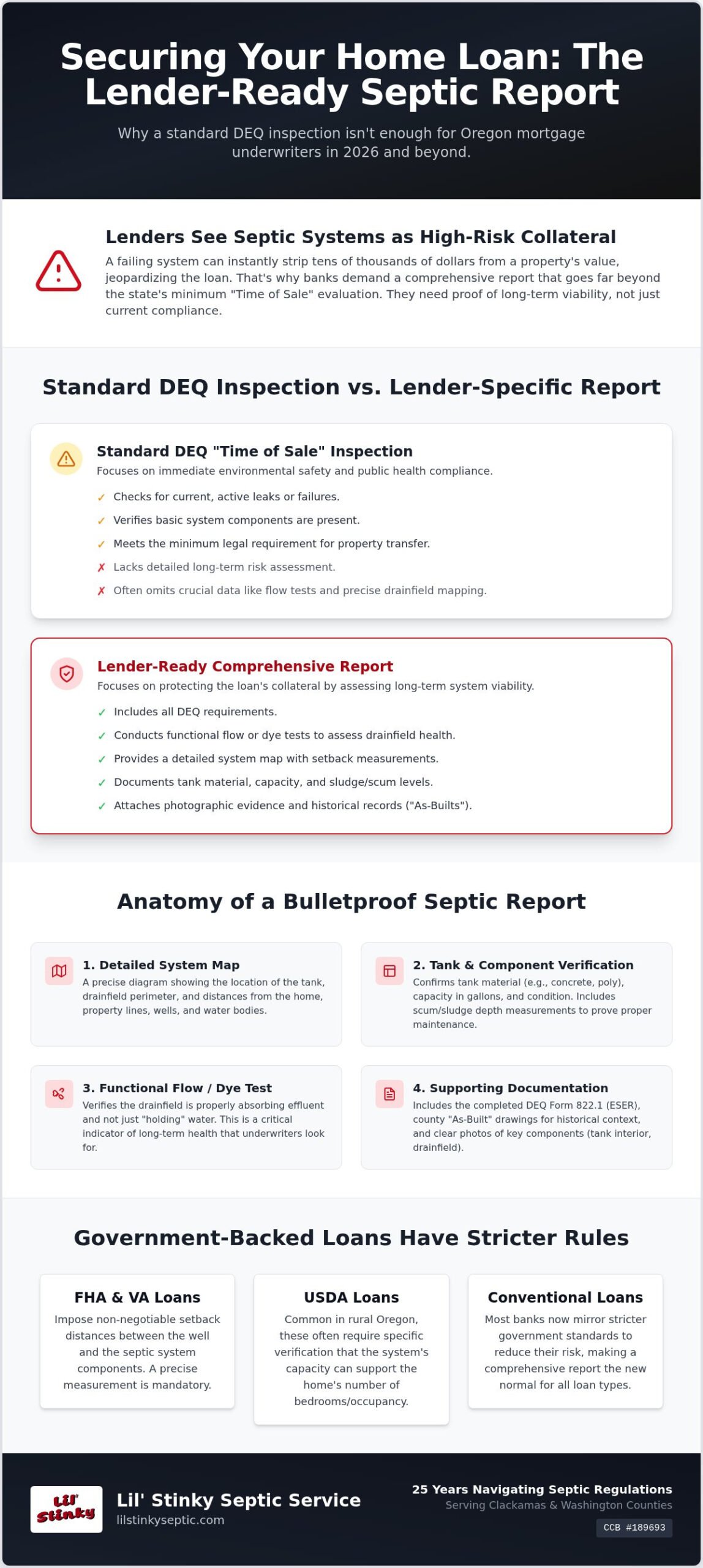
When you’re buying or selling a home in Oregon, the bank isn’t just looking at the roof and the foundation. They’re looking underground. Lenders view septic systems as high-risk collateral because a major failure can instantly strip tens of thousands of dollars from a property’s market value. While Oregon law requires a standard “Time of Sale” evaluation, this is often just the legal minimum. To clear your loan conditions, you’ll usually need a comprehensive septic inspection report for lender Oregon standards that goes beyond simple state compliance.
Banks want proof that the property value is protected from immediate environmental liabilities. They aren’t just checking if the tank is full; they’re looking for evidence of long-term stability. This often involves “functional flow” tests or dye tests that aren’t strictly required by the DEQ but are mandatory for an underwriter’s peace of mind. Understanding septic system basics is helpful, but knowing what a lender specifically fears is what gets your loan closed.
The Difference Between State Compliance and Lender Approval
The Oregon Department of Environmental Quality (DEQ) focuses on environmental safety. Their primary goal is protecting groundwater and public health. If your system isn’t currently leaking sewage into a neighbor’s yard, the state might consider it “satisfactory.” Lenders have a different priority: the loan term. They want to know if the system will remain viable for the foreseeable future.
A report that passes state muster might still get flagged by a bank if the drainfield is nearing the end of its life or if the tank material shows signs of corrosion. We use our 25 years of experience and CCB #189693 certification to bridge this gap. We provide the technical data underwriters need to see that the system isn’t just “not failing,” but is actually healthy and functional for the new owners.
Loan Types With Strict Septic Requirements (FHA, VA, USDA)
Government-backed loans come with the most rigid rules. If you’re using an FHA or VA loan, the appraiser and underwriter will look closely at the distance between your well and your septic drainfield. These setbacks are non-negotiable. USDA loans, which are common in rural areas like Clackamas and Marion counties, often require specific reporting on the system’s capacity to handle the household size. Conventional loans vary by the specific bank, but most now mirror these stricter government standards to reduce their risk profile in the 2026 real estate market. Don’t let a generic report stall your closing because it missed a simple distance measurement or capacity confirmation.
The Anatomy of a Lender-Ready Septic Report (Template Elements)
A “clean” report is more than just a passing grade. For a septic inspection report for lender Oregon underwriters to be accepted, it must provide a transparent, data-driven snapshot of the system’s health. Underwriters hate ambiguity. If your report is vague, they will flag it as a risk. A professional report starts with a detailed system map. This isn’t just a rough sketch; it should clearly identify the tank location and the exact perimeter of the drainfield relative to the home and property lines.
Beyond the map, the document must verify the tank capacity and material. Whether your tank is concrete, poly, or fiberglass, the bank needs to ensure it meets the requirements for the home’s occupancy. We also include precise scum and sludge depth measurements. These numbers, paired with evidence of pumping history, prove the system has been managed responsibly. Finally, the report must show the results of a functional flow test. This test confirms the drainfield is absorbing effluent properly and isn’t just “holding” water. If you need to ensure your paperwork meets these strict standards, you can schedule a certified inspection with our team.
Crucial Data Points for Oregon Underwriters
The foundation of any valid evaluation is the DEQ Form 822.1, also known as the Existing System Evaluation Report (ESER). This must be completed by a certified inspector who understands the 2026 updates. To make the report bulletproof, we often include the “As-Built” drawing from county records. This original blueprint provides a historical baseline for the system. We also attach clear photos of the tank interior and the drainfield surface. Visual evidence often resolves underwriter questions before they turn into loan delays.
Distance and Setback Requirements
Lenders are particularly sensitive to setbacks, especially regarding private wells. For FHA, VA, and many conventional loans, there is a strict 100-foot minimum distance requirement between septic tanks and private wells to prevent contamination. We verify these distances against Oregon Administrative Rules (OARs) to ensure the property is in full compliance. In Clackamas County, residential septic tanks must maintain a minimum five-foot setback from property lines and a ten-foot clearance from any building structure. Our team at Lil Stinky Septic Service (CCB #189693) has spent 25 years measuring these exact details to keep Portland-area closings on track.
Standard DEQ Inspection vs. Lender-Specific Requirements
A basic DEQ inspection answers one question: Is the system failing right now? For the state, that’s enough. For a bank, it’s a gamble. A septic inspection report for lender Oregon requirements must shift the focus to the next decade. Lenders want to know if the system will survive the life of the loan, or at least the first several years of it. They are looking for signs of future failure that a simple pass/fail state form might ignore.
Don’t make the mistake of thinking a pumper’s receipt is an inspection. A receipt just says the tank was emptied. It doesn’t say the baffles are intact, the tank is watertight, or the drainfield is actually taking water. As a CCB-licensed inspector (CCB #189693), we don’t just check boxes. We interpret the evidence. If we see high water marks in the tank or slow drainage in the lines, we flag it. This gives you a chance to address “borderline” issues before they become deal-breakers for an underwriter.
When to Request a “Full System Evaluation”
In Multnomah County, we often deal with systems that are 40 or 50 years old. These older properties almost always trigger extra scrutiny from lenders. A simple visual check won’t satisfy a bank that’s worried about a major replacement cost. In these cases, we recommend a hydraulic load test. This process involves introducing a specific volume of water into the system to simulate heavy daily usage. Our certified septic inspection Oregon service combines this deep-dive testing with standard DEQ compliance to satisfy every party involved.
The Importance of Pumping During Inspection
While Oregon law doesn’t always mandate pumping for a Time of Sale report, most lenders will require it as a condition of the loan. You simply can’t see the structural integrity of the tank when it’s full of effluent. Pumping allows us to visualize the tank bottom and walls for cracks, leaks, or root intrusion that would otherwise stay hidden. It also ensures the new homeowner has a “fresh start.” This practice is strongly recommended by Oregon State University to prevent immediate backups after a family moves in. We ensure the tank is pumped at the time of inspection so the underwriter gets a clear, unobstructed view of the system’s condition.
How to Ensure Your Septic Report Passes Underwriting
Underwriters don’t like surprises. If your report arrives at the last minute with “unsatisfactory” checked on any box, your loan stops cold. To avoid this, you should order your septic inspection report for lender Oregon requirements at least 21 days before your scheduled closing. This three-week window gives us time to perform the inspection, pump the tank, and, most importantly, address any minor repairs that might be needed to turn a “conditional” report into a “clean” one. Waiting until the week of closing is the fastest way to lose your interest rate lock or delay your move-in date.
Preparation on the ground is just as vital as the paperwork. You can save time and money by locating your septic lids and clearing away any overgrown brush or debris before the inspector arrives. If we have to spend an hour probing and digging just to find the tank, it slows down the entire process. A simple pre-inspection walkthrough to ensure the system is accessible and the grass is mowed around the drainfield area makes the inspection go smoothly and keeps your costs down. For a complete overview of what buyers and sellers in the metro area should expect, our Portland septic inspection real estate guide for 2026 walks through every stage of the process.
Addressing Common “Deal Killers” in Oregon Reports
In our 25 years of experience, we’ve seen many “deal killers” that are actually fixable. Root intrusion in the distribution box is a common finding in the wooded areas of Clackamas and Washington counties. While it sounds scary on a report, it’s often a straightforward repair. However, if the drainfield shows signs of “ponding” or surface saturation, this indicates a much deeper issue that lenders will not ignore. We use our expertise to help you understand these findings and provide clear, honest advice. Our guide on septic inspection for home sale Oregon helps sellers and buyers navigate these objections before they blow up a deal.
Coordinating Between the Pumper, Inspector, and Lender
Efficiency is the key to a successful closing. We don’t just do the field work; we handle the office work too. As a CCB-licensed specialist (CCB #189693), we prefer to send the final report directly to the title company or the lender’s portal to ensure nothing gets lost in translation. We’re also available for 24/7 responsiveness when an underwriter has a last-minute question about a specific OAR setback or tank material. We bridge the gap between the muddy reality of a septic tank and the clean requirements of a digital loan file. If you’re ready to get your paperwork started, contact us for a lender-ready report today.
Expert Septic Reporting in the Portland Area: The Lil Stinky Advantage
Choosing a local specialist isn’t just about convenience; it’s about accuracy. Our team at Lil Stinky Septic Service (CCB #189693) has spent the last 25 years mastering the specific septic regulations of Clackamas, Washington, and Multnomah counties. We’ve seen every version of the DEQ Form 822.1 and know exactly which supplemental data points local underwriters demand. When you order a septic inspection report for lender Oregon requirements from us, you aren’t just getting a checklist. You’re getting a document designed to move your loan from “conditional” to “approved.”
We understand that real estate transactions are high-stakes. A single paperwork error can derail a closing and cost you your interest rate lock. That’s why we offer a best-price guarantee for our home sale inspections and reporting fees. We provide a comprehensive package that includes the official DEQ ESER form along with the technical maps, photos, and capacity verifications that banks require. We’ve built our reputation on being a dependable ally for homeowners, realtors, and lenders throughout the greater Portland area.
Our Local Expertise in Canby and Beyond
Soil conditions in the Willamette Valley are unique. The heavy clay common in our region can mimic signs of drainfield failure if an inspector doesn’t know what they’re looking at. We understand how local weather patterns and soil types affect system performance. This deep knowledge allows us to provide more accurate assessments than a generic contractor might. We’ve also established long-term relationships with local realtors and mortgage brokers who trust our “straight talk” approach. In the fast-paced 2026 real estate market, our fast turnaround times ensure you meet your tight deadlines without sacrificing thoroughness.
Beyond the Report: Maintenance and Protection
A “clean” report today is great, but keeping your system healthy for the long term is better. We offer professional septic tank pumping Portland OR residents rely on to prevent future failures. Regular maintenance is often a requirement for future refinancing or home equity lines of credit. To ensure your system remains in peak condition, find out more about Sale of aerobic septic treatment systems and hardware components. Our protection plans are designed to give you peace of mind and satisfy future lender requirements by documenting a consistent service history. Don’t leave your closing to chance. Contact Lil Stinky today for a certified, lender-ready inspection and get the professional documentation you need to clear your loan conditions.
Secure Your 2026 Closing with Professional Septic Documentation
Securing a mortgage in the current market requires more than just a functional tank. You need a detailed septic inspection report for lender Oregon underwriters that proves long-term system health and precise setback compliance. By starting the process at least 21 days before closing and using a certified specialist, you eliminate the risk of last-minute paperwork errors that stall real estate transactions. A clean, comprehensive report is your best defense against the high-risk collateral concerns that banks often have in the 2026 market.
Don’t let a generic “pass” from a standard contractor jeopardize your loan approval. Lil Stinky Septic Service brings 25+ years of local Oregon experience and the technical expertise of DEQ certified inspectors to every job site. As a CCB Licensed #189693 professional, we know exactly how to bridge the gap between muddy field work and the clean documentation banks demand. Get your lender-ready septic inspection from Lil Stinky today to keep your closing on track. Your dream home is too important to leave to chance. We’re here to help you cross the finish line with total peace of mind.
Frequently Asked Questions
Is a septic inspection required by law in Oregon for a home sale?
Oregon does not have a statewide mandate requiring septic inspections at the time of a property sale. However, most lenders and title companies make it a non-negotiable condition of the loan. If an evaluation is conducted, the person performing it must use the official DEQ “Existing System Evaluation Report” form. We recommend checking with your specific mortgage provider early in the process to avoid any last-minute surprises or delays.
How long is a septic inspection report valid for a lender in Oregon?
Most Oregon lenders consider a report valid for 90 days from the date of the inspection. While the DEQ doesn’t set a specific expiration date for the paperwork, banks want to ensure the system’s condition hasn’t changed before they fund the loan. If your closing is delayed beyond three months, you might need a “re-certification” or a fresh septic inspection report for lender Oregon approval to satisfy the underwriter.
What is the DEQ Form 822.1 and why does my bank need it?
DEQ Form 822.1 is the official “Existing System Evaluation Report” (ESER) used to document the condition of a septic system. It provides a standardized checklist covering the tank, disposal area, and overall functionality. Banks require this form because it offers an objective, third-party assessment of the property’s waste management system. It ensures the collateral they are financing isn’t an immediate environmental or financial liability for the new homeowner.
Can I use a regular pumper for a lender-required septic inspection?
You can only use a pumper who is also a DEQ-certified inspector. A standard pumping receipt simply proves the tank was emptied; it doesn’t verify the structural integrity or drainfield health. Lenders require a comprehensive evaluation from a licensed professional, such as our team at Lil Stinky (CCB #189693). Make sure your chosen contractor has the specific credentials and experience to sign off on the official state ESER form correctly.
What happens if my septic system fails the lender’s inspection?
If a system fails, the lender will typically require repairs or a full replacement before the loan can close. In some cases, you may be able to set up a “repair escrow” where funds are held back at closing to cover the work. However, government-backed loans like FHA or VA rarely allow this flexibility. It’s best to address any “unsatisfactory” findings immediately to keep the real estate transaction moving forward on schedule.
How much does a certified septic inspection cost for a real estate transaction?
The cost of a certified septic inspection varies based on the size of the tank, the depth of the lids, and your location within the Portland metro area. You should expect to pay for both the professional evaluation and the required tank pumping. Factors like the City of Portland’s DEQ surcharge, which increased to $159 on July 1, 2026, also influence the final total for homeowners located within Multnomah County.
Do FHA loans have different septic requirements in Oregon?
Yes, FHA and VA loans have much stricter septic requirements than conventional financing. They demand specific minimum distances between the septic tank, the drainfield, and any private wells on the property. These lenders also require a “functional flow” test to prove the system can handle daily household usage without backing up. If your report doesn’t explicitly confirm these setbacks and flow results, the underwriter will likely reject the paperwork.
How long does it take to get the final written report after the inspection?
You can typically expect to receive your final written report within 24 to 48 hours after the field work is finished. This timeline depends on having all necessary information available, such as the “As-Built” drawings from the county records. At Lil Stinky, we prioritize fast turnaround times because we know that a septic inspection report for lender Oregon conditions is often the last piece of the puzzle needed to clear a loan.