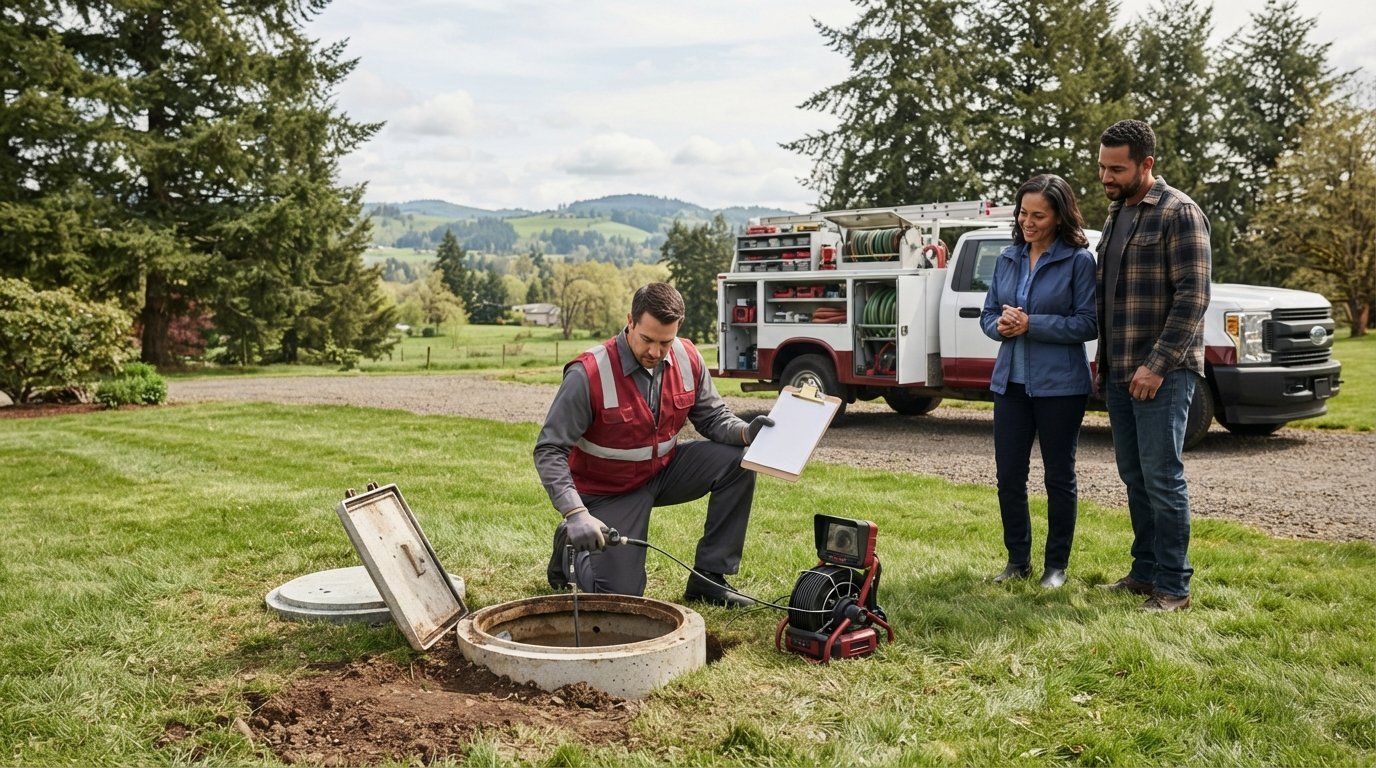
Did you know that your septic tank is actually designed to be full of liquid every single day? It’s a common misconception that a “full” tank is always an emergency, but there’s a major difference between a healthy liquid level and a sludge-packed system about to overflow. If you’re smelling foul odors or hearing strange gurgling from your pipes, you’re likely searching for septic tank full symptoms to prevent a raw sewage backup from ruining your home. We understand the anxiety that comes with these warning signs, especially when you’re worried about high repair costs or the health of your family.
You deserve clear answers instead of corporate jargon or guesswork. This guide will show you exactly how to spot the critical warning signs before they turn into a plumbing catastrophe. We’ll walk you through the seven most common indicators of a failing system and explain how the 2026 Oregon maintenance standards affect your property. By the end of this article, you’ll know how to diagnose the health of your system and when it’s time to call in a trusted local specialist to handle the dirty work for you.
Key Takeaways
- Learn the critical difference between a “normal full” liquid level and a dangerous sludge buildup that requires immediate professional pumping.
- Identify early septic tank full symptoms like gurgling pipes and slow drains before they lead to a messy sewage backup inside your home.
- Discover how to spot hidden outdoor red flags, including pooling water and unusually lush, green grass over your drainfield.
- Use a simple two-step diagnostic checklist to determine if you are dealing with a minor plumbing clog or a major system failure.
- Understand the importance of professional maintenance to safely handle toxic gases and ensure your system meets the latest 2026 Oregon DEQ standards.
Understanding What “Full” Really Means for Your Septic System
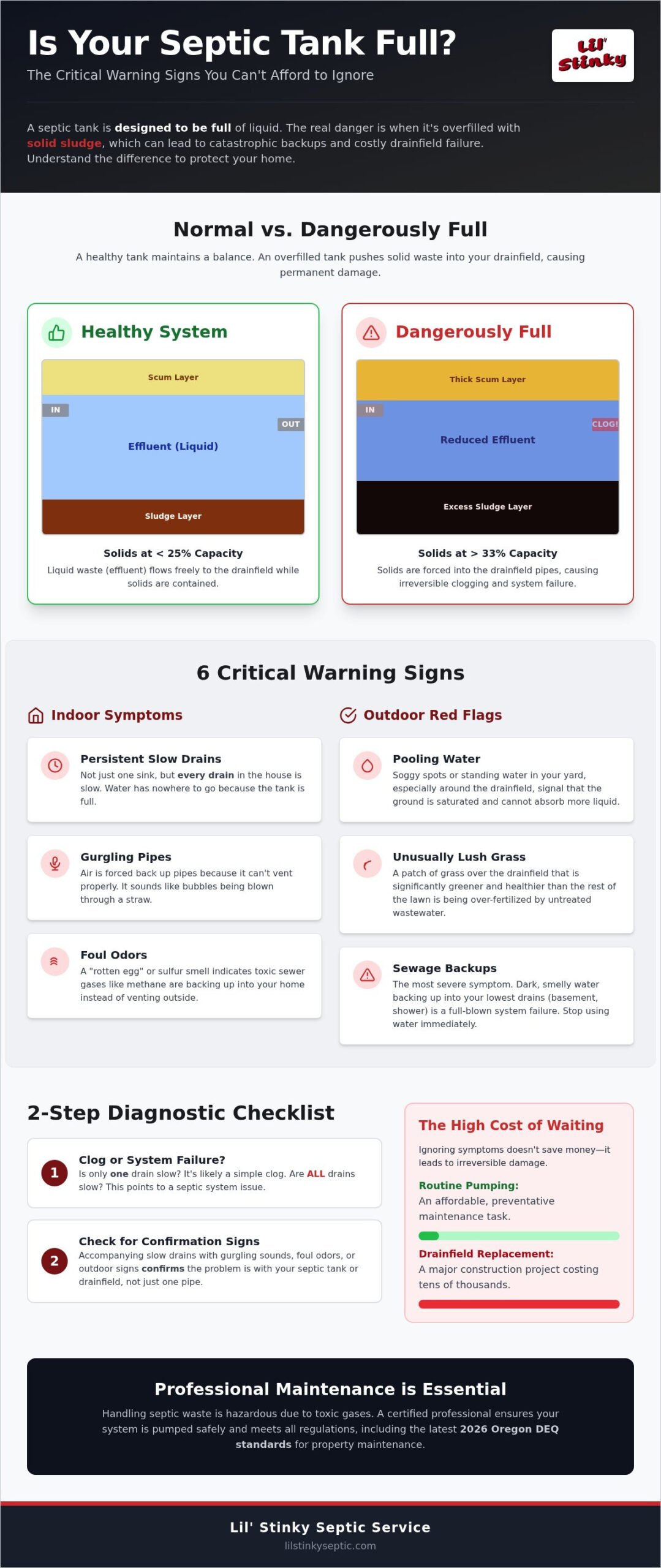
Most homeowners feel a surge of panic when they hear their septic tank is “full.” However, there’s a big difference between a tank that’s operating at its normal liquid level and one that’s “sludge-full.” To accurately identify septic tank full symptoms, you need to understand how a septic tank works as a living filter. In a healthy system, the tank is actually designed to be full of liquid at all times. As wastewater enters from your home, it separates into three layers: a top scum layer of fats and oils, a middle effluent layer of clarified water, and a bottom sludge layer of heavy solids. When a professional recommends pumping, they aren’t just talking about the water; they’re focusing on removing the accumulated solids that have reached a critical volume.
Normal Operating Level vs. Over-Full
Your tank maintains a “static water level” set by the height of the outlet baffle. This baffle acts as a gatekeeper, allowing only the middle layer of liquid effluent to flow out toward your drainfield. A healthy system keeps this liquid level consistent through the natural pressure of incoming water. The problem arises when the sludge at the bottom and the scum at the top grow too thick, leaving no room for the liquid to settle and separate. Sludge capacity is the point where solids reach 25-33% of the total tank volume. Once you hit this limit, the tank can no longer effectively treat waste, and you’ll start noticing septic tank full symptoms inside your home.
The Consequences of Ignoring a Full Tank
Waiting until your drains stop working altogether is a dangerous game. When the sludge layer gets too high, solid waste doesn’t have time to settle. Instead, those solids get pushed out of the tank and into your drainfield pipes. These particles then clog the soil, leading to permanent “biomat” buildup that prevents the ground from absorbing water. This transition from a simple maintenance task to a total system failure can happen quickly. Regular septic tank pumping in Portland OR is an affordable way to protect your property value. It’s much cheaper to pay for a routine pump-out than it is to replace a ruined drainfield, which can cost tens of thousands of dollars. Keeping those solids under control is the best insurance policy for your home’s plumbing.
The Most Common Septic Tank Full Symptoms Found Indoors
When your septic tank reaches its capacity, your home’s plumbing will be the first to tell you. These early warnings often start as minor inconveniences but quickly escalate into expensive emergencies. Identifying septic tank full symptoms early can save you from a massive cleanup bill and the health hazards associated with wastewater. If you’re noticing changes in how your toilets flush or how your sinks drain, it’s time to pay close attention to the specific sounds and smells in your home; for expert help with these plumbing concerns, you can discover Prodigy Mechanical.
If you have one slow sink, you likely have a localized hair clog or grease buildup. However, if every drain in the house feels sluggish, you’re looking at a systemic issue. When the tank is full, there’s no room for new wastewater to enter, causing water to linger in your pipes. You might also hear a distinct gurgling sound coming from the drains after you flush a toilet or run the washing machine. This happens because the tank is so full that air can’t vent properly through the system, forcing bubbles back up through the pipes. It sounds like someone is blowing air through a straw into a full glass of water. According to the official signs of septic system failure, these auditory and visual cues are the most reliable ways to catch a problem before a total backup occurs.
Sewage Backups and Odor Alerts
Foul odors are a major red flag that shouldn’t be ignored. If you start smelling rotten eggs or sulfur around your drains, you’re likely detecting methane and hydrogen sulfide gases. These gases are byproduct of the waste breakdown process and should normally be vented away. When the tank is over-full, these gases have nowhere to go but back into your living space. This is often followed by the most dreaded of all septic tank full symptoms: a physical backup. You might see dark, sludge-like water rising in your basement floor drains or bathtub. If this happens, stop using water immediately to prevent further flooding. Don’t try to fix this with chemical “septic additives” or heavy-duty drain cleaners. These products can actually worsen the situation by disrupting the natural bacteria in your tank or stirring up settled solids that then clog your pipes further. If you’re smelling something “stinky” and want to avoid a disaster, a quick professional check from Lil’ Stinky Septic Service can help you determine if a simple pump-out is all you need.
Outdoor Warning Signs: Identifying Septic Issues in Your Yard
While your indoor pipes might gurgle, your yard often provides the most visible evidence of a failing system. If you step outside and find a puddle in your lawn that wasn’t there yesterday, don’t just blame the Oregon weather. While we’re used to wet winters in the Portland area, standing water specifically over your tank or drainfield is one of the most reliable septic tank full symptoms. When your tank is packed with sludge, the liquid effluent can’t settle or flow properly. This causes the water to back up into the soil, eventually pushing it to the surface. You might notice the ground feels spongy or soggy underfoot even during a rare dry spell in July.
The “Super Green Grass” Phenomenon
It’s tempting to think your lawn is just thriving, but a patch of unusually lush, bright green grass over your septic system is a major red flag. This happens because the soil is being over-fertilized by untreated waste. While the grass looks vibrant, it means your drainfield is failing to filter the effluent correctly. You can often trace the exact path of your underground pipes just by following the line of “super growth” across your yard. Distinguishing between a naturally healthy lawn and “septic-fed” growth is easy: if one specific area is significantly taller and greener than the rest of the yard, your system is likely over-full and leaching nutrients it should be containing. Learning to recognize these septic drainfield failing signs early can mean the difference between a simple pump-out and a costly full system replacement.
The Impact of Oregon Rain on Full Tanks
Our local climate presents unique challenges for homeowners in Clackamas County and the surrounding areas. In the Portland metro area, the high water table and clay-heavy soil can quickly saturate a system that’s already struggling. These common signs of a full septic tank often become much more obvious between October and April when our heavy rain months arrive. Heavy rainfall puts extra pressure on the soil’s ability to absorb liquid. If your tank is already at its limit, that extra rainwater has nowhere to go, forcing sewage gases and liquid to the surface. This often leads to a persistent septic smell in yard what to do scenarios where the odor of sewage lingers near the tank lids. Don’t wait for the rain to stop to address the issue. A saturated yard usually indicates that the sludge layer has reached a critical level that requires immediate pumping to prevent a total system failure.
Diagnostic Checklist: Is it a Full Tank or a Main Line Clog?
You’ve noticed a few red flags, but now you need to determine if you’re facing a simple localized clog or a system-wide failure. Distinguishing between these two can be the difference between a quick fix and a major emergency repair. Use this systematic checklist to evaluate your septic tank full symptoms before the situation escalates. If you’re unsure, it’s always safer to stop using water until you’ve confirmed the source of the backup.
- Step 1: Count the affected drains. Is it just the kitchen sink, or is every drain in the house sluggish?
- Step 2: Check the lowest points. Inspect basement floor drains or ground-floor showers for standing water or dark residue.
- Step 3: Look for “daylighting.” Walk your yard to see if raw sewage is physically pushing through the soil surface.
- Step 4: Verify the lids. If it’s safe to do so, check if the liquid level in the tank is above the inlet pipe.
Whole-House vs. Localized Clogs
If only your kitchen sink is slow, you likely have a grease clog or a food buildup in that specific pipe. You can usually solve this with a plunger or a simple snake. However, if your toilet won’t flush and water starts rising in the shower at the same time, the problem is further down the line. When multiple fixtures fail simultaneously, the tank is likely the culprit. In some cases, a blockage exists in the main line between the house and the tank. Getting a professional septic drain cleaning in Clackamas County can quickly clear these main line obstructions and restore your home’s flow.
Checking Your Maintenance Records
Your calendar is often the best diagnostic tool you have. The standard rule for most Oregon households is to have the tank pumped every three to five years. If you can’t remember the last time a technician visited your property, you’re likely overdue. Keep in mind that household size plays a huge role; a family of five will reach “sludge-full” status much faster than a couple living alone. If your records are missing or unclear, a certified septic inspection in Oregon is the only way to be 100% sure about your system’s health. Don’t play the guessing game with your property’s safety. If your checklist points toward a major issue, contact Lil’ Stinky Septic Service for a professional evaluation today.
Professional Pumping and Maintenance in the Portland Metro Area
Once you recognize the critical septic tank full symptoms discussed in earlier sections, you must act quickly to prevent a permanent drainfield failure. While some home maintenance tasks are great for a weekend DIY project, septic pumping is not one of them. Attempting to pump your own tank is extremely dangerous due to the presence of toxic gases like methane and hydrogen sulfide, which can be fatal in enclosed spaces. Professional technicians use specialized high-powered vacuum trucks and safety equipment to handle these hazards while ensuring the waste is disposed of according to Oregon DEQ regulations. If you’re currently experiencing a backup, our 24/7 emergency response team is ready to help.
During a professional visit, we don’t just skim the water off the top. A proper cleaning requires breaking up and removing the heavy sludge layer that settles at the bottom of the tank. If this solid waste isn’t thoroughly agitated and pumped out, it will continue to take up space and lead to recurring septic tank full symptoms just a few months later. To stop the cycle of emergency repairs, many homeowners choose to establish a septic maintenance plan in Portland OR. This proactive approach ensures your system is inspected and pumped on a schedule that fits your household size and water usage habits.
Why Choose Lil’ Stinky Septic Service?
We’ve served the Portland metro area, Canby, and Clackamas County for over 25 years. As a family-owned business, we take pride in being the “Trusted Local Specialist” your neighbors rely on. We offer a best-price guarantee to ensure you get high-quality workmanship without a corporate price tag. Our technicians are fully licensed (CCB #189693) and certified to handle all necessary DEQ reporting and compliance paperwork. Whether you’re in the middle of a midnight plumbing crisis or just need a routine check-up, we provide honest, straight talk about the health of your system. When selecting who handles your repairs, it pays to understand how to choose a licensed septic contractor Oregon homeowners can trust to meet current DEQ standards and protect your property from liability.
Next Steps: Booking Your Pumping
Scheduling a maintenance check is the best way to gain peace of mind before the next heavy Oregon rainstorm hits. When you book a visit, you can help the process go smoothly by clearing a path for our pumper truck and ensuring the tank lids are accessible. If your lids are buried, we can help locate and uncover them for you. Taking these small steps now prevents the stress and high costs of a sudden sewage disaster. Don’t wait for your drains to stop working completely. Contact Lil’ Stinky Septic Service for emergency pumping or routine maintenance today.
Protect Your Home and Peace of Mind Today
Don’t let a “stinky” situation turn into a total property disaster. You now know that identifying septic tank full symptoms early is the best way to avoid the massive cost of a failed drainfield. Whether you’ve noticed gurgling pipes or that suspiciously green patch of grass in the yard, acting now saves you from the stress of a midnight sewage backup. It’s about more than just pumping; it’s about protecting your investment and your family’s health.
Lil’ Stinky Septic Service is here to be your trusted local ally. With 25+ years of experience and 24/7 emergency support, we’ve seen it all and fixed it all across the Portland metro area. We’re fully licensed and insured (CCB #189693) to give you the professional results you deserve. It’s time to stop worrying about your plumbing and get back to enjoying your home. Get a Free Estimate for Septic Pumping or Emergency Service today and let us handle the dirty work for you.
Frequently Asked Questions
How can I tell if my septic tank is full without digging it up?
Look for slow drains, gurgling sounds, or sewage smells in the yard. You can also check your maintenance records to see if it’s been more than three to five years since your last service. If you’re in the Canby area, a professional inspection is the most reliable method. We use specialized tools to measure the sludge layer without needing to excavate your entire yard or damage your landscaping.
Can a full septic tank cause toilets to gurgle?
Yes, gurgling toilets are one of the most common septic tank full symptoms. This sound occurs because air is being forced back through your plumbing system. When the tank is at capacity, wastewater has nowhere to go, which prevents the system from venting properly. If you hear these bubbles after flushing or running the laundry, it’s a clear sign that your system is struggling to handle the waste load effectively.
What happens if I don’t pump my septic tank when it’s full?
Ignoring a full tank leads to sewage backups into your home and permanent damage to your drainfield. When the sludge layer gets too high, solid waste escapes the tank and clogs the soil in your yard. This prevents the ground from absorbing liquid, often resulting in a complete system failure. Replacing a drainfield is far more expensive than a routine maintenance visit from a licensed professional in the Portland metro area.
How often should a septic tank be pumped in Oregon?
Most Oregon households should have their tanks pumped every three to five years. This timeline depends heavily on the number of people living in your home and your daily water usage. Larger families in Canby may need more frequent service to prevent solids from reaching the outlet pipe. Regular maintenance ensures you stay compliant with local DEQ standards while protecting your property from unexpected and costly plumbing emergencies during the rainy season.
Will a full septic tank smell inside the house?
A foul odor resembling rotten eggs or sulfur inside your home is a major red flag. These smells are caused by methane and hydrogen sulfide gases that are normally vented away. When your system is over-full, these gases can get pushed back through your drains and into your living spaces. If you notice these septic tank full symptoms indoors, it’s critical to call for a professional inspection before a physical backup occurs.
Can heavy rain make my septic tank act like it is full?
Yes, heavy Oregon rainfall can saturate the soil around your drainfield, preventing the system from dispersing liquid. This causes water to back up into the tank, making it appear full even if it was recently pumped. In the Portland area, our clay-heavy soil often struggles with drainage during the wet winter months. If your system only acts up during rainstorms, you may have a drainage issue rather than a sludge problem.
Is pooling water in the yard always a sign of a full tank?
While pooling water is a classic warning sign, it doesn’t always mean the tank itself is full. It could indicate a localized pipe break, a clogged distribution box, or a saturated drainfield. However, if the water is accompanied by a sewage smell or appears specifically over your septic components, it’s a high-priority issue. A professional technician can help determine if you need a pump-out or if you’re facing a more complex mechanical repair.
What is the difference between a clogged pipe and a full septic tank?
A clogged pipe usually only affects one fixture, like a single slow-moving sink or a backed-up toilet. While localized issues can often be handled by experts such as Drain Genie Direct, a full septic tank is a systemic issue that impacts every drain in the house simultaneously. If you notice multiple slow drains and gurgling sounds throughout your home, the problem is likely at the tank level. Our team in Canby uses camera inspections to pinpoint exactly where the blockage is located within your drainage system.