Would you rather manage a predictable maintenance budget or face the sudden, high cost of an emergency failure on a rainy Portland Saturday? Most homeowners in the Pacific Northwest view their septic system as a “set it and forget it” utility, at least until the drains slow down or the yard starts to smell. We understand the stress that comes with managing a septic maintenance plan in Portland OR alongside complex Oregon DEQ regulations. With the major rule updates that took effect in January 2026 and the recent 33 percent fee hikes, it’s a lot for any property owner to track.
Securing a proactive service agreement is the most effective way to take that weight off your shoulders. You deserve the peace of mind that comes from knowing your system is healthy and fully compliant with the latest state standards. This guide explains how a structured plan protects your property from catastrophic failures, ensures you meet the new requirements for ATT systems, and provides priority service when you need it most. We’ll walk through the 2026 steel tank ban, the necessity of sewer-availability letters, and how regular inspections turn unexpected disasters into manageable, routine care.
Key Takeaways
- Learn how a septic maintenance plan Portland OR prevents system failure during our region’s heavy rainfall and saturated soil conditions.
- Identify the essential components of professional maintenance, from tracking sludge levels to cleaning effluent filters before they clog your drainfield.
- Stay compliant with 2026 Oregon DEQ regulations, including the mandatory annual maintenance contracts required for all Alternative Treatment Technology (ATT) systems.
- Understand the financial advantage of predictable maintenance fees compared to the high cost and disruption of emergency weekend repairs.
- Discover how 25+ years of local expertise and priority 24/7 emergency response can provide long-term peace of mind for your property.
What is a Septic Maintenance Plan and Why Do Portland Homeowners Need One?
A septic maintenance plan Portland OR is a professional strategy that combines scheduled inspections with timed pumping to keep your system running efficiently. It isn’t just a calendar reminder; it’s a proactive health check for your property. To understand why this is necessary, it helps to learn how septic systems work and how they interact with the specific environmental conditions in the Pacific Northwest. Most homeowners wait until they see a puddle in the yard or experience a slow drain before calling a technician. This “reactive” approach is often the most expensive way to manage a home.
A proactive plan identifies small issues, like a worn baffle or a clogged filter, before they lead to a total system failure. In the Portland area, our unique weather and soil make this level of management a requirement rather than a luxury. Think of a Protection Plan as a specialized insurance policy for your property. It provides predictability in an industry where emergency costs can spike without warning, especially with the 33 percent DEQ fee increase scheduled for July 2026. Taking control of your system now prevents the stress of a sewage backup later.
The Role of Local Soil and Climate
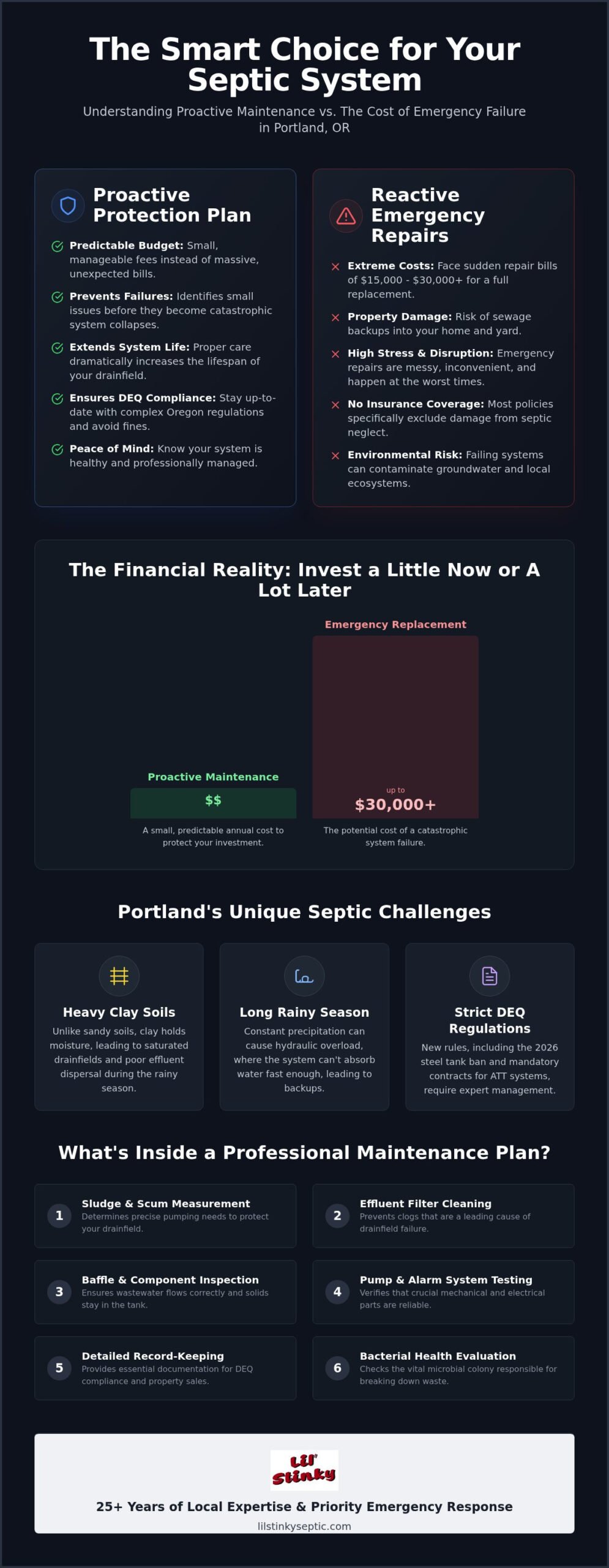
If you live in Clackamas or Multnomah County, you’re likely dealing with heavy clay soils. Unlike sandy soils that drain quickly, clay holds onto moisture. During Portland’s long rainy season, the ground becomes fully saturated, leaving very little room for your septic effluent to disperse. Hydraulic overload occurs when the volume of water entering the system exceeds the soil’s ability to absorb it, often leading to backups during the peak of winter. Regular maintenance ensures your tank and drainfield are in peak condition before these heavy rains arrive.
Financial Protection vs. Emergency Repair
The math is simple but the stakes are high. A full system replacement in Oregon can cost between $15,000 and $30,000 depending on the complexity of the site and the type of system required. In contrast, a maintenance plan costs a fraction of that and extends the life of your drainfield by years. Detecting a broken baffle or a failing effluent filter early can save you thousands in avoided repairs. Don’t assume your homeowner’s insurance has you covered; most policies specifically exclude damage caused by septic neglect or lack of maintenance. Treating your Protection Plan like a property insurance policy is the smartest way to protect your biggest investment and maintain DEQ compliance.
Core Components of a Professional Septic Maintenance Plan
A professional septic maintenance plan Portland OR is more than a simple service call. It’s a full diagnostic check of your entire onsite wastewater system. Following septic system care best practices ensures that your system doesn’t just survive the winter but thrives for decades. We don’t just guess at what’s happening underground. We measure sludge and scum levels to determine exactly when your tank needs pumping, which prevents unnecessary costs while protecting your drainfield from solids.
Mechanical and electrical testing is another pillar of a solid plan. If your system relies on a pump or has a high-water alarm, those components must be tested for reliability. A failed float or a corroded wire can lead to a silent failure that results in a messy backup. We also provide detailed record-keeping after every visit. These reports are essential for DEQ compliance and serve as a “clean bill of health” when it’s time to sell your home. Investing in a Protection Plan ensures these details are never overlooked.
The Inspection Process: Beyond the Pump
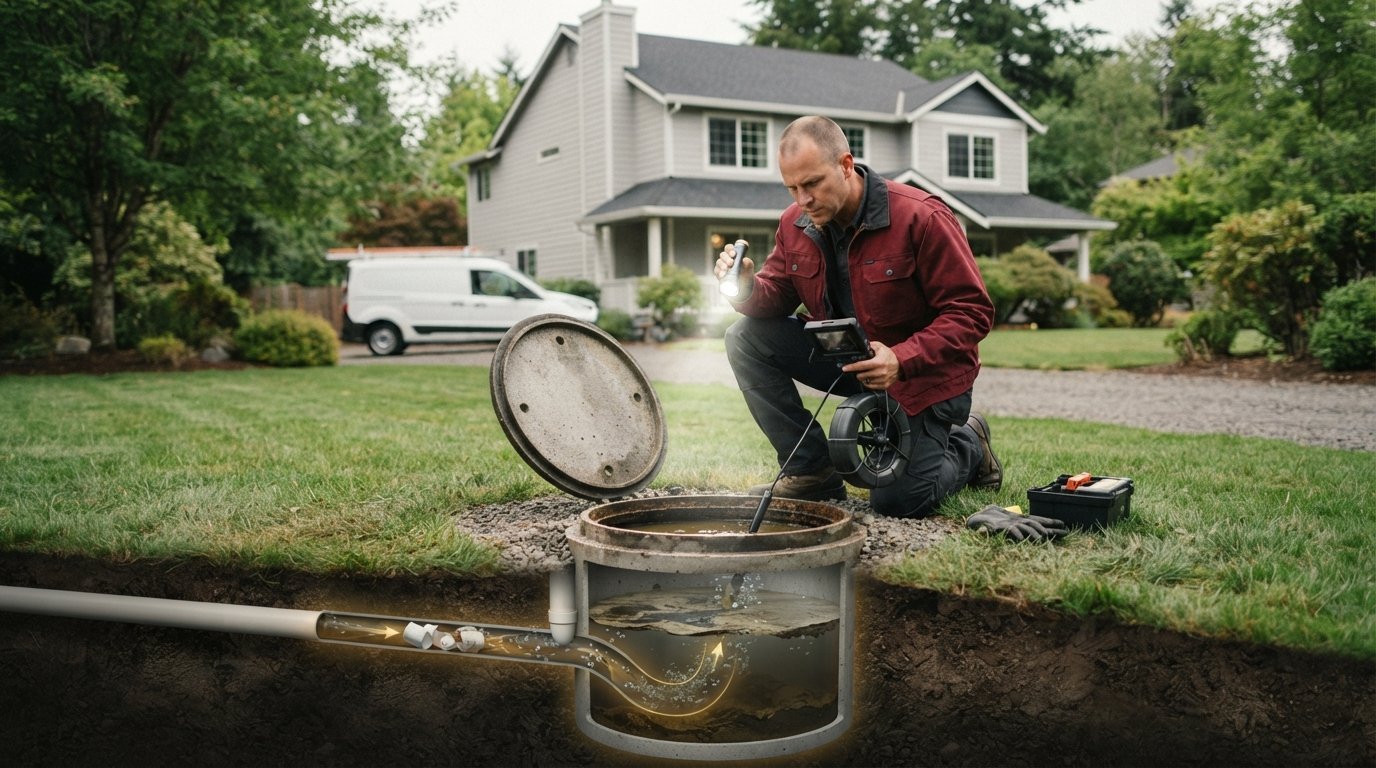
Effective inspections look at the components that often go unnoticed until they fail. Technicians must check the inlet and outlet baffles to ensure they are structurally sound. These baffles direct the flow of wastewater and keep the scum layer from exiting the tank. We also evaluate the health of the bacterial colony. These microbes are responsible for breaking down waste, and their health is a primary indicator of system longevity. For systems with recurring drainage issues, we may recommend pipe camera inspections to identify root intrusions or crushed lines without digging up your entire yard.
Filter Cleaning and Scum Management
The effluent filter is truly the heart of your system protection. It acts as a final screen to catch hair, lint, and small particles before they can reach the soil in your drainfield. If this filter isn’t cleaned regularly, it will eventually clog, causing water to back up into the house. In busy households with lots of laundry or guests, filter maintenance should happen at least once a year. Managing the scum layer is equally important. If the scum becomes too thick, it can bypass the baffles and ruin the filter or the drainfield. A well-executed septic maintenance plan Portland OR keeps these layers balanced and your filters clear, ensuring the water leaving your tank is as clean as possible. For a comprehensive overview of what proper upkeep involves, our essential septic system maintenance tips and checklist for 2026 walks you through every critical task from monthly habits to annual inspections.
Oregon DEQ Compliance and ATT System Requirements
Oregon’s environmental laws are among the most rigorous in the country. Our high water tables and sensitive watersheds require precise management to protect public health. Since the significant update to Oregon’s onsite wastewater rules on January 1, 2026, the DEQ has increased oversight on how homeowners manage their systems. A septic maintenance plan Portland OR is your best tool for staying compliant with these evolving standards. It ensures your system operates within legal parameters while shielding you from the scheduled fee increases. We take the guesswork out of regulation so you can focus on your home.
Alternative Treatment Technology (ATT) systems are a specific focus of these state regulations. These systems treat wastewater to a much higher level than a standard tank, often using aerobic units or specialized sand filters. Because they are more complex and rely on mechanical parts, Oregon law mandates that ATT owners maintain a lifelong Operation and Maintenance (O&M) contract with a DEQ-certified provider. This isn’t optional; it’s a requirement for the continued operation of your system.
Understanding ATT Maintenance Contracts
ATT systems rely on mechanical components like blowers, pumps, and sensors that require regular calibration. They aren’t “set it and forget it” units. A signed maintenance agreement is a legal necessity that ensures these parts are functioning as intended. We specialize in these advanced systems, performing the precise testing required to meet state nutrient reduction goals. Lil’ Stinky handles the heavy lifting of compliance by filing all necessary reports through the “Your DEQ Online” portal. We make sure the state knows your system is in good standing so you never face a compliance notice or fine.
Real Estate and Compliance Reporting
Selling a home with a septic system adds a layer of complexity to any real estate deal. Oregon typically requires a “Time of Transfer” inspection to verify the system’s condition for the buyer and lender. If you’ve been on a consistent maintenance plan, this step is simple. You’ll already have a documented history of inspections and pumping to prove the system’s viability. This transparency builds immediate trust with potential buyers and can even increase your property’s value. To learn more about what’s required during a sale, read our DEQ Compliance Guide. Having a professional septic maintenance plan Portland OR on file transforms a high-stakes certified inspection into a routine check, keeping your closing on schedule. If you’re on the other side of the transaction, our complete guide to buying a home with a septic system in Oregon covers every red flag to watch for and how to negotiate repairs before closing.
Cost-Benefit Analysis: Maintenance Plan vs. Reactive Repairs
Is it cheaper to call a technician only when things go wrong? Many homeowners think so, but the math tells a different story. A septic maintenance plan Portland OR is designed to prevent the emergency surcharges that usually accompany a Saturday night backup. While a standard service call focuses on a single symptom, a plan looks at the entire system’s health. By optimizing your bacterial colony and keeping filters clear, a plan can actually extend the time between required pumpings. You aren’t just paying for a visit; you’re investing in a strategy that avoids the massive costs of sudden system failure.
Hidden costs are the real budget killers in this industry. When a system fails, the price tag isn’t just the technician’s bill. You have to consider the expense of replacing saturated landscaping, potential hotel stays while your water is shut off, and the immense stress of a sewage backup during a Portland winter storm. We offer a best-price guarantee for our members because we believe proactive care shouldn’t be a financial burden. It’s about predictable budgeting rather than financial surprises. Securing a Protection Plan ensures you stay ahead of these “invisible” costs while keeping your property safe and clean.
The Math of Septic Longevity
A well-maintained system can easily serve a home for 40 years, while a neglected one might fail in as little as 15. The difference often comes down to how well the owner manages the sludge levels and filter health. For the price of a few cups of coffee each month, you can secure total septic peace of mind. If you’ve recently invested in a new septic installation, a maintenance plan is the only way to protect that significant investment. It’s the difference between a system that lasts a lifetime and one that requires a premature, expensive replacement.
Priority Service and Emergency Perks
When the rain hits Portland hard, our phones ring off the hook. Protection Plan members move straight to the top of our list. This priority 24/7 emergency response is a critical perk when your yard is flooding and every minute counts. Most plan members also avoid the standard emergency surcharges that non-members face during peak demand periods. You get the security of a local partner who’s ready to act before a minor drip becomes a major disaster. If you ever find yourself facing a sudden backup outside of your plan, our emergency septic service Portland Oregon rapid response guide explains exactly what to do and how our team triages and resolves crises fast. Sign up for our Protection Plan today to ensure your home is always a priority during the next big storm.
Secure Your Property with the Lil’ Stinky Protection Plan
Lil’ Stinky Septic Service has spent more than 25 years helping Portland homeowners navigate the complexities of onsite wastewater management. We’ve seen how the heavy clays in Canby and the saturated soils of Multnomah County can stress a system if it’s not managed with a clear strategy. Our Protection Plan isn’t just a service schedule; it’s a commitment to your home’s safety and your family’s peace of mind. We provide a septic maintenance plan Portland OR residents can rely on for consistent, professional oversight that meets every local and state standard.
Our “No-Stink” promise is the core of our business. It means we arrive on time, work cleanly, and treat your property with the respect it deserves. We understand that septic issues are stressful, so we focus on providing a seamless experience from the moment we pull into your driveway. You get straight talk about your system’s health and a neighborly partner who is dedicated to doing things right the first time. We take pride in our craft, ensuring that every lid is secured and every filter is spotless before we leave.
Why Choose a Local Family-Owned Specialist?
Knowing the specific drainage patterns and regulatory environment of Clackamas County is essential for effective maintenance. As a family-owned business with CCB #189693, we bring a level of accountability and local pride that national franchises simply can’t match. We don’t just follow a checklist; we apply decades of experience to every inspection. This tailored approach is why septic tank pumping in Portland is more effective when handled by our specialists. We look beyond the tank to ensure every component of your property is protected.
Getting Started with Your Maintenance Plan
Enrolling your property in a septic maintenance plan Portland OR is a simple 3-step process designed to get your system on the right track immediately. First, contact our office to discuss your specific system type and household usage. Second, we perform a baseline inspection to document your current sludge levels and mechanical health. Finally, we establish a recurring schedule that ensures you never miss a critical filter cleaning or DEQ-required inspection. This proactive baseline is the best way to catch minor issues before they become expensive emergency repairs. Protect your home today with a Lil’ Stinky Maintenance Plan and enjoy the security of having a local expert on your side.
Take Control of Your Property’s Health Today
Managing a septic system shouldn’t feel like a gamble every time the Portland rain starts to fall. We’ve explored how a proactive strategy prevents catastrophic failures and keeps your property in full compliance with the latest Oregon DEQ regulations. By focusing on consistent inspections and filter cleaning, you extend the life of your drainfield and avoid the immense stress of a sudden sewage backup. A professional septic maintenance plan Portland OR is the most reliable way to turn unpredictable emergency repair costs into a predictable, manageable budget.
Our family-owned team brings over 25 years of local experience and the professional reliability of CCB #189693 to every job site. We offer 24/7 emergency service to our plan members because we believe you shouldn’t have to face a maintenance crisis alone. You’ve worked hard for your home; don’t let a neglected septic system put your property at risk. It’s time to trade maintenance anxiety for the security of a trusted local specialist who knows your neighborhood’s specific soil and drainage needs.
Protect your home and save on repairs with our Septic Protection Plan. Let’s work together to keep your system running cleanly and efficiently for decades to come.
Frequently Asked Questions
Is a septic maintenance plan required by law in Oregon?
For standard gravity systems, a maintenance contract isn’t strictly mandated by law, but you’re legally responsible for preventing environmental contamination. However, if your property uses an Alternative Treatment Technology (ATT) system, Oregon law requires you to maintain a lifelong service contract with a DEQ-certified provider. Failing to keep this agreement active can lead to compliance notices and fines under the updated 2026 onsite wastewater regulations.
What is the difference between a standard septic system and an ATT system?
A standard system uses a concrete or plastic tank and a drainfield to treat waste through natural soil filtration. An ATT system, or Alternative Treatment Technology, uses advanced mechanical parts like blowers or sand filters to treat wastewater to a much higher level before it ever touches the soil. These are often required on smaller Portland lots or in areas with high groundwater to protect the local environment.
How much does a septic maintenance plan cost in Portland?
The cost of a septic maintenance plan Portland OR depends on your specific system type and the frequency of inspections required. While we don’t provide flat rates without a site evaluation, a plan is designed to be a predictable budget item that is far less expensive than a single emergency weekend repair. It covers essential tasks like filter cleaning and reporting, which helps you avoid the high cost of sudden system failure.
Will a maintenance plan prevent my septic tank from ever backing up?
While no service can provide a 100 percent guarantee, a professional plan reduces the risk of a backup by over 90 percent. We catch common issues like clogged filters or failing pumps before they cause a disaster in your home. Backups can still occur if the system is overloaded by extreme rain or improper waste disposal, but plan members enjoy priority 24/7 response to handle those rare situations quickly. If the unexpected does happen, knowing how to reach a trusted emergency septic service in Portland Oregon can make the difference between a minor inconvenience and a major property disaster.
Can I perform my own septic maintenance to save money?
You can monitor your water usage and protect your drainfield, but formal inspections and mechanical maintenance must be handled by a DEQ-certified professional. This is a legal requirement for ATT systems and a practical necessity for standard tanks. Certified technicians have the specialized tools and safety training to handle hazardous waste and complex components. Attempting DIY repairs often leads to expensive damage and can void your system’s warranty.
How often should a septic tank be pumped if I have a maintenance plan?
Most tanks need pumping every three to five years, but a maintenance plan takes the guesswork out of the timing. During your annual inspection, we measure the actual sludge and scum layers in your tank. If the levels are low, we can often extend the time between pumpings, saving you money. If they’re high, we pump before solids escape to the drainfield, which prevents the most common cause of system failure.
What happens if my septic system fails while I am on a maintenance plan?
If you experience a failure while on a plan, you receive priority 24/7 emergency response to minimize property damage. Because we maintain a detailed history of your system’s health and components, we can often diagnose and fix the problem much faster than a technician seeing your tank for the first time. Our Protection Plan is built to catch most issues early, but we’re ready to act if a mechanical part fails unexpectedly.
Does a maintenance plan include DEQ-certified inspections for home sales?
A septic maintenance plan Portland OR provides the documented service history that makes the “Time of Transfer” inspection much smoother during a home sale. While the certified real estate inspection is a separate legal requirement, having a professional maintenance record builds immediate trust with buyers and lenders. It proves the system has been cared for properly, which can prevent closing delays and protect your property’s overall market value. For prospective purchasers navigating this process, our 2026 guide to buying a home with a septic system in Oregon provides a step-by-step due diligence checklist to help you avoid costly surprises before closing.