Imagine you’re finally breaking ground on your dream home in Canby, only to have the project grind to a halt because of a rejected Clackamas County permit or a soil test that didn’t go as planned. It’s a frustrating realization that can lead to unexpected delays and anxiety about the long term safety of your property. You deserve a system that works perfectly from day one without the stress of hidden excavation costs or regulatory surprises. Planning a septic installation in Canby Oregon shouldn’t feel like a gamble with your time and money.
We understand that the technical jargon and shifting state rules can be overwhelming. You want a reliable, permit-approved setup that protects your environment and follows the latest 2026 Oregon DEQ standards. This guide is designed to give you total mastery over the process. We’ll break down the exact steps to secure your permits, explain why steel tanks are now a thing of the past, and help you choose between standard or advanced treatment systems based on your specific soil. By the end, you’ll have a clear timeline and the confidence to move forward with a system built to last for decades.
Key Takeaways
- Learn why a professional site evaluation is the essential first step for any new construction or system replacement in Clackamas County.
- Discover the differences between conventional gravity systems and ATT technology to find the best fit for your property’s specific soil type.
- Navigate the complex permitting process for a septic installation Canby Oregon project with a clear understanding of 2026 DEQ regulations.
- Understand the full project timeline, including site preparation, excavation, and final inspections, to avoid unexpected delays and hidden costs.
- Leverage 25 years of local experience to ensure your new system is built to last and meets all environmental safety standards.
Planning Your Septic Installation in Canby Oregon: The First Steps
Starting a septic installation Canby Oregon project requires more than just a shovel and a permit. Whether you’re breaking ground on a new home or replacing a failed drainfield that’s turned your backyard into a swamp, you need a clear strategy. Most homeowners begin with one of two needs: supporting a brand-new build or restoring sanitation to an existing property. Both scenarios demand a professional approach to ensure your system meets Clackamas County standards and protects your land for decades.
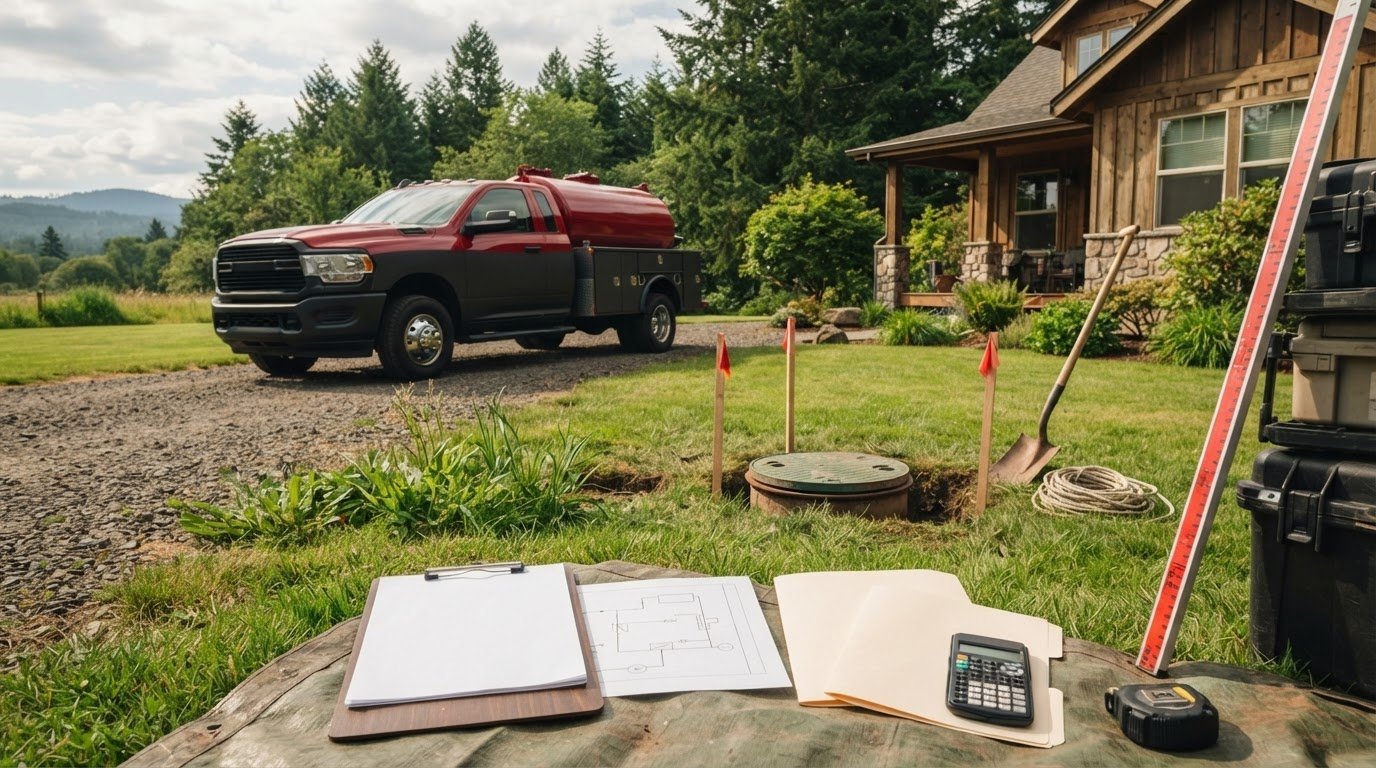
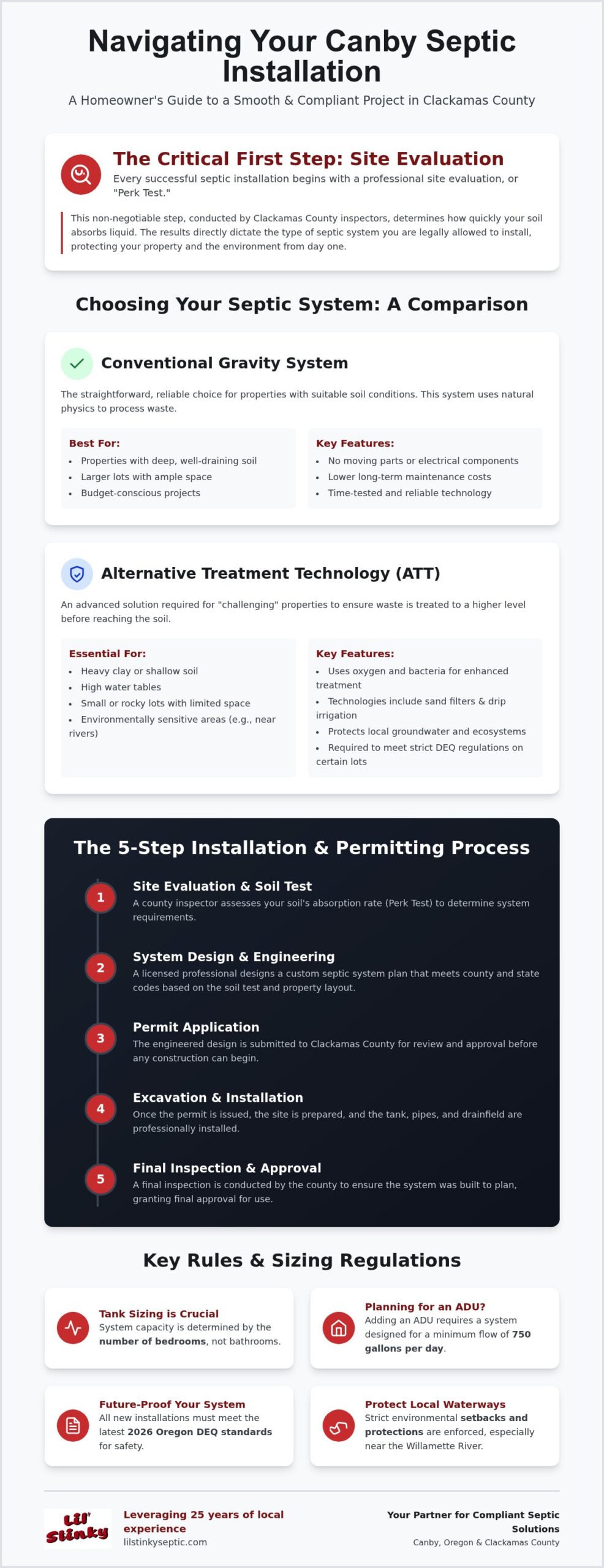
The Site Evaluation, commonly known as a Perk Test, is the most critical part of the early phase. In the Canby area, Clackamas County Environmental Health inspectors use this test to determine how quickly your soil absorbs liquid. This data is non-negotiable. It dictates the type of Onsite sewage facility you can install. If your soil is heavy clay or too shallow, you might be required to use an advanced treatment system rather than a standard gravity setup.
Capacity is another major factor. Your septic tank size is determined by the number of bedrooms in your home, not the number of bathrooms. According to 2026 Oregon DEQ rules, if you plan to add an Accessory Dwelling Unit (ADU), your system must handle a minimum design flow of 750 gallons per day for the combined structures. Getting these numbers right early prevents your system from being overwhelmed and failing prematurely.
Assessing Your Canby Property for Septic Suitability
You must evaluate your lot lines and setbacks before any digging begins. Properties near the Willamette River face even stricter environmental protections to prevent groundwater contamination. If you’re replacing an old system, look for warning signs like spongy soil, odors, or unusually green grass over the drainfield. We always recommend a professional site visit before you finalize a rural lot purchase. This ensures the land can actually support a legal septic system before you commit your life savings.
Setting Realistic Goals for Your Septic Project
Balance your immediate budget with the long-term reliability of the system. While a conventional system might be cheaper upfront, an Alternative Treatment Technology (ATT) system might be the only way to build on a “challenging” lot with poor drainage. Think about your future plans. If you want to add a shop with a bathroom or an ADU later, design for that capacity now. Early planning prevents the need for a costly redesign or a second excavation phase once the project is already underway.
Choosing the Right System: Conventional vs. ATT for Clackamas County Soil
Choosing the right system for your septic installation Canby Oregon project isn’t just a matter of preference; it’s a decision dictated by the earth beneath your feet. In the Willamette Valley, we frequently encounter a mix of rich river silt and heavy, stubborn clay. If your property sits on a deep layer of well-draining soil, a conventional gravity system is usually the gold standard. These systems are straightforward, using natural physics to move effluent through the tank and into the drainfield. They’re generally the most affordable to maintain over several decades because they have no moving parts.
Many lots in the Canby area present hurdles like high water tables or slow soil drainage. This is where the Clackamas County Septic Program guidelines become essential. If your site evaluation shows that the soil cannot process waste quickly enough, you’ll likely need to move beyond a standard concrete tank. Aerobic units or sand filters treat the waste to a higher level before it reaches the soil, which is vital for protecting local groundwater and the health of the Willamette River. These specialized systems ensure that even on “tight” soil, your property remains safe and compliant with environmental regulations.
When to Consider an ATT Septic System in Oregon
Alternative Treatment Technology (ATT) systems are essential for “challenging” properties that don’t meet the requirements for a standard setup. If you have a small lot or one with significant rock outcroppings, a standard drainfield might be impossible to fit due to setback requirements. Our Oregon ATT Septic Systems guide explains how these units use oxygen and specialized bacteria to treat waste more thoroughly. Technologies like sand filters or drip irrigation systems allow us to install functional septic setups on lots that were previously considered unbuildable. The Oregon DEQ strictly regulates these technologies to ensure they meet environmental safety standards for residential use. Homeowners in neighboring Multnomah and Clackamas County properties facing similar soil challenges can also find detailed guidance in our Portland ATT septic installation guide for the 2026 regulatory standards.
Comparing Costs and Complexity
While ATT systems involve a higher initial investment and more complex mechanical components, they offer flexibility that conventional systems can’t match. These units require an ongoing maintenance contract and regular inspections to keep the aerobic bacteria healthy and the pumps functioning. However, the ability to build on a preferred lot often outweighs the maintenance costs. A properly installed ATT system can also boost your property’s future resale value by proving the site is environmentally sound. We provide a best-price guarantee for Canby residents on all installations to ensure you get the most reliable system for your budget. If you’re ready to see which system fits your lot, contact us for a straightforward assessment of your property’s needs.
Navigating the Clackamas County Septic Permit and Design Process
You can’t just dig a hole and drop a tank in your backyard. Every septic installation Canby Oregon project requires a legal permit from Clackamas County Environmental Health. This isn’t just red tape; it’s a critical safety measure to protect your drinking water and the local environment. To get this permit, your installer must be DEQ-certified. We’ve seen homeowners try to cut corners with unlicensed contractors, only to face massive fines and a “stop work” order. For 2026, expect the permit timeline to range from four to eight weeks, depending on the current backlog at the county office.
The Design Phase: Engineering for Compliance
A Septic System Design in Oregon is the blueprint for your project’s success. It’s more than a simple drawing; it’s a comprehensive engineering plan. We map out the exact location of the tank, the transport lines, and both the primary and replacement drainfield areas. This design must adhere to strict DEQ setbacks to protect your property. For example, your system needs to stay a specific distance from property lines, wells, and existing structures. A precise design prevents “red tags” during the final inspection, which can save you from the nightmare of moving components after they’re already in the ground.
Submitting Your Permit Application
Submitting the application is where many homeowners feel the most stress. You’ll need a complete package that includes site maps, soil reports from your perk test, and detailed system specifications. If your property is near the Canby city limits or within the Urban Growth Boundary, you’ll also need a sewer-availability letter from the local authority confirming that a municipal connection isn’t available. As of July 1, 2026, Oregon DEQ Onsite Program fees increased by 33%, so it’s vital to account for these administrative costs in your budget. Once the county reviews your application, they’ll issue an “Authorization to Construct” (AC) notice. We handle the bulk of this paperwork for you to ensure every form is filled out correctly the first time.
Working with someone who knows the Clackamas County inspectors by name makes a huge difference. It streamlines the communication and ensures that your project follows the specific local nuances that generic contractors might miss. Our 25 years of local experience means we know exactly what the county is looking for in a successful permit application. This local insight often helps us navigate the review process more efficiently than out-of-town companies. We take pride in our “straight talk” approach, keeping you informed at every stage of the approval process so there are no surprises when the machines arrive.
The Step-by-Step Process of a Professional Septic Installation
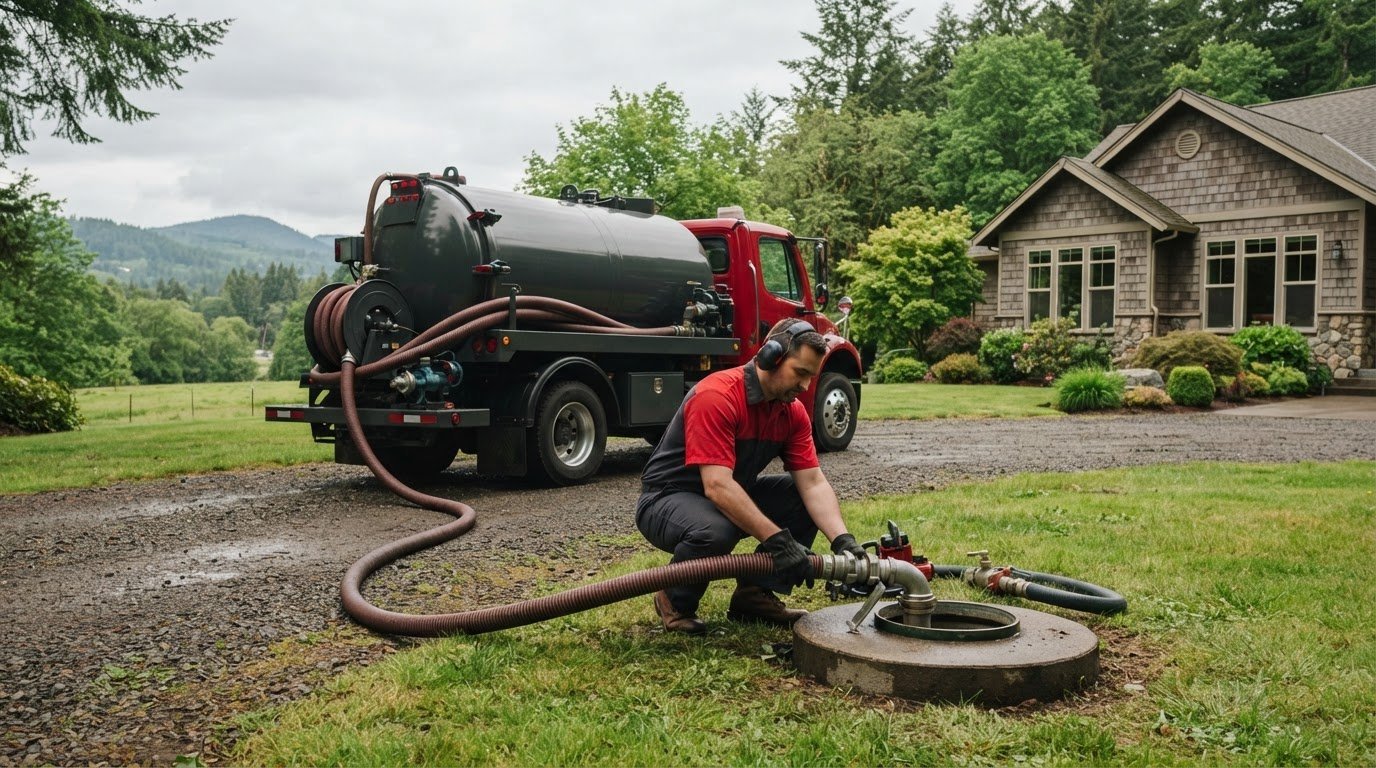
Once your permit is approved, the heavy machinery arrives. A professional septic installation Canby Oregon project is a major construction event that transforms your backyard. It’s messy and loud, but a structured workflow keeps the project on track and protects your property from long term damage. We start by marking underground utilities and clearing the site so our excavators can move safely without hitting water lines or power cables. This pre-construction phase ensures that our team can work efficiently without any safety setbacks.
Excavation is the most visible phase of the job. We dig a precise pit for the septic tank and long trenches for the drainfield. Accuracy matters here. If the tank pit isn’t dug to the exact depth specified in your design, the gravity-fed system won’t flow correctly. After digging, we set the tank. Since the January 1, 2026, DEQ rule change, we exclusively use durable concrete or plastic tanks, as steel tanks are no longer approved for new installations. We use laser levels to ensure the tank sits perfectly flat, preventing structural stress and future leaks.
Installing the Drainfield (Leach Field)
The drainfield is the most sensitive part of your system. We lay perforated pipes in a bed of washed gravel or install modern chamber systems that allow effluent to soak into the soil. The “slope” and “grade” of these pipes must be exact. If the incline is too steep, the liquid moves too fast; if it’s too flat, it won’t move at all. We are extremely careful to keep heavy equipment away from the drainfield area during this phase. Soil compaction is a system killer because it prevents the ground from absorbing liquid, leading to premature failure.
System Hookup and Backfilling
After the tank and drainfield are in place, we connect the main sewer line from your house to the tank inlet. We perform a thorough leak test to ensure every seal is watertight. Before any dirt goes back in the holes, a Clackamas County official must perform a mandatory “open-hole” inspection. They verify that the installation matches the permitted design perfectly. Once we get the green light, we backfill the trenches and grade the surface. This final grading is vital to ensure rainwater flows away from the components rather than pooling over your new system. We provide you with “As-Built” drawings, which are the final maps showing exactly where every pipe is buried for your records. If you’re ready to get started on a reliable system, request a professional installation quote from our local team today.
Why Local Expertise Matters for Your Canby Septic Project
Choosing the right team for your septic installation Canby Oregon is just as important as the system design itself. With 25 years of local experience, we’ve seen every soil variation the Willamette Valley has to offer. We don’t just guess where the pipes go; we understand how the local geology interacts with your system over time. This deep knowledge allows us to provide “straight talk” about your project. We won’t hide behind corporate jargon or ambiguous timelines. You get honest answers from neighbors who value your property’s safety. Expert local knowledge is the only way to ensure a successful septic installation Canby Oregon that stands the test of time.
A major part of our transparency involves pricing. Any generic quote you see online is likely inaccurate because a Septic System Installation Cost in Oregon must be site-specific. Your lot’s slope, soil density, and proximity to water sources like the Willamette River all change the excavation requirements. We provide detailed, transparent estimates so you know exactly where your investment is going. Our goal is to keep your system compliant with DEQ standards for decades, not just until the final inspection is over. We manage every detail of the project so you can focus on your home.
The Lil’ Stinky Best-Price Guarantee
We believe every homeowner deserves high-quality work at a fair price. That’s why we offer a best-price guarantee on all our installations, including complex ATT systems. We’re fully licensed, bonded, and insured (CCB #189693), giving you peace of mind that the job is done correctly. Our relationship with you doesn’t end when the dirt is backfilled. We offer 24/7 emergency response because we know that septic issues don’t wait for business hours. Our local reputation in Canby is built on being there when our customers need us most.
Ongoing Maintenance and Protection
A new system is a significant investment. To keep it healthy, you need a proactive maintenance plan from day one. We help you set up your first pumping schedule based on your specific household size and system type. For even greater security, we offer a Protection Plan designed to catch small issues before they become expensive emergencies. This long-term support ensures your drainfield remains functional and your tank stays clear of sludge buildup. We take pride in our craft and want your system to be the last thing on your mind. Ready to start? Request your septic installation estimate from Lil’ Stinky today!
Take the Next Step Toward a Worry-Free Septic System
Installing a new system is a major investment in your home’s long term value and environmental health. You now have the roadmap to navigate Clackamas County permits and understand the technical requirements of your specific soil. Whether your property needs a standard gravity setup or a complex ATT system, success depends on meticulous planning and expert execution. A professional septic installation Canby Oregon ensures your household waste is managed safely without the risk of system failure or environmental contamination.
We’re here to help you move from the planning phase to a fully functional, permit-approved system. With 25+ years of local service and a team of Oregon DEQ certified installers, we provide the reliable “straight talk” you need to make informed decisions. We stand by our work with a best-price guarantee, ensuring you get the highest quality results for your budget. Don’t let the complexity of county regulations or excavation logistics stall your project. Let a trusted local specialist handle the heavy lifting so you can focus on enjoying your home.
Get a Free Estimate for Your Canby Septic Installation and get your project started on the right foot today. We look forward to being your dependable partner in protecting your property.
Frequently Asked Questions
How much does septic installation in Canby Oregon typically cost?
Total costs for a septic installation Canby Oregon vary based on your soil type, system design, and property slope. Conventional systems are generally the most affordable, while ATT systems require a higher initial investment. Remember that Oregon DEQ permit fees increased by 33 percent on July 1, 2026. We provide detailed, site-specific estimates to ensure your budget is accurate and covers all necessary county requirements.
How long does the entire septic installation process take from start to finish?
You should plan for a timeline of 8 to 12 weeks from start to finish. This timeframe includes the initial soil evaluation, the engineering design phase, and the Clackamas County permit review process, which currently takes 4 to 8 weeks. Once we have the Authorization to Construct in hand, the actual excavation and physical installation of the system typically take about 5 to 10 working days.
Do I need a permit to replace an existing septic tank in Clackamas County?
Yes, you must obtain a permit from Clackamas County Environmental Health to replace a tank or drainfield. Depending on the scope of the work, you’ll need an Authorization Notice or a Repair Permit. This legal requirement ensures the new components meet current safety codes and protect the local groundwater. Working without a permit can lead to significant fines and property liens.
What is the difference between a conventional system and an ATT system?
Conventional systems use gravity to move effluent into the soil for natural treatment. They are the best choice for deep, well-draining soil. Alternative Treatment Technology (ATT) systems use aerobic units or sand filters to treat waste more aggressively before it hits the ground. These are required for lots with high water tables or heavy clay, ensuring your property remains environmentally safe even in challenging conditions. If your property is in the greater Portland metro area, our ATT septic installation guide for the Portland area covers the specific 2026 compliance requirements in detail.
Can I install my own septic system in Oregon if I own the property?
Property owners can legally install their own systems in Oregon if they intend to live in the home, but the process is difficult. You must still apply for all permits, pass a DEQ exam, and follow the approved engineering design perfectly. Most homeowners choose professional installation because of the complex machinery involved and the high risk of red tags during county inspections if the grade or slope is off.
How often will my new septic system need to be pumped?
We recommend pumping your system every 3 to 5 years to maintain its health. The exact frequency depends on your household size and how much water you use daily. Regular pumping is the most effective way to prevent solids from clogging your drainfield. After your septic installation Canby Oregon is finished, we’ll help you set up a maintenance schedule that fits your specific needs.
What happens if my property fails the initial soil perk test?
Failing a perk test simply means your soil doesn’t drain fast enough for a standard gravity system. In these cases, we move to an Alternative Treatment Technology (ATT) or a mound system design. These systems are specifically engineered to handle poor soil conditions, shallow bedrock, or high water tables. They ensure you can still build on your property while meeting all DEQ environmental safety standards.
Does Lil’ Stinky offer financing or payment plans for new installations?
We don’t provide internal financing or payment plans at this time. However, as a licensed and bonded contractor (CCB #189693), we do offer a best-price guarantee on all our installations. This ensures you receive the most competitive rate in the Canby area. We recommend that homeowners explore home equity lines of credit or local credit union loans for project funding. Our team provides transparent, site-specific estimates to help you plan your finances accurately.